GameMaker Adds Claude Code to CLI for AI-Assisted Development
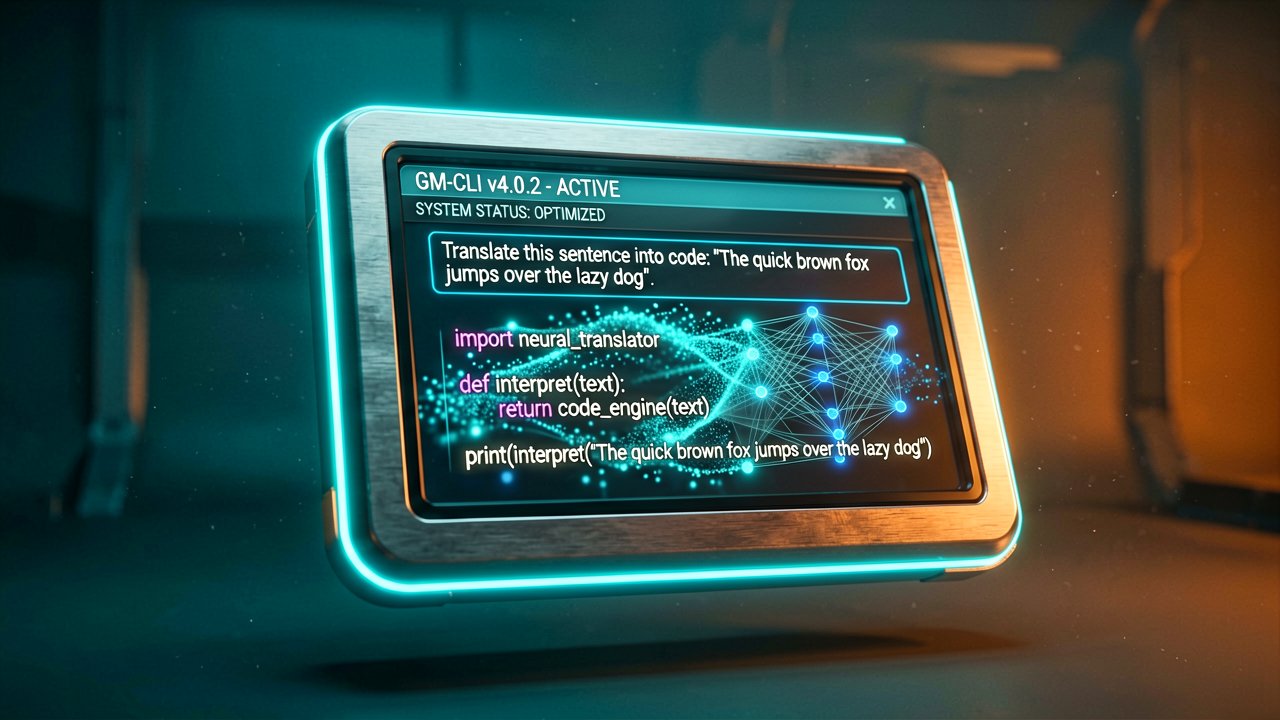
The 2D game engine GameMaker has integrated Anthropic's Claude Code into its new command line toolchain, marking a significant shift toward AI-assisted development workflows. The update arrives alongside the launch of GMRT, a next-generation runtime designed to support larger teams and more complex projects.
GameMaker head Russell Kay confirmed the integration via email to Game Developer, stating the company wants to "give users who might benefit from AI the option to do so." The phrasing is deliberate—this isn't a forced migration to AI workflows, but rather an opt-in tool for developers who want it.
The Claude Code integration lives in the new GM-CLI toolchain, not the traditional IDE. This architectural choice matters. Developers can now handle routine tasks via natural language prompts in the terminal without touching the visual interface. Think of it as describing what you want to build, test, or ship, then letting the AI handle the implementation details. The physical experience shifts from clicking through menus to typing commands and reviewing generated code in your preferred text editor.
According to documentation from Opera, GameMaker's parent company, users can leverage Claude Code to query project structures, hunt down bugs, and manage build configurations. The system uses an MCP Server and API access for automation through GitHub Actions. Crucially, GameMaker isn't running any servers for embedded AI tools—the infrastructure lives on the developer's side.
GMRT itself represents a broader modernization effort. The runtime will offer source access for Desktop, Mobile, and Web platforms, though not full open-source licensing. Developers can access, modify, and build from the code, which addresses long-standing friction points around customization and debugging. Project files are now plain text, making Git version control cleaner and more predictable.
Language support is expanding beyond GML. JavaScript, TypeScript, and C# are planned for later this year. This matters for teams transitioning from other engines or those who need to integrate GameMaker projects into broader software pipelines. The command line interface bridges that gap.
3D workflows are also getting attention, with improved glTF support. For a 2D-focused engine, this is a pragmatic expansion rather than a full pivot. GameMaker isn't trying to compete with Unity or Unreal on 3D fidelity—it's making existing 2D workflows more flexible while adding enough 3D capability for hybrid projects.
The timing aligns with industry trends. AI-assisted coding has become standard practice at many studios, as noted in recent State of the Industry surveys. Kay acknowledged this reality, saying Opera is "simply offering tools that aspiring developers might benefit from." The company recognizes that some developers remain skeptical of AI integration, hence the opt-in design.
Independent reporting from GamingOnLinux corroborates the GMRT timeline, noting the runtime will exit Beta for Desktop in coming months, with Mobile and Console support following later in the year. The CLU tools will be open source, providing transparency around the automation layer.
What this means for developers depends on their workflow. Solo creators might appreciate the ability to prototype faster using natural language prompts. Professional studios could leverage the CLI for CI/CD pipelines and automated testing. The key distinction: the IDE remains available for those who prefer visual development. This isn't a replacement—it's an alternative path.
The "vibe coding" terminology that's emerged around this integration captures something real. Developers describe the experience as conversational—typing what you want, getting code back, iterating. But the reality is more nuanced. As one developer noted in a separate analysis, AI-generated code still requires significant manual review, play-testing, and creative direction. The AI handles implementation; humans handle validation and feel.
There's also the question of cost. Claude Code requires an Anthropic API key. GameMaker isn't subsidizing this—developers pay for their own AI usage. For hobbyists, this might be negligible. For studios running multiple projects, it adds up. The serverless architecture means no hidden fees from GameMaker, but the economics of AI tooling remain a consideration.
Security implications warrant attention. The MCP Server and API access create new attack surfaces. Developers need to understand what data flows to Anthropic's servers and how project files are handled. GameMaker's documentation should clarify this, though the current materials focus more on capabilities than security posture.
The broader industry context matters here. Other engines are experimenting with AI integration, but GameMaker's approach is distinctive. By keeping the AI in the CLI rather than embedding it in the IDE, the company maintains separation between core functionality and optional tooling. This reduces friction for developers who don't want AI while enabling those who do.
Whether this actually improves development velocity remains to be seen. The tools are available now, but adoption patterns will emerge over months. Some developers will embrace the workflow immediately. Others will stick with traditional methods. Both paths are valid, which is the point of the opt-in design.
For now, the integration represents a pragmatic acknowledgment of where game development is heading. AI-assisted workflows aren't going away. GameMaker is positioning itself to support both traditional and modern approaches, letting developers choose their path. Whether that flexibility translates to better games or just faster iteration is the real question.
Artūras Malašauskas is an AI Systems Integrator with 20+ years of production-grade web engineering experience. He has designed, shipped, and scaled enterprise Python/PHP systems for logistics, SaaS, and public-sector clients. For the past year, he has focused exclusively on AI integrations: deploying open-source LLMs, building generative media pipelines (image, audio, video), and engineering multi-agent workflows for real production environments. His standard: reproducibility, security, cost-efficient inference—no vaporware. He documents and evaluates emerging AI tooling, separating verified capabilities from marketing noise. Technical editor at: muza-ai.eu, ai-verslas.lt, ai-naujinos.lt Connect on LinkedIn
Comments