TestMu AI Launches Kane CLI for AI Agent Browser Verification
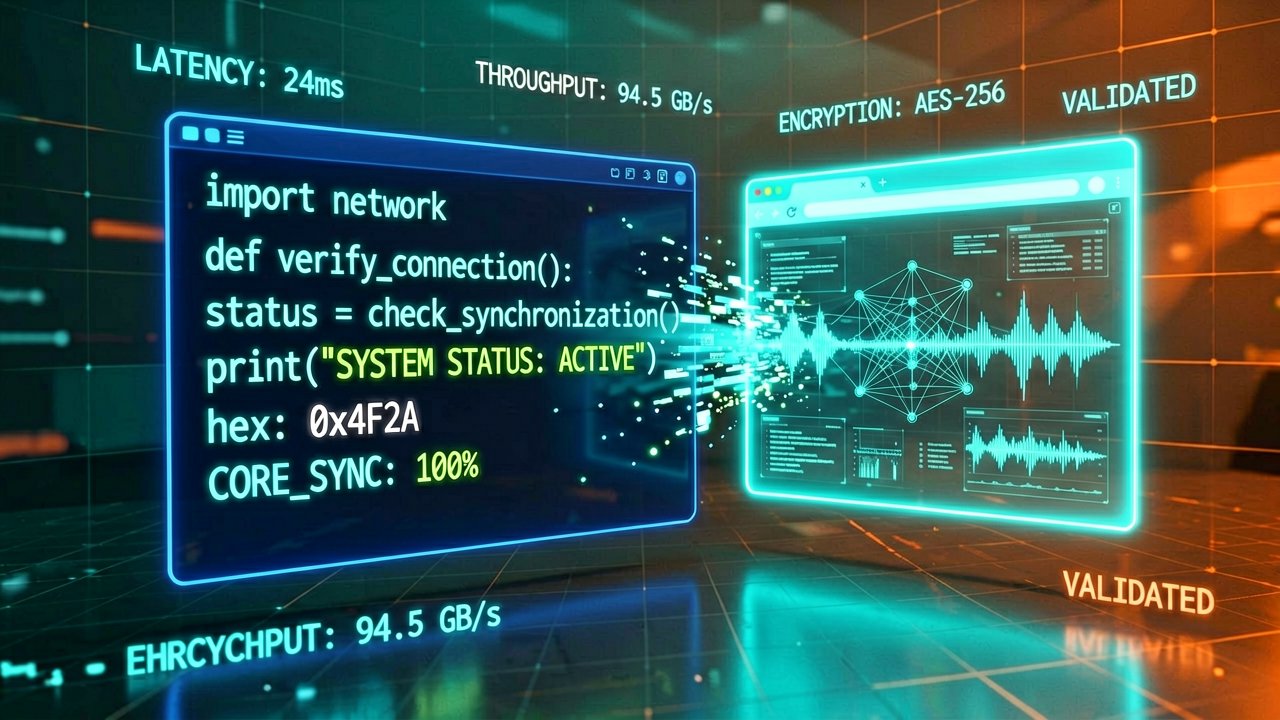
The terminal-native browser verification tool ships today with native support for Claude Code, Codex CLI, Cursor, and Gemini CLI, and it's free to start. TestMu AI (formerly LambdaTest) announced the launch of Kane CLI, a new browser automation tool that runs directly from the terminal. This is the first tool designed simultaneously for human developers and AI coding agents, closing the gap between code generation and verified browser execution.
AI coding agents have transformed how software gets written. Features ship from prompts. Bugs get fixed in seconds. But the development loop has never fully closed: no agent can open a browser and verify that what it built actually works. That step still falls to a human. Kane CLI is built to close this loop.
According to the company's official announcement, TestMu AI positions Kane CLI as the verification layer for the entire workflow. Developers and QA engineers describe the flow and get pass or fail with a full step trace and screenshot before the PR goes up. Designers and PMs verify fixes and broken flows without filing a ticket or waiting for a developer, then drop the shareable evidence link straight into Slack or Jira.
AI agents like Claude Code, Codex CLI, Cursor, and Gemini CLI build a feature; Kane CLI is the missing tool that tells them whether it actually works in the local Chrome browser. The physical reality here matters: instead of staring at a terminal output wondering if the button actually rendered, you see a real browser window execute the flow. You watch the cursor move. You see the page load. You get a screenshot when it breaks.

Key capabilities include intent-based browser control that operates purely on intent, requiring no selectors or underlying code. Kane CLI does not return halfway. It adapts and pushes through, up to 50 steps per flow, until the full journey is verified. Other tools break on the first change. Kane CLI finishes the run. It also converts plain English test flows into native Playwright test code with one command.
Vision-based dynamic waiting detects loaders and animations on screen before acting. Not network-based. Handles canvas, Shadow DOM, and element frameworks that cannot be resolved by traditional selectors. When an automated flow hits an OTP screen or a CAPTCHA, it does not fail silently. Kane CLI pauses, asks the human to handle that one step, and then continues the run. For AI agents, this is human-in-the-loop without stopping the entire workflow (which is actually a pretty clever workaround for a fundamental limitation).
Three modes ship with the tool so humans and agents can consume it the same way from the same terminal. Interactive TUI requires no arguments—a full terminal UI opens for exploring, iterating, and chaining tests across a live browser session. Headless CLI adds --headless for scriptable, display-free runs built for shell scripts and CI pipelines. Agent Mode adds --agent --headless and outputs structured NDJSON that Claude Code, Codex CLI, and Gemini CLI read natively to decide what to do next.
Asad Khan, CEO & Co-Founder of TestMu AI, said: "For years, the bottleneck in software was writing the code. Vibe coding removed that. Teams are shipping more software, faster, than at any point in the history of our industry. But it exposed a new bottleneck most teams haven't named yet: trust. Every feature that ships from a prompt is a feature nobody has actually verified. At agentic speed, 'a human will click through it later' is not a plan — it's a liability, compounding at the speed of AI."

Independent reporting from Hacker Noon corroborates the market context. By January 2026, 90 percent of professional developers worldwide regularly use AI tools for coding. The Pragmatic Engineer's February 2026 survey of 15,000 developers found that 73 percent use AI coding agents daily, up from 41 percent a year earlier. Code generation is no longer a constraint. The constraint moved.
The trust paradox is real. The Stack Overflow 2025 Developer Survey shows positive sentiment toward AI tools fell from over 70 percent in 2023 and 2024 to 60 percent in 2025. Trust in the accuracy of AI output dropped from roughly 40 percent to 29 percent over the same period. Sixty-six percent of developers now report that AI solutions are "almost right, but not quite." Forty-five percent say debugging AI-generated code takes longer than writing it themselves.
According to Q1 2026 survey data, developers now spend 11.4 hours per week reviewing AI-generated code, against 9.8 hours writing new code. For the first time in the history of the profession, reviewing has overtaken writing as the dominant activity in a developer's week. The artifact arrives in seconds. The verification arrives in hours. And the verification is overwhelmingly manual.
Kane CLI is available today, free to start. Install via npm or brew, log in, and run your first flow. Installation command for Kane CLI via npm: npm install -g @testmuai/kane-cli. Installation command for Kane CLI via Homebrew: brew install LambdaTest/kane/kane-cli. Or building with an AI agent? Point it to testmuai.com/kane-cli/agents.md. For a quick start, visit the docs at testmuai.com/support/docs/kane-cli-introduction/ and to learn more, visit testmuai.com/kane-cli.
As part of its launch, TestMu AI is offering bonus credits for the first three months to teams that activate a paid plan during the introductory period. The offer is designed to give engineering and quality teams full access to Kane CLI's cloud capabilities. Whether users actually pay for it remains the real question.
The company rebranded from LambdaTest to TestMu AI in January 2026. The "TestMu" name comes from its annual community conference. The new positioning describes the company as an "agentic quality engineering" platform, a category label that Tricentis, Perfecto and a small number of other testing vendors have also adopted. Industry analyst firm Gartner has not yet formally recognized this category, and whether it endures remains an open question.
The most direct competitor to Kane CLI is Browserbase, a Y Combinator-backed company founded in January 2024 by Paul Klein IV. Browserbase raised a $40 million Series B round in June 2025 at a $300 million valuation, with Notable Capital and Kleiner Perkins among investors. The competitive shape of the market is now clear. Code generation is no longer a constraint. The constraint moved.
Software has always trusted the people who wrote it. Now, for the first time, it has to trust the machines. Kane CLI is how trust scales in the agentic era. Whether that trust actually holds when the browser crashes on step 47 is another matter entirely.
Artūras Malašauskas is an AI Systems Integrator with 20+ years of production-grade web engineering experience. He has designed, shipped, and scaled enterprise Python/PHP systems for logistics, SaaS, and public-sector clients. For the past year, he has focused exclusively on AI integrations: deploying open-source LLMs, building generative media pipelines (image, audio, video), and engineering multi-agent workflows for real production environments. His standard: reproducibility, security, cost-efficient inference—no vaporware. He documents and evaluates emerging AI tooling, separating verified capabilities from marketing noise. Technical editor at: muza-ai.eu, ai-verslas.lt, ai-naujinos.lt Connect on LinkedIn
Comments