Apple Adds 12-Month Commitment Subscriptions to App Store
Apple has introduced a new subscription tier for the App Store: monthly billing with a 12-month commitment. The feature, announced April 27, 2026, allows developers to split annual-style pricing into smaller monthly payments while still locking users into a full-year term. Developers can now configure these subscriptions in App Store Connect and test them in Xcode, with public availability scheduled for May alongside iOS 26.5.
From the official Apple Developer News announcement, the company frames this as a transparency and affordability improvement. Users can cancel at any time, which prevents automatic renewal after they complete their agreed payments. The system tracks completed versus remaining payments directly in the Apple Account interface. Email and optional push notifications alert users before renewal dates hit.
That sounds straightforward on paper. In practice, it means tapping through subscription management screens to see a progress bar showing how many of twelve payments you've made. The physical interaction is familiar—swipe, tap, confirm—but the commitment structure is new. You're essentially signing a lease with monthly rent instead of paying the full year upfront.
Here's where it gets interesting. The feature launches worldwide with two notable exceptions: the United States and Singapore. Neither Apple's press release nor the developer documentation explains why these markets are excluded. No timeline exists for when they might be added. This omission is unusual for a company that typically rolls out features globally or with clear regional sequencing.
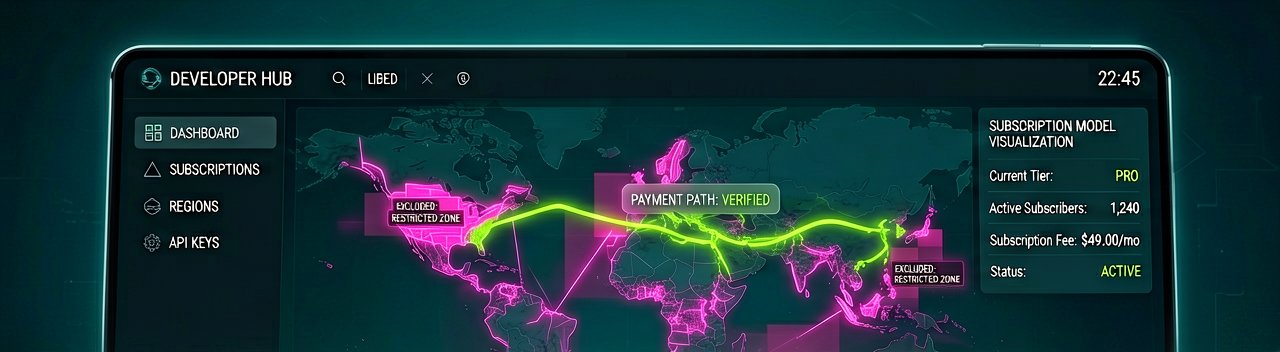
MacRumors first reported the announcement, noting the same geographic gaps. The outlet's coverage aligns with Apple's official messaging on pricing mechanics and cancellation policies. Independent verification from MacRumors confirms the rollout timeline and platform requirements.
For developers, the business case is clear. Annual subscriptions typically offer 15-20% discounts compared to month-to-month pricing. This new model lets developers maintain those discounts while reducing the upfront payment barrier. A $120 annual subscription becomes $10/month instead of $120 upfront. That's a meaningful difference for users who can't or won't commit to a lump sum payment.
The catch is the commitment itself. Users who cancel mid-term still owe the remaining payments until the 12-month cycle completes. They won't be charged beyond that point, but they can't walk away from the obligation. This is fundamentally different from standard monthly subscriptions, where cancellation stops billing immediately.
Platform support spans iOS 26.4, iPadOS 26.4, macOS Tahoe 26.4, tvOS 26.4, and visionOS 26.4 or later. The feature activates with the release of iOS 26.5 and equivalent updates in May. That's a narrow window—users on older OS versions won't see the option until they upgrade.

Consider the user experience. Someone opens the App Store, browses a productivity app, and sees three subscription options: monthly at $12, annual at $100, and the new 12-month commitment at $10/month. The third option looks like the cheapest monthly rate, but the fine print reveals the year-long obligation. That's where friction enters the equation. Users must read beyond the headline price to understand the commitment.
Apple's notification system attempts to address this. Push alerts and emails remind users of upcoming renewals. The Apple Account screen displays payment progress. But these are passive disclosures. They don't change the fundamental structure of the commitment, which remains binding until completion.
The US and Singapore exclusion warrants scrutiny. Both markets have significant App Store subscription usage. Regulatory environments differ—Singapore has strict consumer protection laws, while the US faces ongoing antitrust scrutiny of Apple's App Store practices. Either could explain the delay, but Apple hasn't confirmed either theory.
Developers testing the feature now will need to configure pricing tiers, set up the commitment logic, and verify the cancellation flow works as expected. App Store Connect handles the backend tracking, but developers must ensure their own systems recognize the subscription state correctly. A user who cancels mid-term should still have access until the commitment ends, then lose access afterward.
This isn't a revolutionary change to how subscriptions work. It's a payment structure adjustment that gives developers another pricing lever. For users, it's another option to consider when evaluating whether an app's value justifies the commitment. The math is simple: divide the annual price by twelve, compare it to the standard monthly rate, and decide if the discount is worth the lock-in.
Some users will appreciate the flexibility. Others will see it as a more sophisticated way to lock them in. The feature itself doesn't change the underlying economics of subscription fatigue—it just adds another layer to an already complex pricing landscape.
Whether this drives meaningful adoption remains uncertain. Developers will need to decide if the reduced upfront barrier outweighs the complexity of managing commitment-based subscriptions. Users will need to understand the difference between this and standard monthly billing. Apple's role is limited to providing the infrastructure; the market will determine if it's useful.
The real question isn't whether the feature works technically. It's whether users actually want another subscription commitment structure in an ecosystem already saturated with them. Whether developers can justify the added complexity is another matter entirely.
Artūras Malašauskas is an AI Systems Integrator with 20+ years of production-grade web engineering experience. He has designed, shipped, and scaled enterprise Python/PHP systems for logistics, SaaS, and public-sector clients. For the past year, he has focused exclusively on AI integrations: deploying open-source LLMs, building generative media pipelines (image, audio, video), and engineering multi-agent workflows for real production environments. His standard: reproducibility, security, cost-efficient inference—no vaporware. He documents and evaluates emerging AI tooling, separating verified capabilities from marketing noise. Technical editor at: muza-ai.eu, ai-verslas.lt, ai-naujinos.lt Connect on LinkedIn
Comments