HMD Names Raghav Juyal Brand Ambassador, Teases Vibe 2 on Flipkart
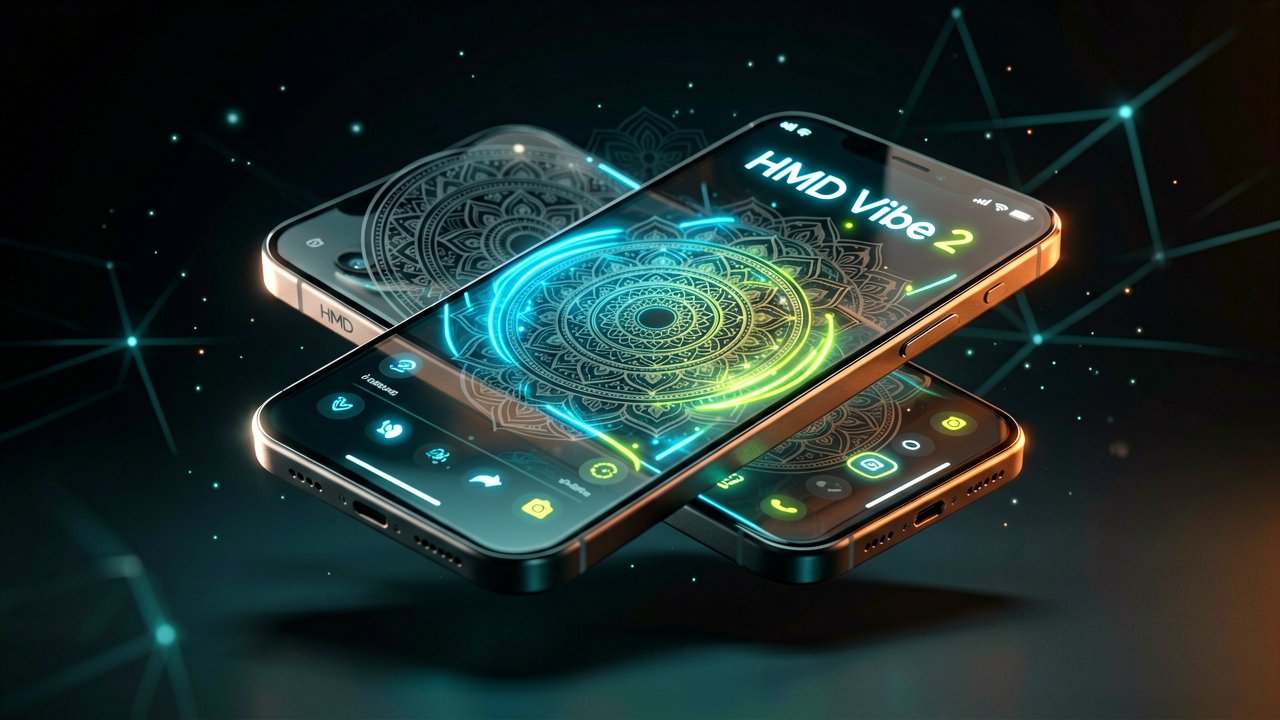
The Finnish smartphone maker HMD has officially announced Raghav Juyal as its new brand ambassador for the Indian market, simultaneously teasing the upcoming Vibe 2 smartphone that will debut through Flipkart.
The partnership was unveiled on April 27, 2026, via a press release distributed through ThePrint. This marks a strategic pivot for HMD in India, where the company is attempting to reposition itself beyond its Nokia heritage toward a more lifestyle-driven, youth-centric brand identity.
Raghav Juyal, known for his work across dance, television, OTT platforms, and cinema, brings what HMD describes as an "authentic, unfiltered, and effortlessly relatable persona." The company explicitly states this mirrors the ethos behind the Vibe 2, which is designed to celebrate self-expression and individuality for Gen Z and millennial audiences.
From a marketing perspective, this is a calculated move. HMD is running a 360-degree campaign spanning OOH billboards, print, social media, video platforms, and influencer networks. The physical reality of this campaign means consumers will encounter Juyal's image on actual billboards in Mumbai and Delhi, not just digital feeds. That tactile presence matters in a market where smartphone purchases still happen in physical retail stores despite e-commerce growth.
Ravi Kunwar, VP and CEO of HMD India, APAC and ANZ, framed the partnership as part of HMD's "reinvention journey." His full statement, published in the press release, emphasizes building "human-centric devices that empower self-expression." Kunwar also noted the strategic collaboration with Flipkart to scale reach across India.
Juyal's own comments reveal the positioning angle. He stated, "HMD's human-centric approach to technology truly resonates with me, it's about empowering creators, not algorithms." This language is deliberate—it positions HMD against competitors who lean heavily into AI features as their primary selling point. The company wants to be seen as enabling creativity rather than replacing it with automation.
The Vibe 2 itself remains shrouded in typical pre-launch mystery. No specifications, pricing, or exact launch date were disclosed. The teaser campaign focuses on "accessible innovation, thoughtful design, and a more expressive, lifestyle-led approach to smartphones." That's marketing speak for mid-range pricing with design elements that appeal to younger buyers.
This announcement builds on HMD's existing 2026 momentum in India. The company already has an official association with Rajasthan Royals for IPL activations, a partnership with Sarvam AI to integrate advanced voice technology into feature phones, and the Flipkart launch alliance for its upcoming smartphone lineup. These partnerships suggest HMD is trying to cover multiple market segments simultaneously—feature phones with AI, mid-range smartphones, and premium lifestyle positioning.
Independent reporting from Indian Television corroborates the partnership details and campaign scope. The outlet notes the campaign will launch soon, though no specific timeline was provided.
The India smartphone market is brutally competitive. HMD faces established players like Xiaomi, Samsung, and Realme, all of whom have deep distribution networks and aggressive pricing strategies. A brand ambassador alone won't overcome those structural advantages. The real question is whether the Vibe 2's actual specifications and pricing will match the aspirational marketing.
HMD's positioning as "Europe's largest smartphone maker" and champion of "repair-at-home phones" is interesting context. The company's About section states consumers are "passionate about the planet, often feel swamped by digital overload, and are keeping a close eye on their budget." That's a specific demographic profile—environmentally conscious, digitally fatigued, price-sensitive. Whether the Vibe 2 actually delivers on those promises remains to be seen.
The Flipkart exclusivity for the launch is notable. In India, e-commerce exclusives create artificial scarcity and drive initial sales velocity. But it also limits reach to consumers who prefer cash-on-delivery or offline retail experiences. That's a significant portion of the market, especially in tier-2 and tier-3 cities where HMD's feature phone business has historically performed well.
Physical interaction with the device will ultimately matter more than any ambassador campaign. Can users actually feel the difference in build quality? Does the camera interface reduce friction when shooting in low light? Are the buttons tactile enough for one-handed use? These are the details that determine whether a smartphone succeeds or becomes another forgotten launch.
HMD's previous smartphone launches in India have had mixed results. The Nokia-branded devices maintained a loyal but shrinking user base. The Vibe series represents a break from that legacy, attempting to establish HMD as its own distinct brand rather than riding on Nokia's historical goodwill.
The partnership announcement itself is straightforward—no complex technical specifications, no benchmark comparisons, no detailed feature breakdowns. It's pure brand positioning. That suggests the actual product details will be revealed closer to the launch date, likely in a separate press event or product page update.
Whether users actually pay for it remains the real question. Brand ambassadorships cost money. Marketing campaigns cost money. Those investments need to translate into actual device sales, not just social media impressions. The smartphone market doesn't reward marketing spend alone—it rewards products that deliver value at the right price point.
For now, the Vibe 2 exists as a teaser. The Flipkart page will eventually show pricing, specs, and availability. Until then, this announcement is a signal of intent rather than a concrete product offering. HMD is betting that Juyal's cultural relevance will translate into consumer interest. That's a reasonable bet, but it's not a guarantee.
The campaign drops soon, as Indian Television reported. If HMD's track record is anything to go by, the actual product experience will determine whether this partnership becomes a case study or a footnote in the company's 2026 strategy.
Artūras Malašauskas is an AI Systems Integrator with 20+ years of production-grade web engineering experience. He has designed, shipped, and scaled enterprise Python/PHP systems for logistics, SaaS, and public-sector clients. For the past year, he has focused exclusively on AI integrations: deploying open-source LLMs, building generative media pipelines (image, audio, video), and engineering multi-agent workflows for real production environments. His standard: reproducibility, security, cost-efficient inference—no vaporware. He documents and evaluates emerging AI tooling, separating verified capabilities from marketing noise. Technical editor at: muza-ai.eu, ai-verslas.lt, ai-naujinos.lt Connect on LinkedIn
Comments