Samsung SmartThings Adds Elderly Care Monitoring and AI Features
Samsung has rolled out a substantial update to its SmartThings smart home platform, introducing features that transform connected appliances into a remote care system for aging family members. The announcement, made through official Samsung press materials, details new monitoring capabilities that leverage existing hardware to track health indicators, detect falls, and alert caregivers when something seems wrong.
The core of this update is the enhanced Family Care service, which connects SmartThings to home appliances and mobile devices to provide notifications about aging parents' activities. Caregivers receive reminders for medication schedules, hospital visits, and location-based alerts. The service also introduces Care on Call, a feature that displays a floating pop-up before a phone call begins, showing the care recipient's first activity time of the day, most recent activity, and local weather. This gives caregivers immediate context before dialing (which, let's be honest, is better than calling blind and wondering if Mom actually got out of bed).
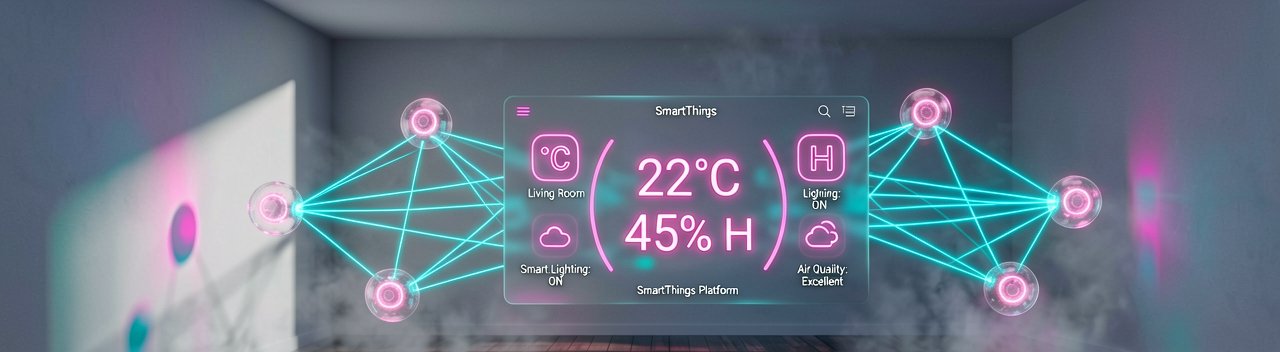
SmartThings now continuously monitors devices like air purifiers, humidifiers, and air conditioners for indoor temperature, humidity, and air quality. When unusual usage patterns are detected, caregivers receive immediate notifications and can remotely control the relevant appliance. The Care Insight feature has been improved to provide more actionable, long-term data by analyzing deviations in environmental conditions and changes in activity levels compared to previous weeks.
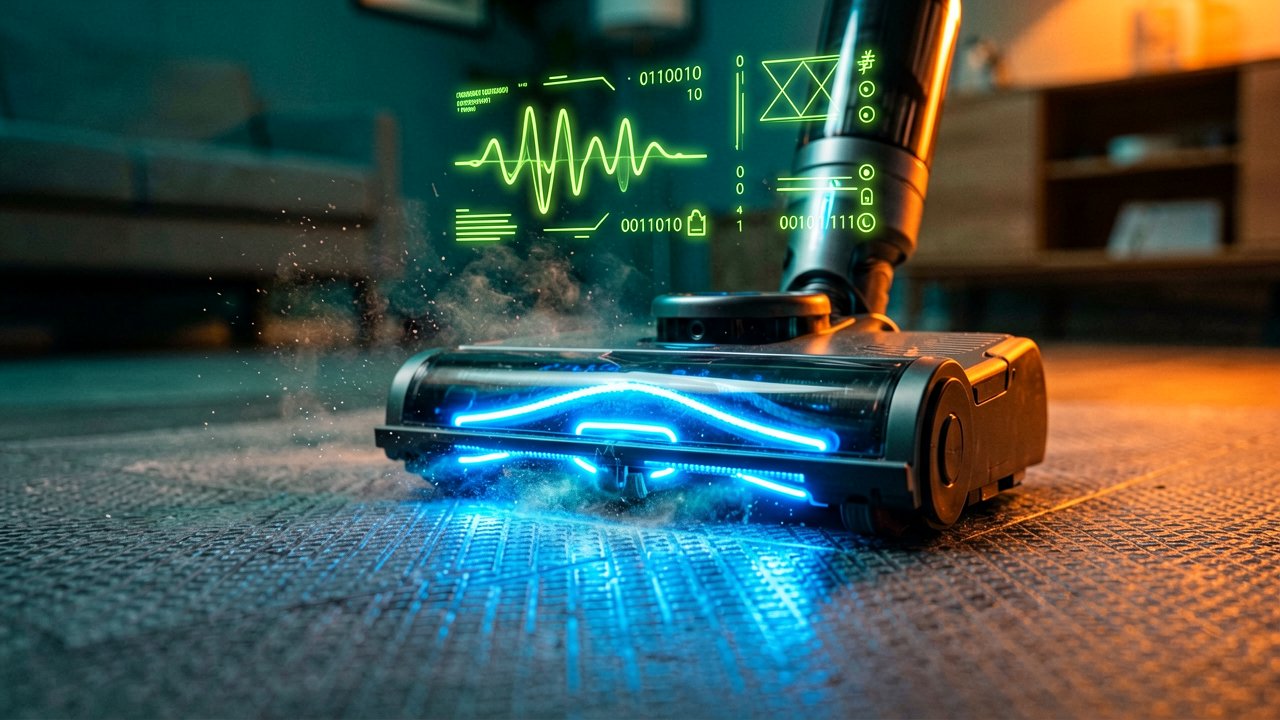
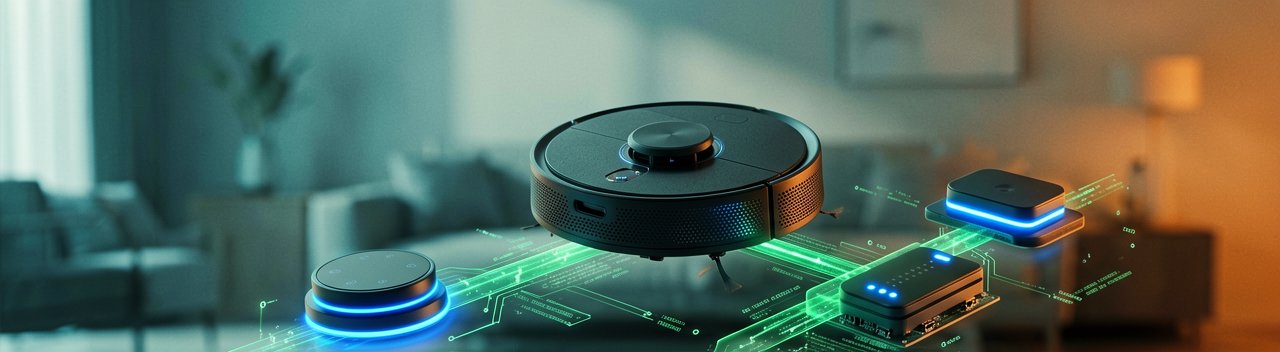
The Safety Patrol feature uses the Bespoke AI Jet Bot Steam Ultra robot vacuum as a mobile monitoring platform. If the care recipient's activity stops for a set period, users receive alerts and can activate the feature remotely. The vacuum's built-in camera can detect a person lying on the floor, and two-way communication through its speaker and microphone allows caregivers to check in. This turns a cleaning appliance into an on-demand surveillance and communication device.
Reputable tech outlet The Next Web reports additional details about cognitive decline detection capabilities. SmartThings can analyze lifestyle patterns through mobile and wearable devices, monitoring speech, typing, walking, sleep, and gait to identify early signs of cognitive deterioration. When changes are detected, alerts are sent to designated caregivers. The feature draws on longitudinal behavioral data that clinical researchers have long identified as potentially predictive of conditions like dementia.
Underpinning these care features is Samsung's ambient sensing technology, which uses millimeter-wave radar combined with sound sensors embedded in Samsung TVs, refrigerators, and other appliances. The system can detect different activities, distinguishing between someone exercising, sleeping, working at a desk, or simply moving through a room, without using cameras in most cases. All sensor data is processed and stored locally on the SmartThings hub, not in the cloud. This privacy architecture addresses the most obvious objection to putting radar sensors in someone's living room.
The Now Brief feature is also expanding significantly. With the launch of the Galaxy S26 series, Now Brief will support Home Security, Family Care, and Pet Care, in addition to existing features including Home Insight, Energy, and Sleep Environment Report. Users will not need to manually activate the feature, as it will automatically activate when they approach a TV or interact with a Family Hub refrigerator. The expanded Now Brief provides updates on home device status, energy usage, overnight sleep status, and parental daily activity.
Samsung plans to roll out the new Now Brief capabilities in phases to TVs launched in 2024 or later, and to Family Hub refrigerators launched in 2021 or later. For added convenience, if the feature is set up in advance, it will be automatically activated when users approach the TV, touch the Family Hub refrigerator screen, or open and close the refrigerator door. The physical interaction matters here—opening a fridge door triggers the briefing, which is a tangible moment of engagement rather than just another notification buried in an app.
Jaeyeon Jung, Executive Vice President and Head of the SmartThings Team at Samsung Electronics, stated that Samsung's AI technology goes beyond everyday convenience to help users care for themselves and their families with greater peace of mind. SmartThings will continue to strengthen its role as a platform that seamlessly connects customers' daily lives with AI, and it will keep expanding differentiated services on an ongoing basis.
The platform's advantage in this category is scale. SmartThings has more than 500 million users, and Samsung's appliance ecosystem means that many households already have the hardware infrastructure the care features require. A Samsung refrigerator, washing machine, air conditioner, TV, robot vacuum, and Galaxy Watch, taken together, generate enough behavioral and environmental data to construct a reasonably detailed model of daily life.
SmartThings is also pushing interoperability. The platform is the first major smart home system to support Matter-compatible cameras as a full device category, working with partners including Aqara, Eve, and Xthings. The new SmartThings hub integrates Thread, Zigbee 3.0, Wi-Fi 6E, Bluetooth 5.3, and Matter control, and doubles as a 15-watt Qi2 wireless charger for Galaxy phones. The open ecosystem approach means the care features can, in principle, extend beyond Samsung hardware to any Matter-compatible device.
Galaxy AI integration adds another layer. SmartThings now learns routines automatically using sensor data from Galaxy phones, and a Routine Creation Assistant powered by large language models lets users build automations with natural-language commands. These automations feed into the care system: a routine that detects when a family member has not turned on a light by their usual time can trigger a check-in alert.
Remote monitoring of elderly relatives raises significant questions about privacy, consent, and the ethics of behavioral surveillance. The local processing approach helps, but the care alert features necessarily involve sharing information with designated family members. Whether users actually pay for these services, or whether they'll find the constant monitoring intrusive, remains the real question.
Artūras Malašauskas is an AI Systems Integrator with 20+ years of production-grade web engineering experience. He has designed, shipped, and scaled enterprise Python/PHP systems for logistics, SaaS, and public-sector clients. For the past year, he has focused exclusively on AI integrations: deploying open-source LLMs, building generative media pipelines (image, audio, video), and engineering multi-agent workflows for real production environments. His standard: reproducibility, security, cost-efficient inference—no vaporware. He documents and evaluates emerging AI tooling, separating verified capabilities from marketing noise. Technical editor at: muza-ai.eu, ai-verslas.lt, ai-naujinos.lt Connect on LinkedIn
Comments