Aptori Launches Autonomous Offensive Testing to Eliminate AI Security Backlog
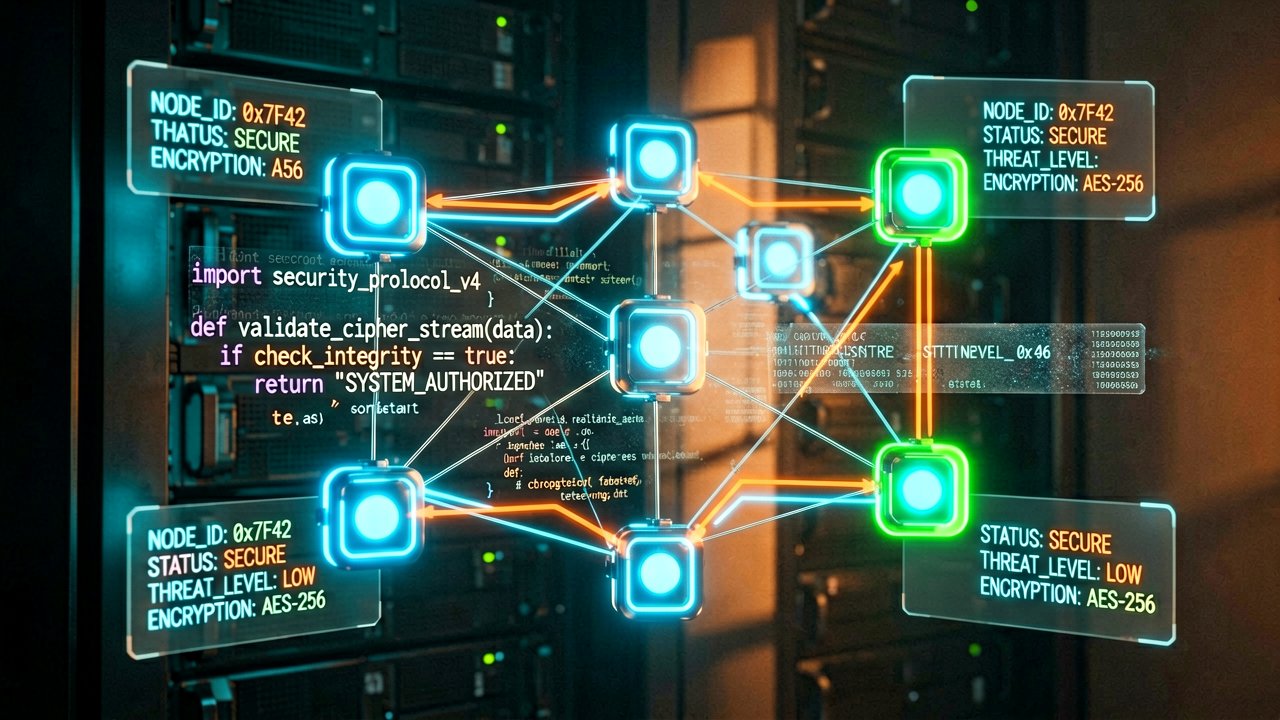
Aptori announced a major expansion of its Runtime-Driven Validation Platform on April 26, 2026, introducing autonomous offensive testing capabilities designed to address the growing security backlog created by AI-assisted development. The company's approach shifts security validation from passive scanning to active exploitation testing within running systems.
The announcement comes as organizations struggle with a fundamental mismatch: AI tools accelerate code generation while traditional security assessments remain point-in-time and manual. Most security scanners produce hundreds of findings that require human triage, creating bottlenecks that slow releases and obscure which vulnerabilities actually matter.
The official press release details how Aptori's system simulates real-world attacks against running applications. Rather than flagging potential issues, the platform's AI agents safely exercise vulnerabilities in runtime environments to confirm which ones are exploitable. This distinction matters because theoretical findings consume developer time without guaranteeing actual risk.
Sumeet Singh, CEO and Founder of Aptori, emphasized that security issues emerge through real execution paths across APIs, logic, and authorization layers. The company built its platform to test those paths at runtime and ensure issues are fixed before release. This represents a philosophical shift from detection-first to validation-first security.

The platform operates through three core mechanisms. Logic-aware exploration navigates application state and interactions, uncovering business logic flaws and authorization gaps that traditional automated tools miss. Active validation confirms which flagged vulnerabilities are actually exploitable. Continuous context ensures new endpoints and application changes are tested as they enter development workflows.
For developers, the physical experience differs from traditional security tools. Instead of receiving a dashboard of theoretical findings requiring manual investigation, teams receive validated exploit evidence with developer-ready fixes. The remediation suggestions integrate directly into existing workflows, reducing the friction of switching between security and development tools.
Aptori's product documentation describes the unified security data layer that normalizes findings from code, dependencies, APIs, and runtime environments into a single model. This eliminates the fragmentation common in security tooling, where teams juggle separate dashboards for SAST, DAST, and dependency scanning.
Early deployments reportedly show significant reduction in remediation backlog and time spent on manual triage. The company claims the platform replaces manual, time-intensive penetration testing with continuous operation at scale. Whether this holds across diverse enterprise environments remains to be seen (though the math on manual triage hours is compelling).

The platform targets enterprise and regulated environments with specific deployment options. Organizations can integrate with commercial and open source AI models, deploy on-premises, or use fully air-gapped configurations. Sensitive data never needs to transmit outside controlled infrastructure, addressing a common concern with cloud-based security tools.
Aptori received a Global InfoSec Award at RSAC 2026 for its approach to application and API security. The recognition reflects growing industry acceptance of runtime-driven validation and secure-by-design development methodologies. The company states the platform is already deployed within leading Fortune 500 organizations.
The technology addresses a specific problem in modern development: AI-generated code increases velocity while security tooling lags behind. Traditional scanners detect patterns but cannot prove exploitability. They cannot validate runtime behavior or confirm whether a flagged issue actually compromises the system. This gap widens as AI tools generate more complex, interconnected code.
Security becomes part of how software is built rather than something applied after deployment. Teams validate authentication, authorization, and business logic controls during the build phase. Issues identified early reduce the likelihood of vulnerabilities reaching production, where remediation costs multiply exponentially.
The Runtime-Driven Validation Platform, including autonomous offensive testing capabilities, is available immediately with SaaS and self-hosted deployment options. Organizations can explore the AI Security Center for securing agentic workflows, LLM integrations, and AI-powered applications.
Whether this actually reduces security backlogs at scale depends on integration complexity and organizational adoption. The technology solves a real problem, but security tooling success often hinges on developer experience and workflow friction more than technical capability. Time will tell if the validation-first approach gains traction beyond early adopters.
Artūras Malašauskas is an AI Systems Integrator with 20+ years of production-grade web engineering experience. He has designed, shipped, and scaled enterprise Python/PHP systems for logistics, SaaS, and public-sector clients. For the past year, he has focused exclusively on AI integrations: deploying open-source LLMs, building generative media pipelines (image, audio, video), and engineering multi-agent workflows for real production environments. His standard: reproducibility, security, cost-efficient inference—no vaporware. He documents and evaluates emerging AI tooling, separating verified capabilities from marketing noise. Technical editor at: muza-ai.eu, ai-verslas.lt, ai-naujinos.lt Connect on LinkedIn
Comments