ChatGPT Voice Now Available in Apple CarPlay
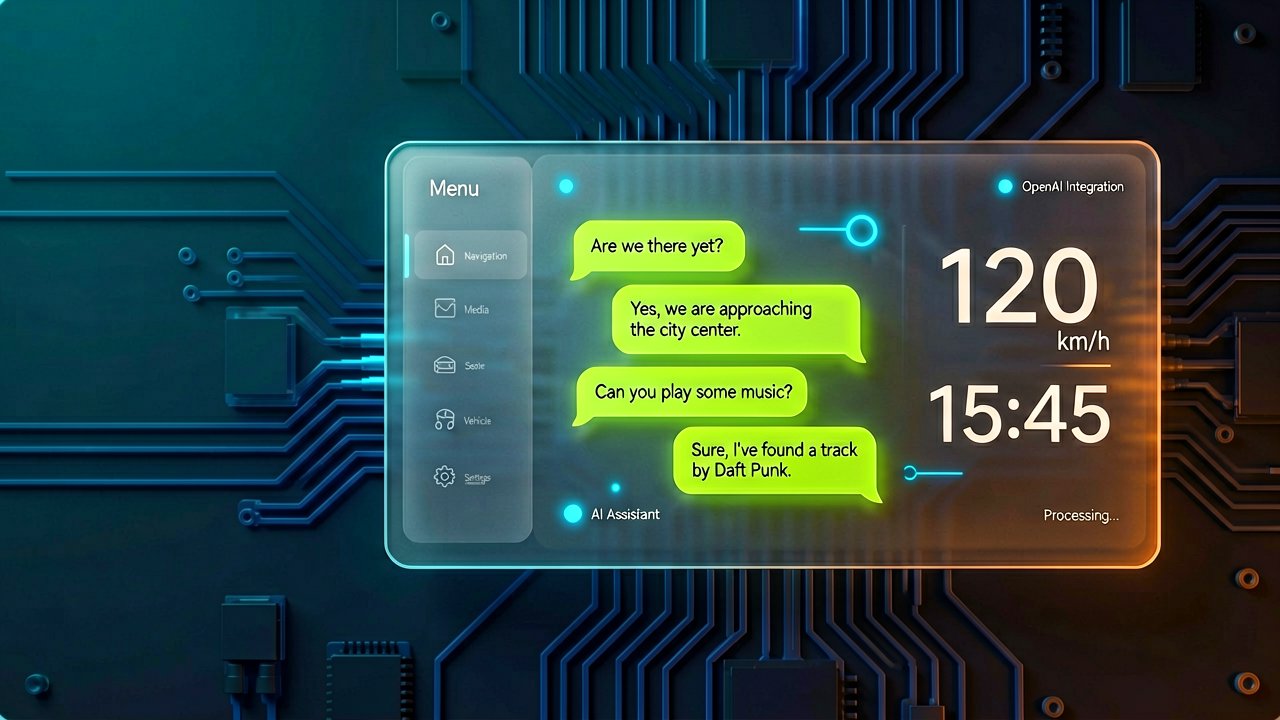
The AI landscape in vehicles just got a new player. OpenAI has officially launched ChatGPT Voice integration with Apple CarPlay, allowing drivers to engage the conversational AI through their car's infotainment system. The announcement came via social media channels, with details subsequently confirmed through the company's community forums.
This isn't just another app appearing on your dashboard. It's a voice-first experience designed for situations where touching a screen is impractical or unsafe. Drivers with compatible iPhones and CarPlay-enabled vehicles can now initiate new voice conversations or resume existing chats without ever reaching for their phone. The physical reality of this matters: you're talking to an AI through your car's speakers and microphones, not staring at a glowing rectangle while your hands leave the wheel.
According to the OpenAI Community announcement, the feature rolled out globally for all ChatGPT subscription tiers. That means whether you're on the free tier or paying for Plus, you get the same CarPlay access. The rollout requires iOS 26.4 or later, the latest version of the ChatGPT app, and a vehicle with CarPlay support. For users who want faster handoffs into voice mode, there's a setting in the iOS app under Settings → Voice → Start automatically in CarPlay.
Here's where things get interesting. The feature has hard limitations that separate it from a true automotive AI assistant. OpenAI's help documentation explicitly states the system cannot access maps, vehicle information, or live location data. It won't control your car or interact with other apps like Maps, Mail, or Slack. This is less of an evolution and more of a coat of paint on a rusted gate—you get the voice interface, but not the deep vehicle integration that would make it genuinely useful for navigation or trip management.
Independent reporting from Mashable corroborates these constraints while adding context about the user experience. The publication notes that voice quality depends entirely on your car's microphone array, speakers, and echo cancellation capabilities. If your vehicle's audio system is from 2018, don't expect studio-quality AI conversations. The physical limitations of automotive hardware become immediately apparent when you try to have a nuanced discussion with an AI while highway noise drowns out your voice.
OpenAI includes a safety warning on its help page that reads like something you've seen before. "Only use your mobile device when allowed by law and when conditions permit safe use. Set up the app before driving, rely on hands-free, voice-first features whenever possible, and avoid interacting with your device while the vehicle is in motion." The company is clearly aware of the liability implications here. They're offering a tool that could distract drivers, then telling users not to be distracted by it. (It's the tech industry's version of selling a chainsaw with a "please don't cut yourself" pamphlet.)
The timing of this launch is worth examining. Apple has historically been cautious about AI integration in CarPlay, prioritizing safety and simplicity over feature density. By allowing ChatGPT Voice, Apple is essentially opening a new slot for conversational AI in the automotive space. This could signal a broader shift in how third-party AI services access vehicle interfaces. Other AI companies will be watching closely to see if this becomes a template for future integrations.
From a technical standpoint, the implementation is straightforward. When your iPhone reconnects to CarPlay, the system may automatically reopen ChatGPT if it was the last app used. This creates a seamless handoff from phone to car, but it also means the AI conversation persists across devices. Your chat history follows you from your desk to your driver's seat without interruption. The friction of starting over is gone, but so is the natural break between contexts.
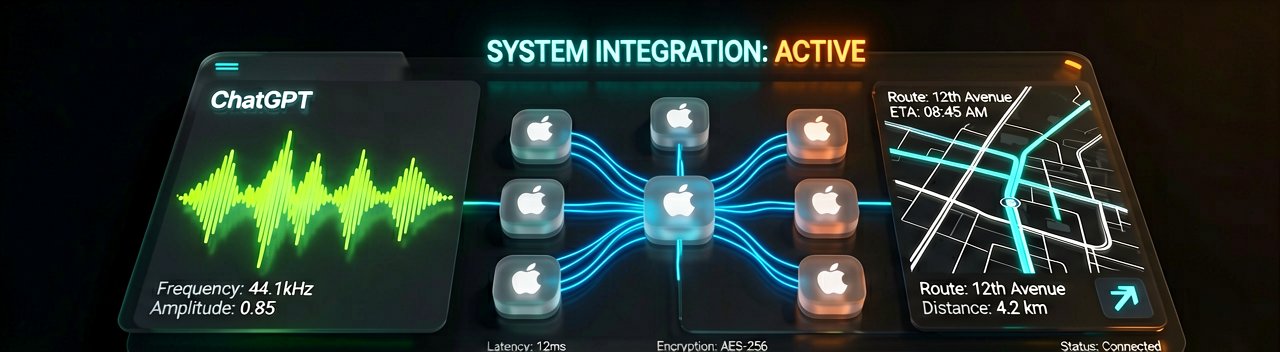
What this doesn't do is compete with built-in vehicle AI systems. Tesla's in-car AI, for example, has direct access to vehicle telemetry and can control climate, windows, and navigation. ChatGPT in CarPlay operates in a sandbox. It's a chatbot with a voice, not a vehicle assistant. The distinction matters for users expecting the kind of deep integration that would make this feel like a native feature rather than an app running through a bridge.
The business implications are subtle but present. By making ChatGPT Voice available across all subscription tiers in CarPlay, OpenAI is removing friction for casual users. Someone who wouldn't pay for Plus might find themselves using the voice feature regularly while commuting. That habitual use could drive conversion to paid plans. It's a classic freemium strategy applied to an automotive context.
There's also the question of what happens when other AI services get similar access. If ChatGPT can integrate with CarPlay, why not Google's Gemini or Microsoft's Copilot? The automotive dashboard is becoming another battleground for AI dominance. Each integration adds another voice competing for your attention while you're trying to drive. Whether that's good for users or just good for the AI companies remains to be seen.
For now, the feature works as advertised. You can talk to ChatGPT through your car's speakers. You can continue conversations from your phone. You can't ask it for directions or have it adjust your climate control. The limitations are clear, the setup is straightforward, and the safety warnings are prominent. Whether users actually pay for it remains the real question.
Artūras Malašauskas is an AI Systems Integrator with 20+ years of production-grade web engineering experience. He has designed, shipped, and scaled enterprise Python/PHP systems for logistics, SaaS, and public-sector clients. For the past year, he has focused exclusively on AI integrations: deploying open-source LLMs, building generative media pipelines (image, audio, video), and engineering multi-agent workflows for real production environments. His standard: reproducibility, security, cost-efficient inference—no vaporware. He documents and evaluates emerging AI tooling, separating verified capabilities from marketing noise. Technical editor at: muza-ai.eu, ai-verslas.lt, ai-naujinos.lt Connect on LinkedIn
Comments