Space and Time Launches Dreamspace AI Builder on Base
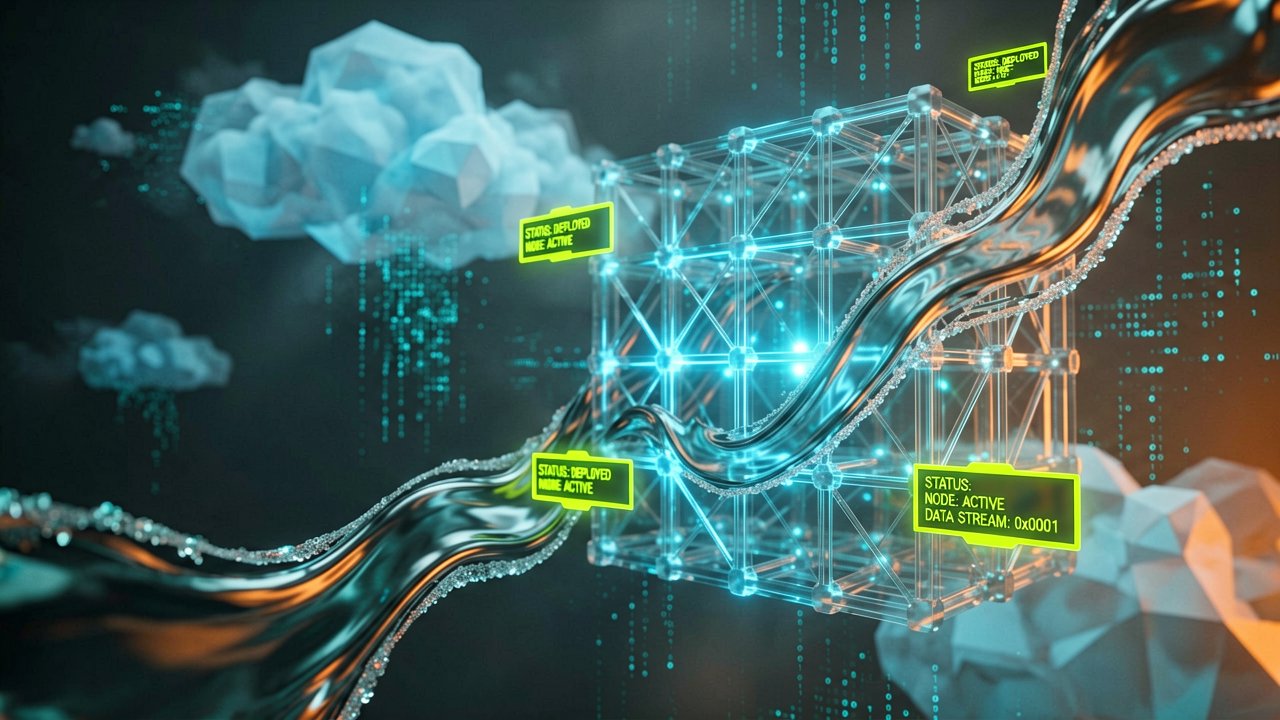
The Microsoft-backed blockchain network Space and Time officially launched Dreamspace on Thursday, an AI-powered application builder designed to let users create and deploy on-chain applications without writing a single line of code. The platform has been in beta since August 2025, and the company claims more than 34,000 apps were created before the public release. This volume suggests a significant appetite for simplified development tools, though the quality of those 34,000 apps remains an open variable.
According to Space and Time co-founder Scott Dykstra, the core value proposition is ownership and security. The tool generates, audits, and deploys smart contracts alongside the front-end applications that interact with them. Dykstra told Decrypt that the goal is making it easy to deploy an app where the creator actually owns, signs, and deploys the contract to an Ethereum-based chain. It is a specific pivot from general AI coding assistants that might leave the underlying logic opaque.
Dykstra compared Dreamspace to Lovable, an AI coding platform that lets users create apps from plain-language prompts. However, he noted a critical distinction. Anybody can use a tool like Lovable to build a website or a little app that has a back end, but Dreamspace is specifically designed to generate smart contracts, audit them, and deploy them with a front end that understands the smart contract. This distinction matters because a standard web app does not require the same level of cryptographic verification as a financial smart contract.
The technical stack relies heavily on enterprise infrastructure. Dreamspace was built using Microsoft’s Azure AI Foundry and Azure OpenAI, with front ends hosted on Azure and smart contracts deployable to any Ethereum Virtual Machine-compatible blockchain. The platform defaults to Base, Coinbase’s Ethereum layer-2 network. This choice was not accidental; Base supported the product during beta testing and user growth. Space and Time said Base enables transactions costing less than one cent and speeds of under one second.

For a developer, the physical experience of this tool removes the friction of terminal windows and compiler errors. Instead of wrestling with syntax, the user describes the logic, and the system handles the deployment. (It is a relief to not debug a gas limit error at 2 AM, frankly). The interface abstracts away the complexity of the blockchain layer, presenting a unified workflow where the data layer handles itself. This allows the creator to focus on what they want to create rather than how the data is stored.
Adoption metrics extend beyond the beta numbers. Dreamspace has already onboarded about 140,000 students, Dykstra said, while the company said schools in Indonesia have created AI labs and curriculum centered around the platform. This educational push indicates a strategy to capture the next generation of builders early. If students learn to build on Dreamspace first, they are more likely to deploy on Base later. It is a long-term play for ecosystem lock-in.
The financial backing behind the project is substantial. The initiative is backed by M12, which led a $20 million investment in Space and Time in 2022, according to U.Today. Space and Time was founded in 2022 and provides blockchain-based data infrastructure for on-chain finance. The company has increasingly pushed into AI, including through last year’s partnership with Bless Network to support AI agents. This funding suggests confidence in the convergence of AI and blockchain infrastructure.
Nate Holiday, Co-Founder of Space and Time and creator of Dreamspace, emphasized the infrastructure aspect. He stated that Space and Time was built to make verifiable data accessible to any application, at any scale. Dreamspace is where that infrastructure meets the people building the next wave of the internet. When the data layer handles itself, the only thing left to focus on is what you want to create. This philosophy aligns with the broader industry trend of abstracting complexity away from the end user.

On the network side, Eric Brown, Head of AI Developer Relations at Base, commented on the partnership. He noted they are building Base as an open stack for the global economy, making it possible for anyone to participate as a builder, not just a user. This exciting new project makes starting an onchain business as simple as having an idea worth building. The low transaction costs and high speed of Base are critical for this model to work economically.
However, the promise of "no-code" smart contracts carries inherent risks. While the tool audits the contracts, the AI generation process is not infallible. Users must trust the audit mechanism provided by the platform. If the AI hallucinates a vulnerability, the creator signs and deploys it anyway. The ease of deployment lowers the barrier to entry, but it does not eliminate the need for technical literacy. Users still need to understand what they are deploying, even if they do not write the code.
The platform is part of Space and Time’s broader collaboration with Microsoft, integrating enterprise-grade AI infrastructure with blockchain-based data verification. This integration allows for scalable data handling, which is often a bottleneck in on-chain applications. By leveraging Azure for the front end and Base for the chain, the system attempts to bridge the gap between traditional cloud computing and decentralized finance.
Whether users actually pay for it remains the real question. The tool is free to use during the initial launch phase, but monetization strategies for AI-generated smart contracts are still evolving. If the platform takes a cut of transaction fees or charges for advanced auditing, it could impact the economics for small creators. The 34,000 beta apps prove interest, but sustainable revenue is a different metric.
Ultimately, Dreamspace represents a shift in how blockchain applications are built. It moves the focus from code quality to prompt quality. The physical reality of interacting with the tool is smoother, but the underlying risks of the blockchain remain. Time will tell if the AI can reliably secure the contracts it generates. For now, the infrastructure is ready, and the builders are waiting.
Artūras Malašauskas is an AI Systems Integrator with 20+ years of production-grade web engineering experience. He has designed, shipped, and scaled enterprise Python/PHP systems for logistics, SaaS, and public-sector clients. For the past year, he has focused exclusively on AI integrations: deploying open-source LLMs, building generative media pipelines (image, audio, video), and engineering multi-agent workflows for real production environments. His standard: reproducibility, security, cost-efficient inference—no vaporware. He documents and evaluates emerging AI tooling, separating verified capabilities from marketing noise. Technical editor at: muza-ai.eu, ai-verslas.lt, ai-naujinos.lt Connect on LinkedIn
Comments