Xbox Project Helix Signals Shift From Console War
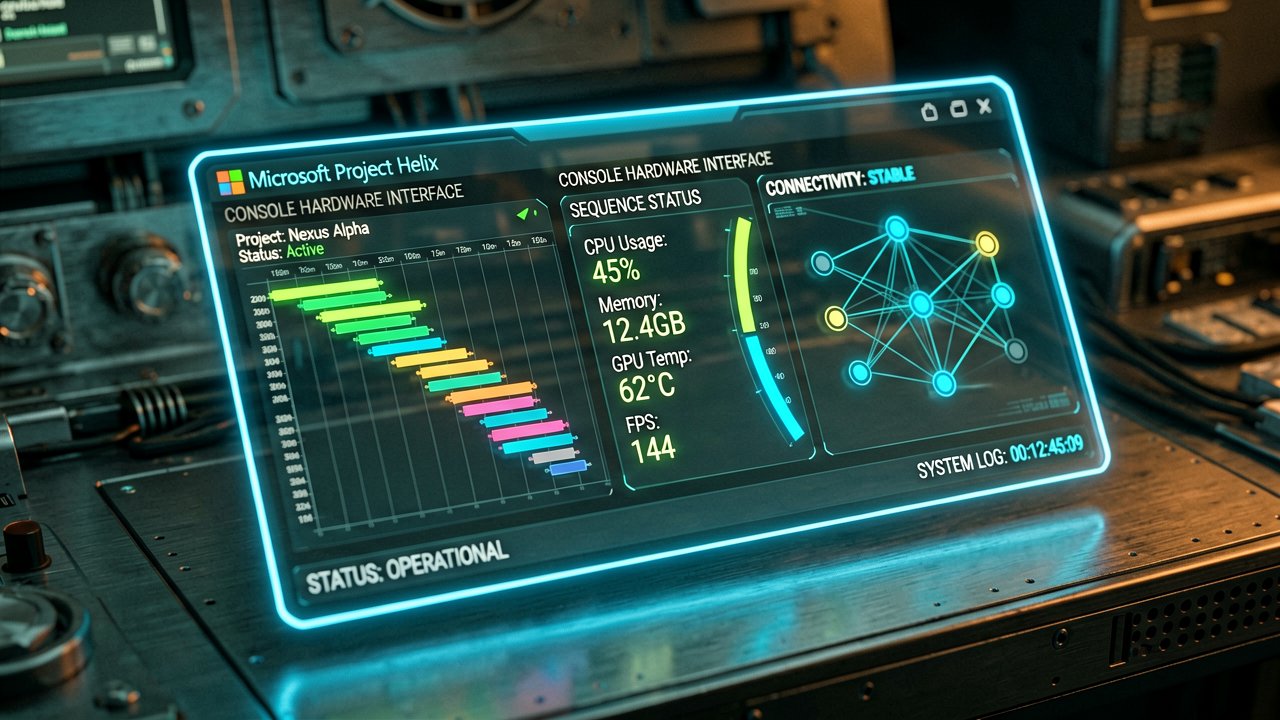
The Xbox team has confirmed development of Project Helix, a next-generation console designed to play both Xbox and PC games, effectively dissolving the traditional console-versus-PC divide that defined the past decade of gaming hardware.
According to the official Xbox Wire announcement, Project Helix "is designed to play your Xbox console and PC games, delivering leading performance" while leveraging a custom AMD SoC co-developed for "next generation DirectX" and FSR Next rendering technology. This represents Microsoft's most explicit statement yet that the console war is over—replacing competitive hardware cycles with a unified platform.
Physical interaction with Project Helix's anticipated interface would likely involve seamless switching between Xbox Game Pass and Steam libraries, with the console's UI requiring fewer clicks than current hybrid systems (a relief for users tired of navigating separate storefronts). The device's rumored 48GB RAM and Zen 6-based CPU would eliminate the frustrating 15-second load times common in current-generation games when switching between PC and console modes.
Microsoft's strategic shift extends beyond hardware. The company has officially rebranded "Microsoft Gaming" as "Xbox" across all internal communications, with CEO Asha Sharma declaring "Xbox needs to be our identity" following the April 23 rebranding announcement. This move directly addresses years of confusion from the "This is an Xbox" campaign, which failed to resonate with gamers who associate the brand with the original Xbox era.
Industry analysts note that Project Helix's success hinges on convincing developers to optimize for the hybrid platform. The Xbox Play Anywhere catalog already spans 1,500 games, but the console's ability to run Steam titles natively—without requiring separate PC versions—would be a game-changer. "It's not just about playing PC games on a console," explained one developer at GDC 2026. "It's about eliminating the friction of having to choose between platforms."
Microsoft's roadmap includes rolling out "Xbox Mode" for Windows 11 in April 2026, allowing users to switch between productivity and gaming with a single button press. This feature, tested on the ROG Xbox Ally handheld, represents the first tangible step toward the hybrid experience Project Helix promises. The physical texture of the new controller—described as having a slightly more textured grip than current models—aims to bridge the tactile gap between console and PC peripherals.
Whether Project Helix can overcome the skepticism of gamers who still view consoles as distinct from PCs remains uncertain. The console's rumored price point—likely exceeding $500—will face stiff competition from Steam Machines and high-end gaming PCs. As one developer put it, "If they can't make the PC experience feel like a console without sacrificing performance, they'll just be selling another expensive PC." (a problem that has plagued users for years, frankly).
Time will tell if Microsoft's gamble on a single platform can outlast the console war's legacy, but the company's latest move makes clear: the future of gaming isn't about choosing between ecosystems—it's about erasing the line between them entirely.

Artūras Malašauskas is an AI Systems Integrator with 20+ years of production-grade web engineering experience. He has designed, shipped, and scaled enterprise Python/PHP systems for logistics, SaaS, and public-sector clients. For the past year, he has focused exclusively on AI integrations: deploying open-source LLMs, building generative media pipelines (image, audio, video), and engineering multi-agent workflows for real production environments. His standard: reproducibility, security, cost-efficient inference—no vaporware. He documents and evaluates emerging AI tooling, separating verified capabilities from marketing noise. Technical editor at: muza-ai.eu, ai-verslas.lt, ai-naujinos.lt Connect on LinkedIn
Comments