Tripo 3.0 Launches AI 3D Creation Standard
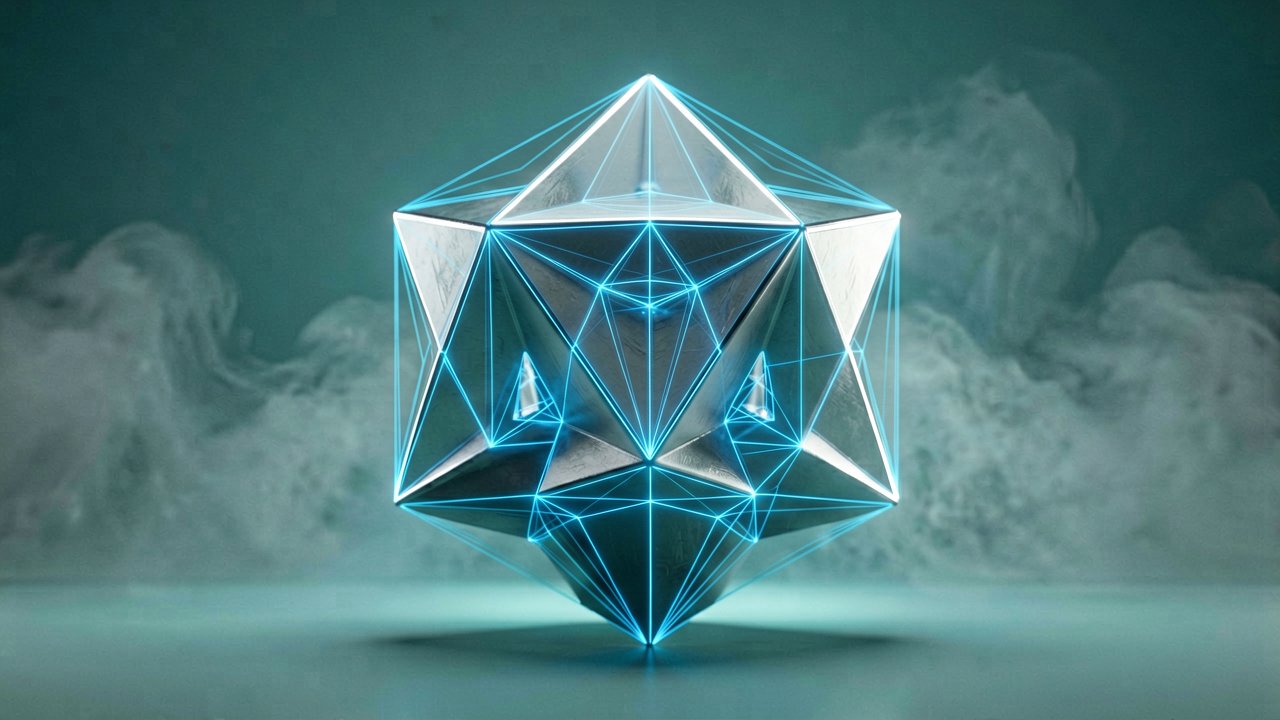
The Tripo platform has officially launched its v3.0 suite, positioning itself as a new standard for AI-driven 3D creation. Unlike earlier tools that produced blobby, topology-challenged models, Tripo 3.0 generates assets with "crisp edges and coherent structures" directly from text or images, according to its official blog post.
Users drag a 5MB JPG, PNG, or WEBP into the interface, and within seconds, Tripo converts it into a high-fidelity 3D model with "sharp geometry and solid topology." The process feels less like magic and more like dropping a puzzle piece into place—no more wrestling with Blender’s vertex tools to fix a wonky mesh. The system’s "Intelligent Segmentation" splits complex models into editable parts, while "AI Texturing" applies 4K PBR-ready materials with a single click, eliminating the need to manually paint micro-details on a character’s armor.
What’s new in v3.0? The blog details "Ultra Mode" for 2 million-polygon models (ideal for intricate jewelry or large environments) and "refined geometry" that eliminates artifacts like double-layer surfaces. A beta phase involving 40,000+ developers helped iron out issues—users reported earlier versions struggled with "surface gaps" that made models unusable for 3D printing. Now, Tripo claims its output matches "real-world nuance," from fabric textures to embedded text on a prop.
Industry adoption speaks louder than specs: Tripo reports 100 million models created by 6.5 million global users, with 700+ enterprise clients. The Scenario platform integration demonstrates real-world utility, embedding Tripo 3.0 into end-to-end workflows. Creators now move from "text prompt to animation-ready character" in a single interface—no more exporting to Mixamo or wrestling with Maya rigging.
For mobile users, the Apple App Store version (rated 3 stars despite "shocking" speed) simplifies the process: upload a photo, tap "Generate," and export to Blender or a 3D printer. One user noted: "My model looked ready in seconds. Everyone thought I spent days in Blender." The app’s free tier offers monthly credits, but premium plans start at $10/month for full access.
Crucially, Tripo avoids the "generative AI" hype trap. It doesn’t claim to replace artists—it streamlines the tedious "middle layer" of 3D work. As one indie dev put it: "Saved days of work. Assets dropped right into my game." The focus on "production-level detail" (not just "cool renders") matters for industries like game dev, where a model’s topology dictates whether it runs smoothly on a console.
Whether users actually pay for it remains the real question. The $10/month price point sits between free tiers (like NVIDIA Omniverse) and enterprise tools (like Maya). But with 700+ industry clients already using Tripo, the platform’s bet on "smarter algorithms, faster results, and lower cost" isn’t just marketing—it’s a workflow shift. (A problem that has plagued users for years, frankly.)
Artūras Malašauskas is an AI Systems Integrator with 20+ years of production-grade web engineering experience. He has designed, shipped, and scaled enterprise Python/PHP systems for logistics, SaaS, and public-sector clients. For the past year, he has focused exclusively on AI integrations: deploying open-source LLMs, building generative media pipelines (image, audio, video), and engineering multi-agent workflows for real production environments. His standard: reproducibility, security, cost-efficient inference—no vaporware. He documents and evaluates emerging AI tooling, separating verified capabilities from marketing noise. Technical editor at: muza-ai.eu, ai-verslas.lt, ai-naujinos.lt Connect on LinkedIn
Comments