NipsApp Shifts to AI-VR Medical, Nuclear Training
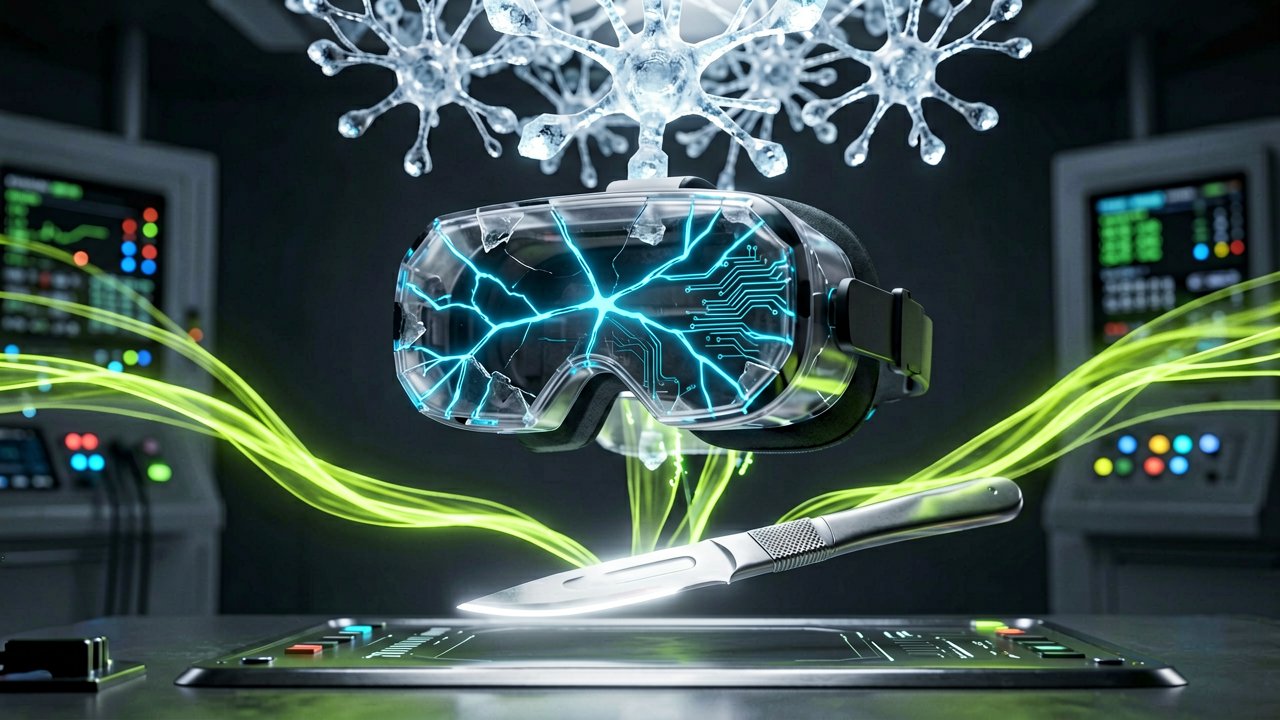
NipsApp Game Studios, a Trivandrum-based game developer founded in 2010, announced a strategic pivot toward AI-powered VR solutions for high-stakes professional training on April 21, 2026, according to a GlobeNewswire press release.
CEO Nipin P N described the shift as moving beyond "keeping someone engaged for 30 seconds" in games to creating "real infrastructure" where AI in VR reacts to trainee actions in real time. The surgical training system generates dynamic patient scenarios: if a trainee makes a mistake, bleeding worsens or vitals shift, with AI providing subtle guidance before errors become ingrained habits.
For industrial applications, NipsApp targets nuclear safety and heavy manufacturing through "cold practice" – repeated simulations of rare high-risk events like reactor coolant failures. Unlike traditional drills, each session presents unique variations to prevent rote memorization, ensuring workers develop adaptive decision-making skills before facing actual emergencies.
Nipin emphasized the company's game development expertise as a strategic advantage: "Every field will end up with some form of simulation. Game developers just happen to be very good at building them." The approach leverages NipsApp's existing Unity and Unreal Engine capabilities to create physics-based, responsive environments previously absent in medical and industrial training.
Healthcare pilots are scheduled for 2026, with industrial safety partnerships targeting 2027. Nipin noted the challenge in regulated fields: "These are regulated fields where trust matters more than hype. Early demos won't be enough. The company will need real results." The announcement explicitly excludes combat applications, focusing instead on "AR tools for medics and logistics teams" with a clear ethical boundary: "There's a clear difference between helping someone save a life and building something that harms."
NipsApp's website confirms this shift through its VR medical training platform, which includes case studies like "MediVerse VR" for anatomy education and "Neonatal VR Training" for NICU workflows. The company cites "109+ verified reviews on Clutch" for its existing medical VR solutions, though the new AI-driven systems represent a significant evolution beyond current offerings.
The announcement positions NipsApp at the intersection of two critical trends: the maturation of VR as a training tool beyond gaming, and AI's transition from novelty to operational necessity in high-risk professions. By leveraging game development's core strengths in real-time interaction and user engagement, the company aims to address a persistent gap in professional training where "mistakes aren't an option."
Artūras Malašauskas is an AI Systems Integrator with 20+ years of production-grade web engineering experience. He has designed, shipped, and scaled enterprise Python/PHP systems for logistics, SaaS, and public-sector clients. For the past year, he has focused exclusively on AI integrations: deploying open-source LLMs, building generative media pipelines (image, audio, video), and engineering multi-agent workflows for real production environments. His standard: reproducibility, security, cost-efficient inference—no vaporware. He documents and evaluates emerging AI tooling, separating verified capabilities from marketing noise. Technical editor at: muza-ai.eu, ai-verslas.lt, ai-naujinos.lt Connect on LinkedIn
Comments