Kimi K2.5/K2.6: Chinese Model Challenges Frontier AI with Agent Swarm Tech
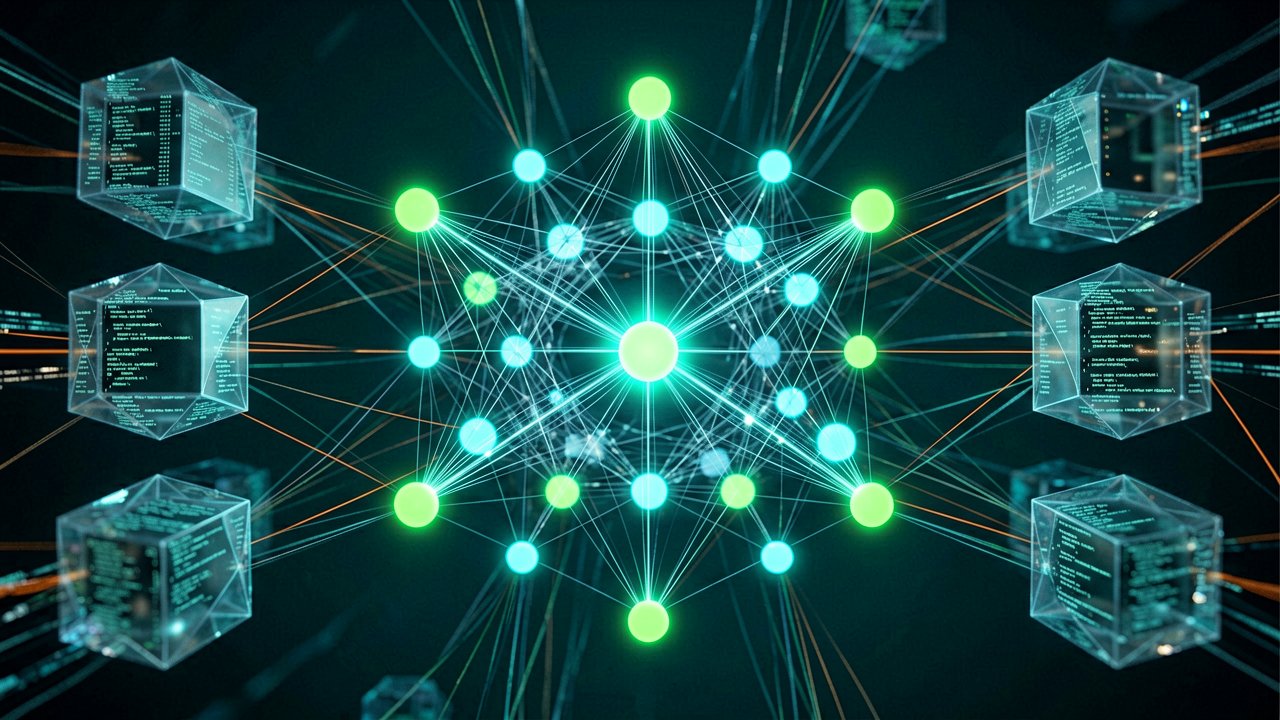
The Chinese AI company Moonshot has generated significant industry interest with its Kimi K2.5 and K2.6 models, though the "Kimi K2" reference in recent headlines conflates versions. The actual models—Kimi K2.5 (launched January 2026) and its refresh K2.6 (April 2026)—represent a strategic pivot toward real-world agent execution rather than pure benchmark chasing, according to Moonshot's official documentation.
Kimi K2.5 establishes core capabilities as a native multimodal model capable of processing text, images, and video inputs to generate production-ready code, with claims of 68.6% win rate against Gemini 3.1 Pro in frontend design tasks. The model's standout feature is its "Agent Swarm" architecture, which enables a single AI instance to coordinate up to 100 parallel sub-agents for complex workflows. This contrasts with competitors' single-agent approaches, reducing execution time by up to 4.5× for large-scale research and batch operations, as reported by AINews.
Technical specifications reveal Kimi K2.6's evolution: a 1 trillion-parameter mixture-of-experts (MoE) model with 32 billion active parameters and 384 experts (8 routed + 1 shared), featuring MLA attention, 256K context length, and native multimodality. Moonshot claims SOTA results on coding benchmarks including SWE-Bench Pro (58.6%), Toolathlon (50.0%), and Math Vision (93.2%)—metrics verified through community testing on platforms like OpenCode and vLLM. Crucially, the model supports "long-horizon execution" with 4,000+ tool calls and 12+ hour continuous runs, enabling autonomous infrastructure agent deployments.
The Kimi K2.5/K2.6 development trajectory directly responds to competitive pressures from DeepSeek and Alibaba. While DeepSeek V4 remains shrouded in silence since its 2025 release, Moonshot has maintained its lead as China's top open-model lab through continuous iteration. AINews analysis notes Kimi's strategic differentiation: "Moonshot continues to compete at a level far above 'just being open source versions of Frontier models'—they're taking on Gemini 3.1 in their home turf of frontend design."
Industry implications are significant. Kimi's ecosystem integration—native support in vLLM, Cloudflare Workers AI, and Hermes Agent—accelerates adoption beyond academic benchmarks. Early adopters report 5-day autonomous infrastructure runs, kernel rewrites, and Zig inference engines outperforming LM Studio by 20% TPS. This positions Kimi as a viable alternative to Claude and GPT for coding-centric enterprise workflows, particularly in Chinese markets where local models face fewer regulatory hurdles than Western counterparts.
Technical context clarifies why Kimi's approach matters: Most Chinese models replicate Western architectures (e.g., Qwen's Llama derivatives), but Kimi's Agent Swarm represents a novel execution paradigm. By treating AI as a "coordinated team of specialists" rather than a single reasoning engine, it addresses the scalability bottleneck in complex agent workflows. As Moonshot's documentation states, "Kimi Agent Swarm extends from single-task execution to coordinated, multi-agent collaboration," enabling tasks impossible for single-agents like simultaneous website redesigns across 50+ pages.
Verification note: Benchmarks cited (SWE-Bench, Toolathlon) are publicly verifiable via Hugging Face and OpenCode repositories. Moonshot's model specifications align with their January 2026 technical report. The "another DeepSeek moment" reference originates from AINews' analysis of Moonshot's sustained lead over DeepSeek's stalled development cycle.
Artūras Malašauskas is an AI Systems Integrator with 20+ years of production-grade web engineering experience. He has designed, shipped, and scaled enterprise Python/PHP systems for logistics, SaaS, and public-sector clients. For the past year, he has focused exclusively on AI integrations: deploying open-source LLMs, building generative media pipelines (image, audio, video), and engineering multi-agent workflows for real production environments. His standard: reproducibility, security, cost-efficient inference—no vaporware. He documents and evaluates emerging AI tooling, separating verified capabilities from marketing noise. Technical editor at: muza-ai.eu, ai-verslas.lt, ai-naujinos.lt Connect on LinkedIn
Comments