Inside the Machine: Dissecting the Multi-Agent Architecture of Sakana AI's Fugu-Cyber
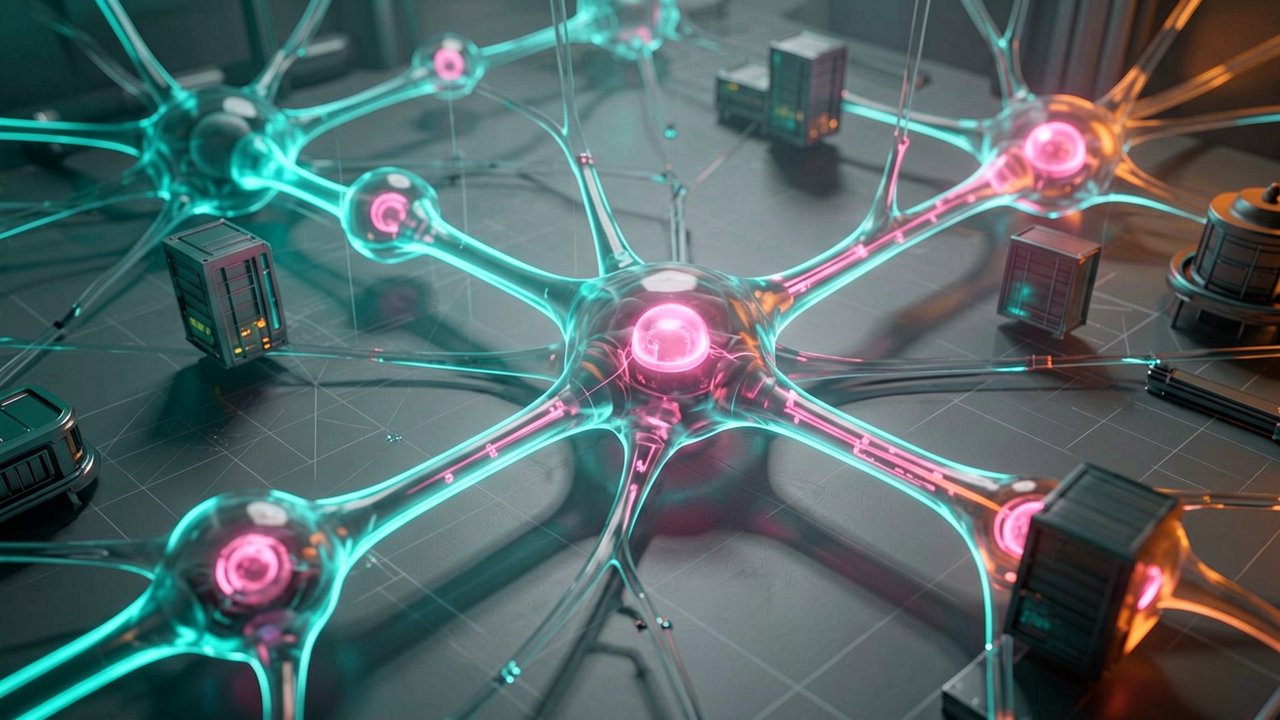
The arms race in automated defensive engineering has taken a sharp turn away from brute-force scale. Instead of chasing multi-trillion parameter monolithic systems, Tokyo-based Sakana AI is double-downing on systemic intelligence. Their latest release, Fugu-Cyber, is a security-tuned orchestration endpoint that functions less like an omniscient single brain and more like an elite InfoSec incident response team. By routing specialized tasks to a dynamic pool of underlying expert agents behind a unified API, the architecture proves that clever orchestration can match or exceed the capabilities of raw, hardware-heavy frontier models.
At its core, the system relies on foundational routing principles established in the company's GitHub repository documentation for Fugu. Rather than forcing a singular neural network to simultaneously master proof-of-concept exploit generation, log parsing, and threat intelligence synthesis, Fugu-Cyber uses a compact coordinator model. This central "conductor" is optimized via reinforcement learning and evolutionary strategies to actively design agent-to-agent communication topologies on the fly. When a complex security prompt enters the endpoint, the conductor deconstructs the objective, writes tailored instructions for individual worker LLMs, and synthesizes their collective output without needing complex weight-merging or shared architectures.
Decoding the Infrastructure and Task Allocation
This decentralized delegation shifts the heavy lifting away from a single vendor, mitigating API lock-in and systemic failures. In practice, the orchestrator evaluated on security reasoning might hand an obfuscated binary to a code-specialist sub-agent, route historical threat signatures to a retrieval-heavy model, and leverage a third model to draft the final detection signature. By operating as a smart administrative layer, Fugu-Cyber maximizes collective system performance. It effectively decouples high-tier security intelligence from massive local hardware dependencies.
The Real-World Numbers Behind the Hype
The ultimate validation of this structural philosophy shows up in its specialized benchmark performance. Fugu-Cyber secured an 86.9% rating on the CyberGym vulnerability research matrix and a 72.1% score on Microsoft's CTI-REALM evaluation framework. According to analysis on Tech Times, these marks establish parity with cybersecurity-focused enterprise frontier models. The CyberGym benchmark pushes systems to generate functional proofs-of-concept that can reliably crash a pre-patch software build while leaving the post-patch configuration unaffected—a task spanning over 1,500 real-world open-source testing instances.
However, looking closely at the data reveals where human intervention remains essential. The 72.1% performance metric on CTI-REALM, which evaluates a model's trajectory across threat intelligence and detection rule generation, means nearly three out of ten automated output attempts require human validation before entering production environments. Sakana AI is maintaining tight control over this powerful tool; access to the Fugu-Cyber API is strictly managed through a specialized Token Plan. Enterprises must pass manual use-case reviews and adhere to a strict defensive-use acceptable use policy, ensuring these automated orchestration mechanics remain firmly on the defensive side of the digital line.
Behind the Scenes: The Orchestration Pipelines and Data Routing
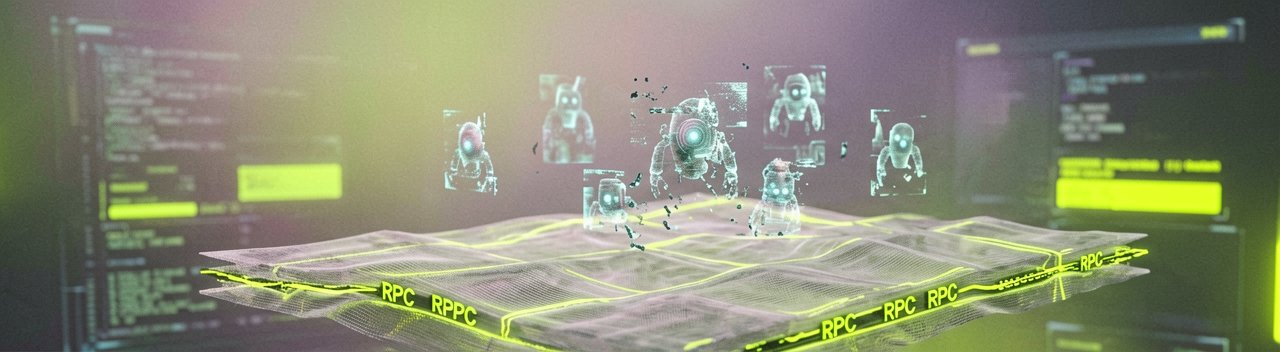
Behind the Scenes: Building an orchestration framework capable of defending enterprise infrastructure requires solving severe synchronization and telemetry bottlenecks. At the systems architecture level, Fugu-Cyber moves away from traditional, stateful agent loops that rely on sequential chain-of-thought prompting. Instead, it implements a highly parallelized directed acyclic graph (DAG) execution engine. This engine treats individual sub-agents as stateless microservices, using an ultra-low latency memory fabric to pass vector embeddings and intermediate payload states across concurrent execution threads. This prevent execution stalls when multiple sub-agents analyze the same compromised memory dump or multi-gigabyte server log simultaneously.
To keep API overhead and latency under control, the central conductor relies on aggressive prompt-caching and state-compression algorithms. When a security alert triggers the system, the orchestrator does not pass raw, unformatted logs to every sub-agent. A proprietary token-reduction pipeline first sanitizes the data stream, stripping out repetitive system noise while preserving critical cryptographic hashes, IP addresses, and memory addresses. This optimized state context is then dynamically sliced and routed only to the specific expert models required for that phase of the incident lifecycle, drastically lowering total processing time.
Memory management within this multi-agent fabric uses a strict tiering system designed to prevent context window saturation during prolonged security incidents. Fugu-Cyber maintains a localized, high-speed key-value store for active session variables alongside an asynchronous vector database for historical threat intelligence retrieval. If an analysis thread begins to exceed the context limits of a specialized worker model, the orchestration layer automatically executes a semantic summary pass. This distills thousands of lines of execution logs into high-density metadata chips, preserving the structural lineage of an attack chain without crashing the worker sub-processes.

The code execution environment itself operates inside hardened, sandboxed micro-containers to mitigate the inherent risks of automated exploit parsing. When the orchestrator commands a sub-agent to validate a potential vulnerability or decode an obfuscated PowerShell script, the operations run within a strictly isolated, ephemeral kernel layer. This sandbox streams real-time system call telemetry back to the central conductor via secure gRPC channels. If a payload attempts an unauthorized network connection or unauthorized privilege escalation within the testing environment, the conductor immediately kills the container, logs the malicious signature, and updates the active defense policy.
To ensure high accuracy across diverse targets, the platform uses an automated prompt-tuning loop that adapts to different target operating systems and code bases on the fly. Rather than relying on static system instructions, Fugu-Cyber dynamically adjusts the temperature and generation constraints of its sub-agents based on the complexity of the code under inspection. A low-level C binary analysis triggers high-precision, low-temperature constraints to prevent hallucinations in memory offset calculations. Conversely, high-level behavioral analysis of a social engineering campaign permits a higher temperature setting, allowing the models to cross-reference nuanced linguistic patterns against known advanced persistent threat indicators.
Reading Between the Lines: The Reality of Autonomous Cyber Defense
Reading Between the Lines: The celebratory press releases surrounding Fugu-Cyber’s benchmark victories obscure a fundamental truth about automated security testing: standardized evaluations rarely mirror the chaotic reality of live enterprise infrastructure. Achieving an 86.9% score on a synthetic matrix like CyberGym is a triumph of closed-loop engineering, but it assumes a world where system configurations are clean, documentation is accurate, and target environments behave predictably. In the wild, an autonomous orchestrator faces a far more hostile landscape of undocumented legacy APIs, conflicting internal security policies, and fragile production databases that might crash if an automated tool scans them too aggressively.
A glaring contradiction lies in the architectural reliance on multi-agent collaboration. While distributing tasks across a pool of specialized LLMs lowers hardware dependencies and circumvents API lock-in, it introduces a massive, complex surface area for orchestration errors. If the central conductor misinterprets a single token within an obfuscated malicious script, that error cascades down the entire dependency graph, causing sub-agents to waste valuable compute cycles analyzing non-existent threat vectors. In a high-stakes ransomware incident where every second matters, the latency added by agent-to-agent negotiations, semantic summarization loops, and context slicing could easily become a liability rather than an asset.
Furthermore, the security industry must grapple with the inevitable democratization of these exact same orchestration mechanics. Sakana AI might restrict access to its Fugu-Cyber API through a vetted Token Plan and strict defensive-use policies, but the underlying architectural blueprints are now public knowledge. Red teams and state-sponsored adversaries will inevitably replicate this parallelized DAG infrastructure to automate complex, multi-stage cyberattacks. When an autonomous defensive orchestrator meets an equally sophisticated autonomous offensive orchestrator, the battleground shifts from human ingenuity to raw algorithmic throughput, raising the stakes for everyone involved.
Ultimately, the 72.1% score on the CTI-REALM framework serves as a sobering reminder that human analysts cannot simply hand over the keys to the kingdom just yet. A system that requires manual validation for nearly three out of every ten threat intelligence outputs is not fully autonomous; it is an incredibly sophisticated, highly demanding assistant. Until orchestration models can close that remaining gap without generating catastrophic false positives, the true value of Fugu-Cyber will not be found in replacing human incident response teams, but in absorbing the overwhelming tide of low-level telemetry so that human minds can focus on the anomalies the machines still miss.
"We are rapidly moving toward an era where AI agents will seamlessly detect, isolate, and patch complex software vulnerabilities in milliseconds, leaving human security teams free to handle the far more difficult task of explaining to the board of directors why the automated patch just accidentally disconnected the entire accounting department."
Artūras Malašauskas is an AI Systems Integrator with 20+ years of production-grade web engineering experience. He has designed, shipped, and scaled enterprise Python/PHP systems for logistics, SaaS, and public-sector clients. For the past year, he has focused exclusively on AI integrations: deploying open-source LLMs, building generative media pipelines (image, audio, video), and engineering multi-agent workflows for real production environments. His standard: reproducibility, security, cost-efficient inference—no vaporware. He documents and evaluates emerging AI tooling, separating verified capabilities from marketing noise. Technical editor at: muza-ai.eu, ai-verslas.lt, ai-naujinos.lt Connect on LinkedIn
Comments