Cisco Antares Signals a Democratization Shift in AI-Powered DevSecOps
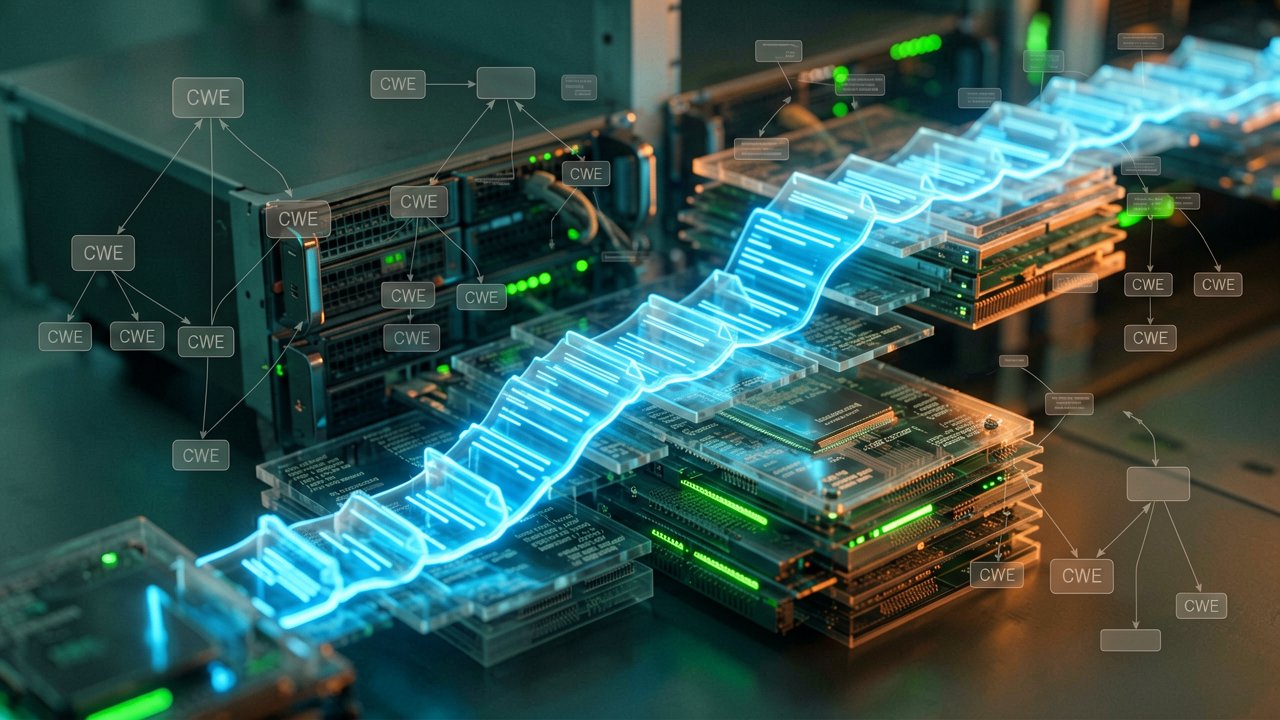
The economics of enterprise software security have shifted fundamentally with Cisco’s launch of the Antares family of open-weight small language models (SLMs). Developed by the Cisco Foundation AI research group, these hyper-efficient models—comprising the Antares-350M, Antares-1B, and a forthcoming Antares-3B—are fine-tuned from IBM Granite 4.0 checkpoints specifically to pinpoint vulnerabilities within vast, unfamiliar repositories Cisco. By driving token and compute overhead down, this release positions automated, agentic repository exploration as a highly affordable utility rather than an expensive, frontier-class luxury reserved solely for massive enterprise budgets.
Historically, deploying advanced, closed-source artificial intelligence systems for codebase triage required substantial cloud API spend and introduced significant regulatory friction. Antares addresses these hurdles by behaving as an evidence-driven agent that navigates codebases via local terminal command traces to isolate potentially vulnerable implementation files based on Common Weakness Enumeration (CWE) descriptions InfoWorld . This sub-dollar operational framework brings near-frontier security reasoning straight into local developer pipelines without exposing proprietary source code to external cloud environments.
By operating up to 172 times cheaper than legacy commercial closed models, Cisco alters the structural math of continuous verification within DevSecOps teams Help Net Security. The Apache 2.0 release of the 350M and 1B weights means any size organization can now gate code output locally and continuously, closing the defense gap at a time when malicious actors are rapidly deploying their own automated AI agents to discover exploit paths.
Disrupting the AppSec Toolchain with Agentic Localization
The technical innovation of Antares hinges on its specialization in vulnerability localization rather than full-spectrum detection or automated patching. Rather than executing simple static regex matching or pattern checks like conventional SAST tools, Antares acts as a read-only exploration agent Wavect. Given a specific CWE ID and a generic category description, it leverages a maximum of 15 terminal commands to actively open files, trace package imports, map out call paths, and revise its security hypotheses dynamically.

This specialized design dramatically shortens the manual triage queue for application security engineers. When a new vulnerability advisory lands, security professionals frequently spend multiple hours tracing framework conventions to figure out where an architectural flaw actually lives. By automating this initial excavation pass, Antares hands engineers a tightly ranked shortlist of candidate files in standard SARIF or JSON formats, allowing downstream security teams to immediately focus on confirming exploitability, validating severe flaws, and writing fixes TechRepublic.
Navigating the Security Realities of Local SLM Deployment
While the elimination of model fees democratizes advanced code reasoning, shifting AI infrastructure to local deployments introduces specialized engineering guardrails. Because Antares models are optimized strictly for autonomous repository navigation and code search, they did not receive conventional stand-alone safety alignments for conversational use cases. Enterprise software teams must actively isolate these code-analysis runtimes, enforce strict read-only access controls, and actively audit model provenance to mitigate emerging AI model supply-chain vulnerabilities.
The ultimate market impact of the Antares family lies in its competitive efficiency across resource-constrained environments. On Cisco’s internal Vulnerability Localization Benchmark, the larger Antares variants achieve near-parity with frontier closed-source models while finishing long sweeps quickly enough to run on individual code commits. This rapid execution profile repositions automated code verification as an essential, non-blocking gating mechanism capable of validating human-written and agent-generated software changes alike before they ever reach a production environment.
What Most Reports Miss: The Architectural Shift From Gatekeeper to Agentic Peer
The standard media narrative surrounding Cisco’s Antares release focuses heavily on cost containment, framing sub-dollar AI as a simple budgeting victory for cash-strapped DevSecOps teams. However, the truly disruptive transformation lies in how this technology fundamentally flips the psychological dynamics of enterprise application security. For decades, security teams have operated as friction-heavy gatekeepers, swooping in at the tail end of the software development lifecycle to deliver overwhelming spreadsheets filled with thousands of opaque static analysis warnings. By packaging highly optimized localization logic into localized, open-weight models that execute directly on an engineer's workstation, security shifts from an external corporate audit to an immediate, local feedback loop that acts as an engineering peer.
This structural change addresses a persistent industry bottleneck: developer fatigue and the systemic ignoring of traditional security tooling. Legacy Application Security Testing platforms are notoriously brittle, triggering sweeping false positives that force developers to waste hours justifying secure code to an automated scanner. Because Antares acts as an active investigator that utilizes an internal terminal trace to verify context before generating a report, it filters out irrelevant code paths by design. This structural approach mirrors the manual triage processes of senior penetration testers, delivering actionable evidence rather than generic pattern matches, which builds unprecedented trust between software engineers and automated defense systems.
From a macroeconomic perspective, Cisco’s strategic reliance on the Apache 2.0-licensed IBM Granite foundation architecture marks a deliberate pushback against vendor lock-in within the AI ecosystem. Large enterprise buyers are increasingly wary of becoming entirely dependent on centralized cloud models that can alter their pricing, deprecate APIs, or modify model behaviors overnight. By open-sourcing these fine-tuned weights, Cisco provides organizations with the cryptographic certainty required for long-term compliance strategies. Enterprise infrastructure teams can permanently freeze these weights, audit them for internal vulnerabilities, and run them indefinitely across air-gapped data centers without a single byte of telemetry ever leaving the corporate perimeter.
However, the democratization of enterprise security via small language models introduces a critical operational paradox that security architecture teams must actively solve. While downloading and running a 350-million parameter model requires negligible computing power, orchestrating hundreds of autonomous code-exploration agents across thousands of daily git commits introduces a completely new layer of infrastructure complexity. If left unmonitored, the collective resource drain of continuous agentic sweeps can quickly overwhelm local CI/CD build runners. Engineering leaders are discovering that the true cost center of democratized AI is no longer the model token fees, but rather the internal orchestration, compute scheduling, and operational telemetry required to manage localized models at enterprise scale.
Reading Between the Lines: The Friction of Free Security
The euphoria surrounding sub-dollar AI code analysis rests on a fragile assumption: that reducing token costs to near-zero automatically equates to friction-free software delivery. While commoditizing the underlying inference logic is a triumph of engineering efficiency, it risks masking the hidden taxonomic tax of autonomous agents. Security organizations are already drowning in telemetry, and deploying fleet-wide agentic models that aggressively dig through legacy codebases will inevitably amplify the volume of edge-case discoveries. If an organization lacks the human engineering capacity to triage the highly localized files that Antares points to, lowering the financial barrier to discovery merely shifts the operational bottleneck from software scanning to human remediation.
Furthermore, a distinct tension exists between the open-weight ethos of the Antares release and the underlying realities of commercial enterprise security. Cisco is structurally a hardware and subscription-software behemoth that thrives on locking down enterprise networks; releasing highly capable, Apache 2.0-licensed security models for free seems counterintuitive to its historical business model. This strategic pivot suggests that the network perimeter is no longer the defensible moat it once was. By democratizing code-level security at the foundation layer, Cisco is effectively commoditizing its competitors' core value propositions, forcing the broader DevSecOps market to compete on complex integration pipelines and proprietary threat intelligence rather than raw model reasoning.
Projecting this paradigm forward, the widespread availability of local, hyper-efficient security models creates an inevitable dual-use dilemma. The exact technical traits that make Antares highly effective for internal defense—its ability to navigate unfamiliar codebases using minimal terminal commands and pinpoint architectural vulnerabilities for pennies—make it an incredibly potent tool for automated adversarial reconnaissance. Malicious actors no longer need expensive cloud infrastructure to scan stolen or open-source repositories for zero-day exploits. As small language models become optimized enough to run seamlessly on consumer-grade hardware, the structural advantage inherently tilts back toward attackers, who can run millions of localized permutations in parallel without triggering the API rate limits or anomalous traffic alerts of centralized cloud monitors.
"We have finally achieved the holy grail of modern software engineering: an automated system that finds security vulnerabilities faster than our developers can write them, at a price point cheaper than the coffee required to fuel the remediation team. Now we just have to figure out who is actually going to fix the code before the hackers’ equally affordable AI agents find the exact same files."
Artūras Malašauskas is an AI Systems Integrator with 20+ years of production-grade web engineering experience. He has designed, shipped, and scaled enterprise Python/PHP systems for logistics, SaaS, and public-sector clients. For the past year, he has focused exclusively on AI integrations: deploying open-source LLMs, building generative media pipelines (image, audio, video), and engineering multi-agent workflows for real production environments. His standard: reproducibility, security, cost-efficient inference—no vaporware. He documents and evaluates emerging AI tooling, separating verified capabilities from marketing noise. Technical editor at: muza-ai.eu, ai-verslas.lt, ai-naujinos.lt Connect on LinkedIn
Comments