Sovereign AI Defenses: South Korea Deploys 256-GPU Cluster for State-Backed Cyber Warfare

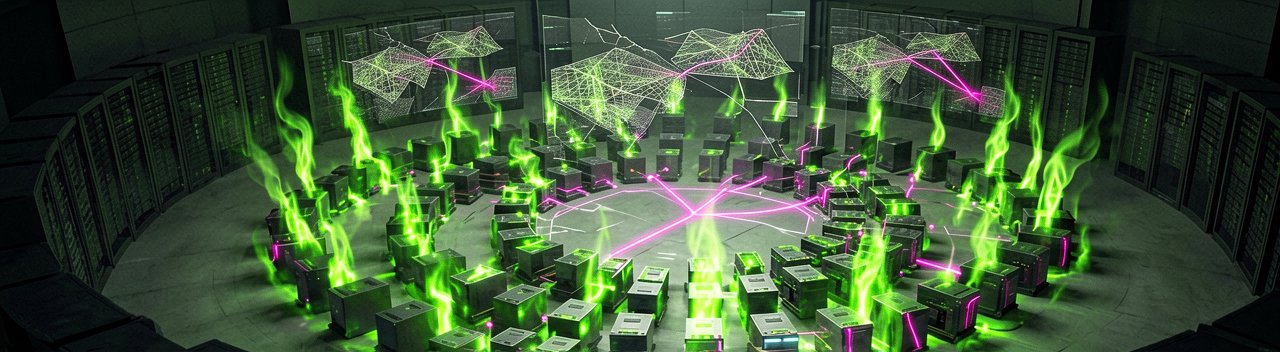
South Korea has initiated a targeted domestic campaign to counter advanced digital warfare by committing approximately $11.5 million (16 billion won) alongside a dedicated cluster of 256 high-performance graphics processing units to establish a security-focused foundation model. Spearheaded by the Ministry of Science and ICT in partnership with the Korea Internet and Security Agency, this strategic mobilization addresses a critical gap in local defense infrastructures by creating a specialized intelligence platform trained exclusively on threat intelligence, system logs, and malicious code. According to reports from Seoul Economic Daily, the program is designed to move beyond passive defensive postures and pioneer automated, preemptive cyber counter-measures.
This initiative underscores a larger macroeconomic pivot toward technological nationalism as nations recognize that relying on commercial, foreign-hosted large language models introduces profound data sovereignty and structural vulnerabilities. By allocating hardware specifically for institutional protection, the government is insulating its cyber response mechanisms from international supply-chain volatility while fostering a domestic ecosystem capable of immediate, sovereign automated response. Technical coverage from Digital Today reveals that the computing framework will support localized enterprise security firms, providing the heavy computational resources necessary to train specialized security models that were previously cost-prohibitive for private domestic contractors.
By integrating state-funded infrastructure with localized cybersecurity intelligence, South Korea is setting an aggressive precedent for public-private technical synthesis. This foundational defense blueprint positions state-backed artificial intelligence not just as an optimization tool for data analysis, but as an indispensable pillar of modern asymmetric warfare deterrent frameworks.
Geopolitical Determinants of the Sovereign AI Pivot
The geopolitical landscape dictates that infrastructure control equals national security. Commercial defensive tools often fail to address regional tactical abnormalities or specific state-sponsored hacking signatures native to the East Asian theater. Transitioning to a dedicated national infrastructure enables South Korea to cultivate tailored algorithmic defenses that analyze threat patterns in real time without leaking sensitive defensive analytics to external cloud environments. This structural independence prevents adversaries from reverse-engineering the detection parameters used by the state, thereby closing a critical operational vulnerability inherent to globalized public software models.
Mitigating High-Tier Compute Shortages Through State Allotment
Global hardware scarcity remains the primary bottleneck for advanced machine learning development, meaning state-level intervention is mandatory to guarantee local security parity. By centralizing a pool of 256 enterprise-grade graphics chips exclusively for defense applications, the Ministry of Science and ICT is effectively bypassing standard market competition and vendor backlogs. As documented by The Asia Business Daily, this state-allotted infrastructure lowers operational overhead for local technical consortia, enabling engineering teams to prioritize rapid iterative model training over hardware procurement logistics.
Strategic Imperatives for Future Threat Synthesis
The core objective of the state-backed platform focuses on automated threat synthesis, predictive vulnerability mapping, and instant endpoint mitigation. Standard security protocols depend on human intervention to isolate infected systems, creating a latency window that advanced threat actors regularly exploit. Incorporating localized foundation models directly into state networks shifts the tactical paradigm toward zero-latency response mechanics. This operational shift transforms artificial intelligence from a passive monitoring aid into an autonomous digital shield capable of neutralizing hostile network incursions at machine speed.
Behind the Scenes of Seoul’s Algorithmic Shield
What Most Reports Miss: The true catalyst behind South Korea’s 16 billion won compute allocation is not merely the rising volume of network incursions, but the absolute failure of generic commercial large language models to parse localized, highly contextualized threat vectors. State-sponsored adversary groups targeting the Korean peninsula have historically utilized deeply customized, low-signal extraction techniques that slip beneath the detection thresholds of Western-centric security suites. By establishing an independent sovereign foundation model trained directly on the nation's unique telemetry data, the Ministry of Science and ICT is correcting a structural blind spot that has plagued regional defense frameworks for nearly a decade.
Historically, domestic cybersecurity firms in Seoul operated in silos, hindered by an acute scarcity of the high-tier hardware needed to train specialized deep learning architectures. Large enterprise networks generate petabytes of raw system logs daily, a data volume that rapidly becomes cost-prohibitive to process without state-subsidized infrastructure. The introduction of this 256-GPU cluster fundamentally alters the economic calculus for the nation’s tech sector. It essentially acts as a public-utility supercomputer that allows mid-sized security developers and institutional researchers to stress-test predictive defensive models without burning through private venture capital.

The strategic deployment also reveals a profound shift in how the Korea Internet and Security Agency views automated defense. Traditional security architecture relies heavily on signature-based detection, meaning a threat must be identified elsewhere before a patch can be deployed. This new initiative targets the immediate synthesis of zero-day exploits, leveraging autonomous agents to predict where a vulnerability will emerge before code is ever executed. This proactive stance requires massive, sustained computational parallel processing, explaining why the government prioritized immediate hardware procurement over prolonged software grants.
Furthermore, this public-private consolidation creates a highly defensive data loop within the domestic economy. Private security contractors who utilize the state-backed infrastructure will feed anonymized threat intelligence back into the central model, creating a rapidly evolving defensive feedback system. This localized synthesis prevents sensitive domestic vulnerability data from leaking across international borders into public cloud networks, satisfying strict national data residency mandates while systematically fortifying the entire ecosystem against advanced persistent threat actors.
The Sovereign Compute Illusion
Reading Between the Lines: The primary assumption underpinning this 16 billion won initiative is that a dedicated cluster of 256 graphics processors is sufficient to build a competitive, state-tier defensive artificial intelligence. While this allocation marks a significant upgrade for localized public-sector frameworks, it represents a rounding error when compared to the massive infrastructure arrays deployed by global technology giants or adversarial cyber warfare divisions. In an era where commercial frontier models are trained on clusters numbering in the tens of thousands of chips, South Korea's sovereign security model risks being structurally outmatched before the first epoch of training is completed.
This hardware disparity exposes a fundamental contradiction in state-backed technology policy. The government aims to insulate national defense from international supply chain dependencies, yet the very silicon driving this initiative remains tethered to foreign foundries and global logistics networks. A truly sovereign AI strategy requires domestic semiconductor independence, a goal that cannot be achieved merely by purchasing a modest batch of enterprise-grade hardware. By treating procurement as a substitute for long-term supply chain autonomy, policymakers are building an advanced software shield on top of an incredibly fragile geopolitical foundation.
Furthermore, deploying an AI foundation model specifically for national security introduces severe operational vulnerabilities that traditional security models avoid. Adversaries targeting South Korea will inevitably attempt to poison the training data pipelines or execute adversarial prompt injections designed to blind the autonomous defensive system. When a traditional security architecture fails, engineers patch a discrete line of code; when an integrated foundation model suffers a systemic failure due to data manipulation, tracing the root cause across billions of weights and parameters becomes a logistical nightmare that could paralyze state response mechanisms during a coordinated crisis.
Ultimately, the true metric of success for this program will not be the raw computational capacity of the cluster, but the state's ability to retain the engineering talent required to maintain it. The public sector and domestic security contractors routinely lose high-tier machine learning talent to international commercial firms offering exponentially higher compensation. Without a radical restructuring of public-sector labor incentives, Seoul's state-of-the-art security supercomputer may soon find itself operating as a very expensive, highly sophisticated piece of automated office furniture run by under-equipped bureaucratic caretakers.
Throwing a couple hundred GPUs at a national cyber defense strategy is a beautifully modern way to look busy, proving that while governments may still struggle to patch basic server vulnerabilities, they have thoroughly mastered the art of tech-sector optics.
Artūras Malašauskas is an AI Systems Integrator with 20+ years of production-grade web engineering experience. He has designed, shipped, and scaled enterprise Python/PHP systems for logistics, SaaS, and public-sector clients. For the past year, he has focused exclusively on AI integrations: deploying open-source LLMs, building generative media pipelines (image, audio, video), and engineering multi-agent workflows for real production environments. His standard: reproducibility, security, cost-efficient inference—no vaporware. He documents and evaluates emerging AI tooling, separating verified capabilities from marketing noise. Technical editor at: muza-ai.eu, ai-verslas.lt, ai-naujinos.lt Connect on LinkedIn
Comments