Nvidia and Naver's 200MW South Korean Expansion Signals a New Era of Regional AI Infrastructure Dominance
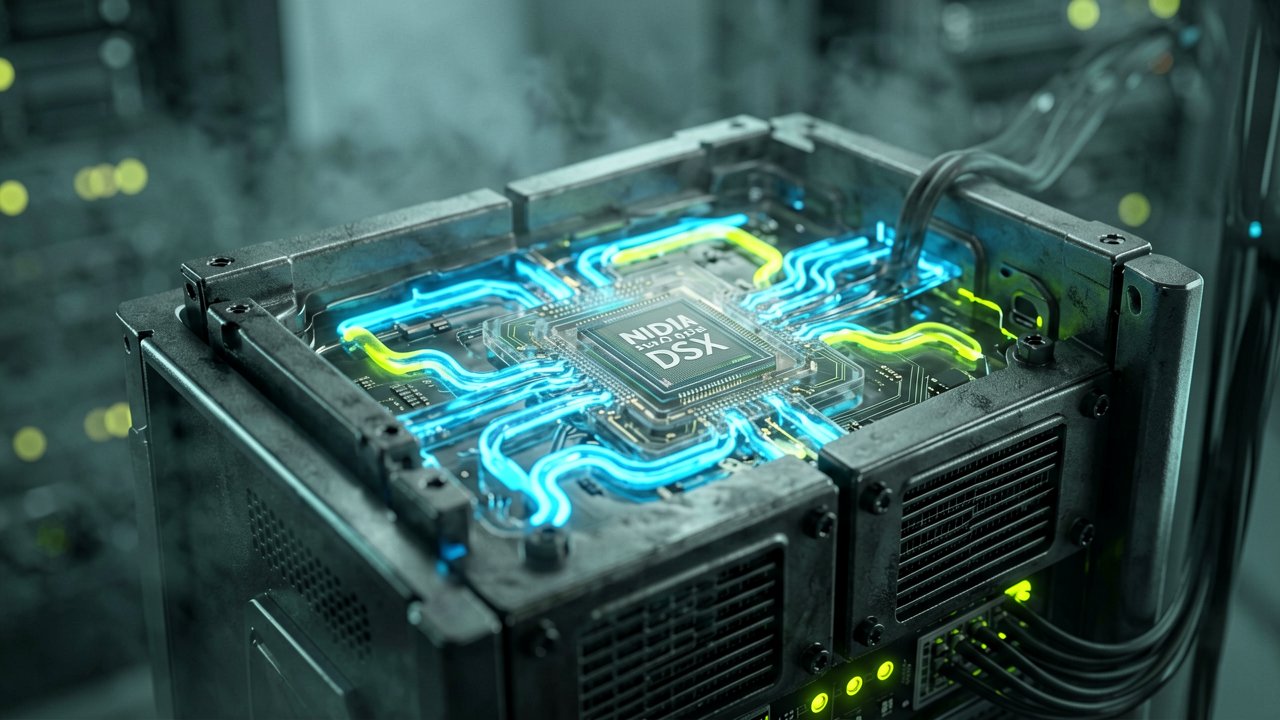
The strategic alliance between NAVER Corp., Nvidia, and Brookfield Asset Management to expand South Korea’s national AI factory infrastructure to 200 megawatts by 2028 marks a defining shift in the global technology landscape. By more than tripling the initial 55-megawatt blueprint announced just a month prior, this $10 billion joint initiative underscores an explosive regional demand for high-performance computing. It transitions South Korea from a consumer of global cloud services into a self-sufficient powerhouse capable of exporting industrial intelligence.
At the core of this multi-billion-dollar buildout is the deployment of the Nvidia DSX platform at NAVER’s GAK Sejong hyperscale data center. Under the terms of the agreement, Nvidia plans to inject $1 billion directly into NAVER, while Brookfield secures a nonbinding term sheet to provide up to $9 billion in institutional financing. This capital structure ensures the rapid delivery of full-stack, low-token-cost computing capacity, effectively insulating the domestic technology ecosystem from foreign cloud dependencies and fluctuating cross-border data regulations.
From a market perspective, this infrastructure roadmap—which outlines an ultimate long-term trajectory toward a massive 1-gigawatt sovereign footprint—reflects a broader geopolitical imperative. By integrating Nvidia's upcoming Blackwell and Vera Rubin architectures, NAVER intends to scale its HyperCLOVA X large language models utilizing Nvidia Nemotron open-source frameworks. This localized approach allows East Asian enterprises, industrial giants, and government bodies to develop highly specialized, agentic AI solutions tailored to regional cultural and linguistic nuances, establishing a blueprint for sovereign infrastructure dominance worldwide.
The Geopolitical Imperative of Sovereign Compute
Nations increasingly view domestic data control as essential to national security and economic independence. The establishment of localized AI factories ensures that sensitive enterprise and government data remains within national borders during model training. This infrastructure protects critical domestic intellectual property from shifting international data privacy frameworks and geopolitical trade restrictions.
Financing the Next Industrial Revolution
The trilateral partnership introduces a highly scalable blueprint for funding capital-intensive technology projects by pairing asset management with hardware providers. Brookfield’s massive $100 billion AI infrastructure portfolio balances the heavy upfront capital expenditure required for high-density server deployments. This financial structure allows telecom and internet giants like NAVER to scale aggressively without overextending their corporate balance sheets.
Next-Generation Hardware Integration
Operating a 200-megawatt ecosystem requires specialized operational expertise and highly efficient software stacks designed to minimize power bottlenecks. Incorporating Nvidia's Blackwell and future Vera Rubin architectures ensures maximum token throughput per watt of electricity consumed. This ultra-dense hardware deployment enables advanced physical AI, sophisticated digital twins, and autonomous agent frameworks to run efficiently at a lower operational cost.
Reading Between the Lines: The Friction in the Sovereign Strategy
Reading Between the Lines: The sheer scale of this 200-megawatt expansion masks a delicate paradox in South Korea’s quest for digital sovereignty. While the partnership is explicitly designed to shield the domestic market from the data-hungry hegemony of American hyperscalers, the underlying architecture remains fundamentally tied to Silicon Valley hardware. By anchoring its sovereign AI factory to Nvidia’s proprietary DSX platform and upcoming Blackwell nodes, NAVER is essentially swapping a cloud service dependency for a silicon dependency. True architectural autonomy becomes a secondary priority when the immediate survival of local models depends entirely on securing allocations of high-density GPUs from a single global gatekeeper.
This reality exposes a massive financial contradiction in how regional tech giants must fund their defense against big tech. NAVER's reliance on Brookfield Asset Management for up to $9 billion in institutional financing underscores that local balance sheets are simply inadequate for the brutal capital expenditure requirements of the modern AI race. The arrangement shifts the burden of physical infrastructure development onto international private equity, creating an intricate web of global stakeholders who expect rapid, predictable returns on hardware that depreciates at an unprecedented rate. If regional enterprise adoption slows down or token monetization strategies fail to match the aggressive buildout pace, the financial strain on this infrastructure hub could trigger early friction between the national security goals of the state and the profit motives of international asset managers.

Furthermore, scaling to 200 megawatts by 2028 introduces immediate structural pressures on South Korea’s domestic power grid, which is already grappling with the challenges of a heavy industrial manufacturing footprint. Operating these high-density AI clusters requires a stable, continuous flow of electricity that forces local utilities into an awkward balancing act between supporting national technology mandates and managing carbon emission targets. While deploying Nvidia's latest architectures promises better token throughput per watt, the aggregate demand of a 1-gigawatt long-term roadmap will test the boundaries of municipal infrastructure. The success of this facility will ultimately depend less on software optimizations or algorithmic breakthroughs, and far more on the mundane realities of securing enough high-voltage power lines and advanced liquid cooling systems to keep the silicon running.
The Structural Realities of Global Hardware Allocation
The strategic timeline for deploying these next-generation architectures highlights the intense competition for advanced silicon. Regional partnerships must constantly compete for priority status with the hyper-scale cloud providers that command massive buying power. This dynamic means that even a highly publicized national initiative can face logistical delays if global supply chains tighten, demonstrating that localized infrastructure remains tightly bound to international production schedules.
"Building a multi-billion-dollar sovereign data fortress to protect domestic data from foreign tech giants is a brilliant strategy, provided everyone ignores the fact that the entire fortress runs on proprietary silicon shipped from California and is funded by institutional capital managed out of Toronto."
Artūras Malašauskas is an AI Systems Integrator with 20+ years of production-grade web engineering experience. He has designed, shipped, and scaled enterprise Python/PHP systems for logistics, SaaS, and public-sector clients. For the past year, he has focused exclusively on AI integrations: deploying open-source LLMs, building generative media pipelines (image, audio, video), and engineering multi-agent workflows for real production environments. His standard: reproducibility, security, cost-efficient inference—no vaporware. He documents and evaluates emerging AI tooling, separating verified capabilities from marketing noise. Technical editor at: muza-ai.eu, ai-verslas.lt, ai-naujinos.lt Connect on LinkedIn
Comments