The $500 Billion Gamble: Nvidia and SK Group Blueprint the Next Era of Silicon Dominance
The global race for artificial intelligence hardware just shifted into overdrive. In a jaw-dropping development, Nvidia and South Korea's second-largest conglomerate, SK Group, officially signed letters of intent to establish a historic alliance valued at more than $500 billion. Unveiled at an AI summit in San Francisco, this staggering infrastructure initiative intends to reshape the global tech landscape by building massive "AI factories" and locking down the highly contested next-generation memory supply chain. It is a massive, multi-front offensive designed to guarantee that neither compute power nor silicon shortages will stall the relentless momentum of enterprise and agentic AI workloads.
At the absolute center of this monumental deal is a planned 2-gigawatt AI data center in South Korea, spearheaded by affiliate SK Telecom. Set to begin operations in 2027, this behemoth of a facility will run on Nvidia's cutting-edge Vera Rubin accelerated computing architecture, leveraging the full-stack Nvidia DSX platform to drive token costs to absolute minimums while optimizing energy efficiency. According to reports from Reuters, the massive energy footprint of this buildout is expected to house hundreds of thousands of high-end graphics processing units, giving the region a truly unprecedented concentration of raw digital intelligence.
Locking Down the High-Bandwidth Memory Pipeline
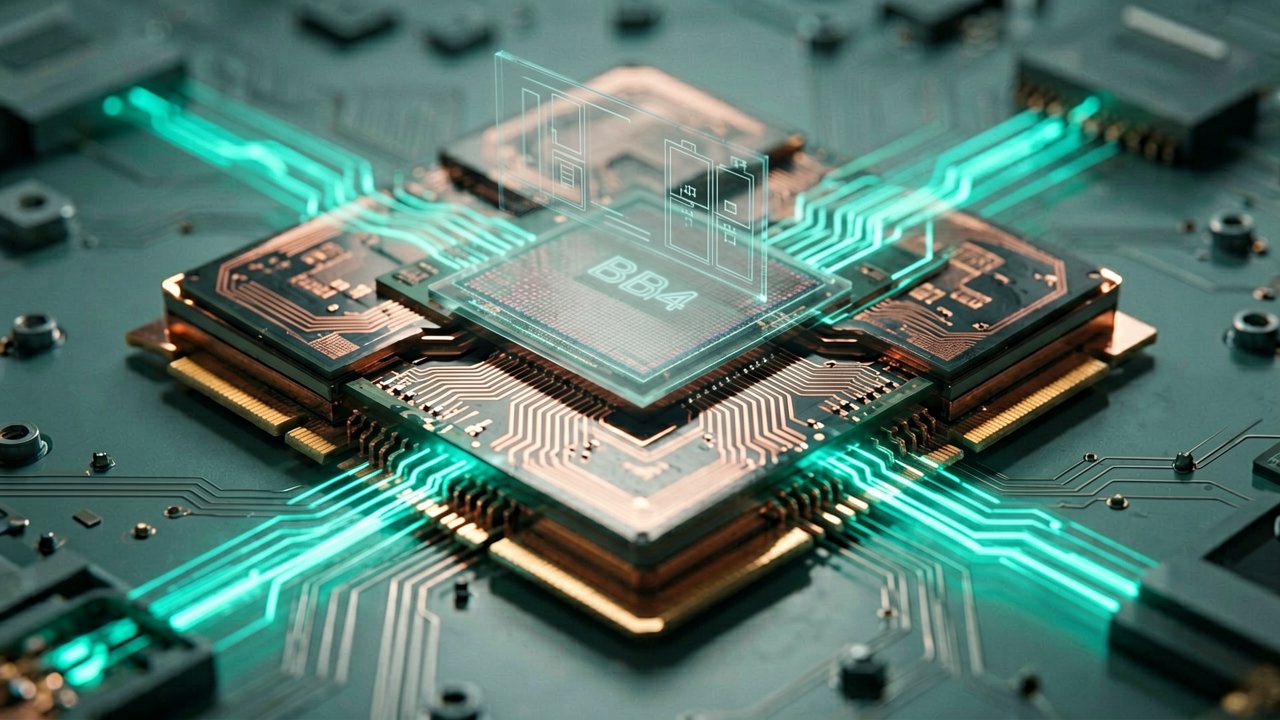
Beyond the raw scale of the upcoming data centers, the partnership addresses the single greatest bottleneck currently threatening the AI industry: high-bandwidth memory. Under the newly expanded agreement, memory pioneer SK hynix enters a long-term supply and co-development compact with Nvidia to guarantee a stable pipeline of its ultra-advanced HBM4 memory chips. Because modern AI training and physical AI applications chew through data at astronomical speeds, having direct, priority access to SK hynix's fabrication lines gives Nvidia an ironclad insurance policy against the ongoing global memory crunch reported by CNBC.
The technical synergy goes even deeper than simple procurement. According to an official update shared on SK hynix's Newsroom, the two semiconductor powerhouses are actively applying AI to chip design and manufacturing by utilizing Nvidia's CUDA-X libraries and PhysicsNeMo to accelerate complex fab simulations. Furthermore, SK hynix is constructing advanced digital twins of its physical facilities using Nvidia Omniverse technologies, effectively allowing engineers to optimize autonomous factory floor operations in a virtual world before implementing changes on real assembly lines.

A Geopolitical Shift in Sovereign AI Power
This $500 billion megadeal also sends a clear message about where the gravitational center of AI infrastructure is shifting. By anchoring these massive capital investments in South Korea, Nvidia CEO Jensen Huang explicitly highlighted the nation's world-class networks, industrial scale, and chip leadership as the ideal foundation for the next wave of global AI growth. The aggressive expansion does not stop with SK Group either; a separate, complementary project with local internet giant Naver and Brookfield Asset Management will further expand the regional footprint of gigawatt-scale computing factories.
Ultimately, this isn't just a routine corporate agreement; it's a structural realignment of the international technology supply chain. By tightly integrating next-generation HBM4 memory roadmaps with future GPU architectures, Nvidia and SK Group are erecting an incredibly high barrier to entry for any rival chipmaker trying to catch up. For enterprise customers looking to deploy autonomous AI agents or compute-heavy large language models over the next decade, the roadmap for tomorrow's infrastructure has officially been laid down in Seoul.
Beneath the Surface of the Silicon Balance of Power: This half-trillion-dollar alliance is far more than a massive infrastructure spend; it is a calculated preemption of the technological bottlenecks that threaten to stall the next decade of computing. In the fast-moving semiconductor ecosystem, securing raw manufacturing capacity is no longer enough to maintain market dominance. By fusing Nvidia's proprietary computing architectures directly into the foundational physics of SK Group's memory fabric, both titans are effectively building an industrial fortress that rivals will find incredibly difficult to breach. This integration represents a major strategic shift from transactional client-vendor relationships toward true structural codependency.
Industry insiders have long known that the real limiting factor in training frontier artificial intelligence models isn't just the sheer number of processing cores, but how quickly data can move between those cores and the memory banks. Over the past several years, SK hynix pioneered the high-bandwidth memory market, keeping a razor-thin technological lead over competitors like Samsung and Micron. By signing this long-term agreement, Nvidia essentially guarantees that its upcoming Vera Rubin and post-Rubin architectures will have exclusive, first-priority access to the densest, most power-efficient HBM4 modules on earth, effectively starving rivals of the premium components required to compete at the highest tier of enterprise computing.
The Economics of the Gigawatt Infrastructure Race
To truly understand the scale of a two-gigawatt AI data center footprint, one must look at the immense energy and real estate challenges that modern tech infrastructure faces. Building an AI factory of this magnitude requires an electrical supply equivalent to powering a major metropolitan city, a reality that has forced tech companies to rethink their geographical dependencies. SK Group’s choice to anchor these mega-facilities in South Korea capitalizes on the nation's highly stable, industrialized energy grid and advanced logistical networks. It is a calculated move to bypass the severe power grid backlogs and regulatory bottlenecks currently choking data center development in traditional hubs like Northern Virginia and Silicon Valley.
Furthermore, the collaboration introduces a fascinating geopolitical shift in the race for what tech leaders call sovereign AI capacity. By partnering with local powerhouse Naver and global infrastructure investor Brookfield Asset Management, Nvidia is diversifying its geopolitical risk. At a time when supply chains are increasingly vulnerable to international trade tensions, establishing a massively localized, end-to-end silicon fabrication and compute hub in East Asia builds critical redundancy into the global tech ecosystem. It ensures that even if traditional shipping lanes or international trade policies shift, the production pipeline for advanced intelligence remains operational.
The collaboration also signals a profound transformation in how microchips are designed and manufactured. By utilizing Nvidia’s Omniverse platform to build complex digital twins of SK hynix’s physical semiconductor fabrication plants, the partnership is using artificial intelligence to optimize the very facilities that create AI hardware. Engineers can simulate microscopic adjustments to automated machinery, model thermodynamic shifts inside cleanrooms, and predict equipment failures in a virtual environment long before a single piece of physical hardware is altered. This closed-loop system fundamentally changes the economics of chip manufacturing, shaving months off the time it takes to scale up production for new silicon architectures.
Ultimately, this historic partnership reflects a mutual realization that the future of computing cannot be solved by software or hardware design alone. It requires an absolute alignment of energy, logistics, memory fabrication, and processing power. As enterprise workloads transition from simple text generation to massive, autonomous agentic systems that require constant, real-time data processing, the infrastructure demands will be unforgiving. Through this $500 billion gamble, Nvidia and SK Group have secured the high ground, establishing a structural blueprint that will dictate the pace of technological progress for the foreseeable future.
Reading Between the Lines: While the financial press has eagerly celebrated this $500 billion announcement as an unmitigated triumph, a sober analysis reveals a high-stakes game of corporate chicken fraught with immense systemic risks. The sheer scale of the capital expenditure assumes that the global appetite for artificial intelligence compute will continue on a permanent upward trajectory without ever hitting a wall of diminishing returns. By locking themselves into a massive, multi-year infrastructure buildout, Nvidia and SK Group are betting the farm on the premise that enterprise AI software revenue will magically materialize to justify these staggering hardware valuations. If the broader market experiences an AI winter or a correction in enterprise software adoption, this monumental investment could quickly transform into the most expensive monument to overcapacity in tech history.
Moreover, the partnership exposes a glaring contradiction in Nvidia’s long-term business strategy. For years, Jensen Huang has championed the democratization of AI, pitching a future where every nation and mid-sized enterprise operates its own localized, autonomous systems. Yet, an exclusive alliance of this magnitude achieves the exact opposite by further centralizing the global supply of high-bandwidth memory and advanced compute into the hands of an incredibly tight, elite duopoly. Smaller chip design startups and cloud providers looking to compete with Nvidia will find themselves pushed even further to the margins, unable to secure the necessary HBM4 allocations from an SK hynix that is now financially and operationally tethered to the market leader.
The Realities of the Power and Fabrication Bottleneck
The operational logistics of the proposed two-gigawatt data center also demand a healthy dose of skepticism. Building a facility that consumes as much electricity as a small nation is one thing on paper, but negotiating that kind of immense power draw with local utility grids and environmental regulators is another matter entirely. South Korea's energy infrastructure is already under intense strain as the country balances its own industrial manufacturing needs with strict carbon-reduction mandates. Relying on vague promises of green energy and unprecedented efficiency gains glosses over the harsh reality that computing factories of this scale are fundamentally dirty, energy-hungry entities that could face severe political and environmental blowback long before they ever reach full operational capacity.
There is also the underlying tension of single-source dependency that should give Nvidia’s board of directors pause. While hitching its wagon to SK hynix solves immediate supply chain anxieties, it concentrates an alarming amount of risk into a single geographic corridor. East Asian semiconductor supply chains remain a geopolitical flashpoint, subject to unpredictable regulatory shifts and regional instability. By doubling down on South Korean manufacturing rather than aggressively diversifying into European or North American fabrication hubs, Nvidia is prioritizing short-term technological supremacy over long-term geopolitical resilience, leaving the future of global AI compute highly vulnerable to regional shocks.
Ultimately, this historic alliance resembles less of a forward-looking technological blueprint and more of an aggressive defensive maneuver designed to suffocatingly crowd out the competition. It is a preemptive strike against the rise of custom, in-house silicon being developed by hyper-scalers like Microsoft, Amazon, and Google. By hoarding the world's finest memory and building out massive regional data hubs, Nvidia and SK Group are trying to make the cost of building an independent AI infrastructure entirely prohibitive. Whether the rest of the tech industry quietly accepts this consolidation or actively rebels against it will be the real story to watch over the coming decade.
"Building a half-trillion-dollar AI factory before the world has even figured out how to make a corporate chatbot reliably schedule a meeting without hallucinating is the ultimate tech industry power move. We may not have achieved artificial general intelligence just yet, but we have certainly perfected the art of spending money on the silicon to house it."
Artūras Malašauskas is an AI Systems Integrator with 20+ years of production-grade web engineering experience. He has designed, shipped, and scaled enterprise Python/PHP systems for logistics, SaaS, and public-sector clients. For the past year, he has focused exclusively on AI integrations: deploying open-source LLMs, building generative media pipelines (image, audio, video), and engineering multi-agent workflows for real production environments. His standard: reproducibility, security, cost-efficient inference—no vaporware. He documents and evaluates emerging AI tooling, separating verified capabilities from marketing noise. Technical editor at: muza-ai.eu, ai-verslas.lt, ai-naujinos.lt Connect on LinkedIn
Comments