KnowBe4’s Custom AI Video Builder and the Era of Hyper-Personalized Cybersecurity Training

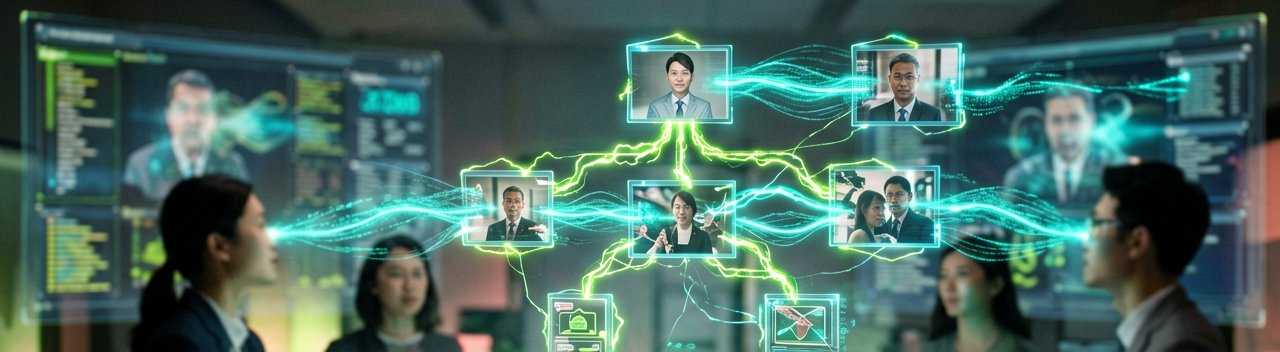
The enterprise cybersecurity sector is undergoing a massive shift away from standardized, flat-rate training architectures toward highly adaptive, context-aware user defenses. Leading this paradigm change is the release of the KnowBe4 Custom AI Video Builder, a tool built to generate personalized, studio-quality training videos directly within security awareness workflows. By enabling localized, immediate content generation, this feature replaces legacy learning modules with hyper-targeted digital media designed to mirror an organization's actual internal structure and immediate threat profile.
This product launch follows an industry-wide realization that generic, "one-size-fits-all" security training modules exhibit a severe decay in retention, with data showing that employees frequently forget up to 90% of instructional material within 30 days. As cybercriminals leverage generative AI to engineer highly personalized, localized social engineering attacks, security teams have struggled to update traditional material quickly enough to counter these targeted campaigns. KnowBe4's rollout addresses this critical operational lag, empowering administrators to match the velocity of external threats through automated, localized video production.
Strategically, the feature deepens KnowBe4’s transition toward an AI-native training ecosystem, building on its structural partnerships with foundational media tools like Synthesia AI Video. By utilizing over 125 unique AI avatars and flexible customization engines, organizations can now instantly author internal localized scripts to train teams against emerging deepfakes, regional phishing variations, and role-specific credential harvesting. This represents a definitive structural shift from reactive compliance checklists to dynamic human risk management.
Market Impact and Accelerated Localization
The deployment of synthetic video builders inside corporate networks significantly lowers the cost and specialized technical barriers traditionally associated with enterprise content creation. Organizations can instantly customize corporate safety messages, update policies, and address fresh zero-day exploits without requiring dedicated studio space, editing software, or professional voice actors. For global enterprises operating across diverse legal and geographic jurisdictions, this speed enables localized compliance training that directly accounts for regional regulatory frameworks and specific cultural engineering tricks.
Neutralizing Sophisticated Social Engineering
As social engineering tactics advance to incorporate cloned voices and artificial executive personas, security programs require tools that educate employees using the exact media formats weaponized by threat actors. Deploying realistic AI avatars to demonstrate simulated attacks bridges the gap between theoretical knowledge and real-world behavior modification. This technical alignment helps organizations build cognitive immunity against adversarial deepfakes, turning potential human vulnerabilities into hardened, active threat detection nodes across the corporate directory.
Behind the Scenes of the Synthetic Defense Shift
The acceleration toward AI-driven video synthesis in cybersecurity training is not merely a technical upgrade; it is a calculated response to the sophisticated industrialization of digital deception. Historically, corporate training suites relied on standard animations and text-heavy slide decks designed primarily for regulatory check-the-box exercises. As early deepfake technologies emerged in the late 2010s, security leaders viewed them as edge-case anomalies, but the rapid democratization of generative audio and video tools has transformed executive impersonation into an everyday operational risk. Chief Information Security Officers are discovering that passive warnings about artificial media fail to prepare employees for the jarring experience of receiving a highly convincing, deepfaked video call from their own chief executive.
Internal corporate dynamics are heavily driving this shift toward localized, custom-rendered instructional content. Human resource departments and security awareness managers frequently clash over the scheduling and volume of mandatory employee training, with workers reporting severe compliance fatigue when forced to sit through identical annual modules. By integrating custom video engines, administrators can dynamically swap the faces, names, and regional dialects within training scenarios to match specific corporate sub-cultures or departmental workflows. A finance professional in London receives a scenario reflecting specific UK payment protocols, while a developer in Tokyo interacts with localized source-code security simulations, maximizing immediate psychological relevance and tactical attention.
From an adversarial perspective, the window of vulnerability between the discovery of a new social engineering technique and an organization's defense response has narrowed dramatically. Traditional corporate training production pipelines required months of scriptwriting, storyboarding, local talent casting, and localization approval, by which time the targeted phishing campaign had already evolved into a completely different format. Synthetic video creation effectively eliminates this developmental latency, allowing a security operations center that detects an active, highly specialized spear-phishing variant in the morning to deploy a tailored video alert across the global workforce before the close of business.
This paradigm shift ultimately represents a structural pivot from passive awareness to behavioral conditioning. Industry researchers note that modern cognitive defenses rely on immediate pattern recognition rather than abstract policy memorization. By exposing teams to the identical tools, pacing, and emotional manipulation tactics deployed by real-world adversaries, organizations are building a reflexive operational muscle. The long-term objective of this structural transition is to outpace the malicious deployment of synthetic media by making high-fidelity generative tools an ubiquitous, highly visible element of day-to-day internal corporate communications.
Reading Between the Lines of the Synthetic Arms Race
The enterprise rush to adopt synthetic video tools for security training introduces a fundamental paradox: organizations are leveraging the exact technology they are training their workforces to fear and reject. By normalizing the presence of AI-generated corporate avatars for mandatory training and executive announcements, IT departments risk blurring the lines of digital authenticity. Employees are instructed to remain hyper-vigilant against deepfaked internal communications, yet they are simultaneously expected to trust synthetic replicas of company leadership delivering policy updates. This strategic contradiction could inadvertently dull an employee's critical skepticism, conditioning them to accept artificial media as a standard, trusted component of corporate life.
Furthermore, the operational reliance on automated, rapid-response video creation relies on the fragile assumption that security teams possess the editorial accuracy to match their new production speeds. When an organization reduces the time required to build and deploy training media from months to minutes, traditional editorial oversight and psychological vetting pipelines inevitably break down. A rushed, AI-generated training module designed to counter a zero-day exploit could inadvertently distribute inaccurate threat indicators, spark unnecessary internal panic, or alienate specific demographics through poorly calibrated localized nuances. The threat shifts from a lack of timely content to an overabundance of rapidly produced, low-vetted corporate media cluttering the employee inbox.
There is also a deeper, structural vulnerability regarding the data supply chains powering these personalized video architectures. To generate hyper-personalized training scenarios that realistically mimic localized departmental workflows, these AI systems must ingest significant amounts of internal corporate data, org charts, communication styles, and regional policy documents. This centralizes a highly valuable repository of corporate intelligence within a single third-party training platform. Should an adversary compromise the AI video engine itself, they gain access to a perfect blueprint of an organization's defense posture, allowing them to train their malicious deepfakes against the exact system built to detect them.
Ultimately, this technological escalation highlights the limits of treating human behavior as a purely technical vulnerability to be patched with software upgrades. While dynamic video modules undeniably command more immediate engagement than static slide decks, they do not fundamentally alter the underlying psychological vulnerabilities—such as urgency, fear, and respect for authority—that social engineers exploit. Organizations may find that investing heavily in high-fidelity synthetic media yields diminishing returns if the workforce simply develops a higher tolerance for corporate video production rather than a sharper instinct for spotting adversarial manipulation.
The corporate world has officially achieved peak technological symmetry: we are now using artificial intelligence to build simulated deepfakes to train distracted employees not to fall for actual deepfakes built by automated threat actors. One can only assume the ultimate victory in cybersecurity will be achieved when we bypass the human element entirely and let our security bots watch the training videos on behalf of the firewall.
Artūras Malašauskas is an AI Systems Integrator with 20+ years of production-grade web engineering experience. He has designed, shipped, and scaled enterprise Python/PHP systems for logistics, SaaS, and public-sector clients. For the past year, he has focused exclusively on AI integrations: deploying open-source LLMs, building generative media pipelines (image, audio, video), and engineering multi-agent workflows for real production environments. His standard: reproducibility, security, cost-efficient inference—no vaporware. He documents and evaluates emerging AI tooling, separating verified capabilities from marketing noise. Technical editor at: muza-ai.eu, ai-verslas.lt, ai-naujinos.lt Connect on LinkedIn
Comments