Sovereign Silicon: South Korea Deploys 256 B200 GPUs to Forge Custom Security AI

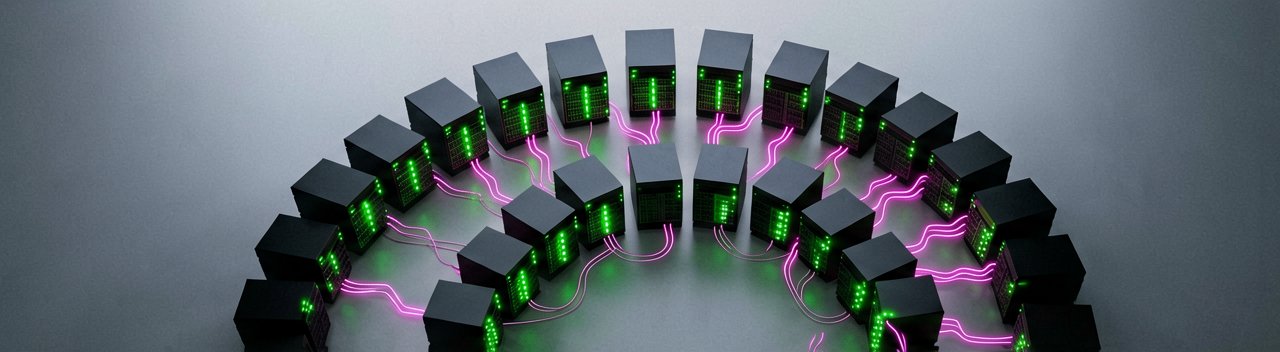
Governments worldwide are scrambling to build digital walls around their sensitive assets, but South Korea isn't just relying on software updates. On July 22, 2026, the South Korean Ministry of Science and ICT officially threw its weight behind a dedicated Security AI development program, handing over an immediate allocation of 256 state-of-the-art Nvidia B200 GPUs arranged across 32 processing nodes. It's a calculated, hardware-first move designed to inject raw computational muscle into the nation's defense frameworks, aiming to construct a localized foundation model capable of out-thinking modern cyber threats.
According to project details shared by Digital Today, this ten-month initiative will see a specialized team build and stress-test an open-source cybersecurity model tailored specifically to the country’s infrastructure. Officials won't be writing blank checks, either; a strict milestone review is slated for the five-month mark to ensure the model actually delivers on its defense promises before further funding is released. By planting its flag firmly in sovereign silicon, the administration is making a definitive statement about tech independence.
The Geopolitical Push for Sovereign AI
We’ve seen similar strategic plays across the globe, including Japan’s recent multimodal push with industrial leaders and the United States’ escalating deployment of defense-oriented compute models. Ryu Je-myeong, the second vice minister of the Ministry of Science and ICT, explicitly framed the new project as a preemptive defense mechanism against rapidly shifting cybersecurity paradigms reported by The Asia Business Daily. Instead of renting commercial models that could easily be choked off by export restrictions or targeted by overseas adversaries, South Korea wants an in-house ecosystem that can safeguard public sector operations autonomously.
Throwing heavy silicon at defense strategies isn’t just about looking powerful on paper; it's a structural pivot toward agentic AI that can actively intercept zero-day exploits in real-time. Because the final architecture is intended to be open-sourced domestically, the benefits should theoretically ripple through the entire South Korean tech sector, raising the baseline security of local enterprises and government bodies alike. It’s an aggressive, compute-heavy blueprint that shows exactly how future cyber warfare will be fought: won or lost long before the actual attack, based entirely on who owns the best training data and the biggest clusters.
The Hidden Compute Math
Behind the Silicon Allocation: While an allocation of 256 Nvidia Blackwell B200 GPUs might look like a modest cluster compared to the massive AI factories operated by hyperscalers like Microsoft or Meta, its specialization changes the math entirely. In the context of a highly focused national security framework, this cluster represents an extraordinary amount of dedicated firepower. By keeping the compute footprint tightly bound to cybersecurity parameters, engineers can bypass the massive parameter overhead required by generalized LLMs, focusing training cycles purely on high-velocity code analysis, packet inspection, and threat telemetry.
The decision to utilize an immediate, hardware-first allocation also speaks volumes about the current state of global supply chains. Procuring this amount of cutting-edge hardware for an isolated sovereign cloud requires substantial political capital and deep pockets, signaling that the South Korean administration views compute scarcity as a primary vulnerability. Industry insiders note that waiting on commercial cloud providers to allocate ring-fenced, secure instances simply wasn't a viable option for defense frameworks that require absolute data isolation from foreign networks.
Historically, military and intelligence agencies have relied on heavily siloed, legacy systems that excel at rule-based detection but fail miserably when encountering novel, AI-generated exploits. By deploying localized foundation models, the defense sector aims to pivot from reactive patching to proactive, agentic defense. These systems are designed to autonomously simulate sophisticated adversarial attacks against public infrastructure, finding and plugging zero-day vulnerabilities before human engineers are even aware a threat vector exists.
However, the strategy is not without its skeptics within the domestic tech ecosystem. Some researchers point out that a ten-month development timeline is incredibly tight for training and stabilizing an enterprise-grade foundation model from scratch, even with Blackwell architecture doing the heavy lifting. The five-month milestone review imposed by the Ministry of Science and ICT will serve as a high-stakes stress test, forcing the engineering team to demonstrate tangible defensive utility or risk seeing the hardware cluster repurposed for other state-sponsored scientific projects.

Ultimately, this initiative reflects a broader geopolitical shift toward algorithmic nationalism, where a country’s security posture is increasingly measured by its floating-point operations per second. By open-sourcing the resulting architecture to the domestic private sector, the government is betting that a rising tide of sovereign AI capability will lift all boats. The success of this blueprint will likely dictate how middle-power nations navigate the escalating tech cold war, balancing a reliance on global hardware providers with the absolute necessity of domestic software autonomy.
The Sovereign AI Paradox
Reading Between the Lines: The political theater surrounding the launch of this program paints a picture of instant technological autonomy, but the underlying reality is riddled with structural contradictions. The most glaring irony is that South Korea’s grand push for digital sovereignty is entirely bankrolled by American silicon. By anchoring its national security strategy so heavily to Nvidia’s Blackwell architecture, the administration is merely trading one form of foreign dependency for another, remaining tightly bound to the political stability and export whims of Silicon Valley and the open market.
Furthermore, the government's dual mandate to build a highly classified national defense model while simultaneously promising to open-source the final architecture to the domestic private sector creates an obvious operational friction. Cyber defense thrives on secrecy, yet true open-source development requires transparent codebases and public scrutiny. If the engineering team holds back the most potent threat-detection mechanisms to safeguard state secrets, local enterprises will receive a watered-down framework that does little to elevate their actual defense posture against sophisticated foreign actors.
There is also the matter of talent acquisition in a fiercely competitive global AI landscape. Throwing 256 high-performance GPUs at a problem is the easy part; finding the hyper-specialized engineers capable of optimizing a localized foundation model within a rigid ten-month government timeline is another issue entirely. Public sector initiatives historically struggle to compete with the sky-high compensation packages offered by tech conglomerates, meaning this security team will likely face an uphill battle against institutional bureaucracy and brain drain.
If the project fails to meet its aggressive five-month milestone, the broader political fallout could trigger a retreat toward safe, predictable legacy software vendors. A premature failure would not only embarrass the Ministry of Science and ICT but could also chill public investment in ambitious, sovereign tech projects for years to come. For this initiative to survive its own hype, the administration must quickly realize that raw compute power is simply an expensive pile of sand without the institutional agility required to deploy it effectively.
"In the modern tech race, governments often mistake the purchase order for the victory lap, forgetting that a room full of spinning GPU fans creates an awful lot of heat, but not necessarily a drop of wisdom."
Artūras Malašauskas is an AI Systems Integrator with 20+ years of production-grade web engineering experience. He has designed, shipped, and scaled enterprise Python/PHP systems for logistics, SaaS, and public-sector clients. For the past year, he has focused exclusively on AI integrations: deploying open-source LLMs, building generative media pipelines (image, audio, video), and engineering multi-agent workflows for real production environments. His standard: reproducibility, security, cost-efficient inference—no vaporware. He documents and evaluates emerging AI tooling, separating verified capabilities from marketing noise. Technical editor at: muza-ai.eu, ai-verslas.lt, ai-naujinos.lt Connect on LinkedIn
Comments