FLUX 3 Bridges the Digital-Physical Divide: Creative Generative AI Meets Robotic Control
The boundaries separating creative generative media from physical artificial intelligence just evaporated. On July 23, 2026, the European AI powerhouse Black Forest Labs officially announced the release of FLUX 3, a multimodal frontier model designed to fundamentally reframe how artificial networks interact with our reality. Instead of treating image creation, cinematic rendering, audio engineering, and mechanical action as isolated problems requiring a messy patchwork of specialized models, the firm has bound them into a single, unified architectural backbone.
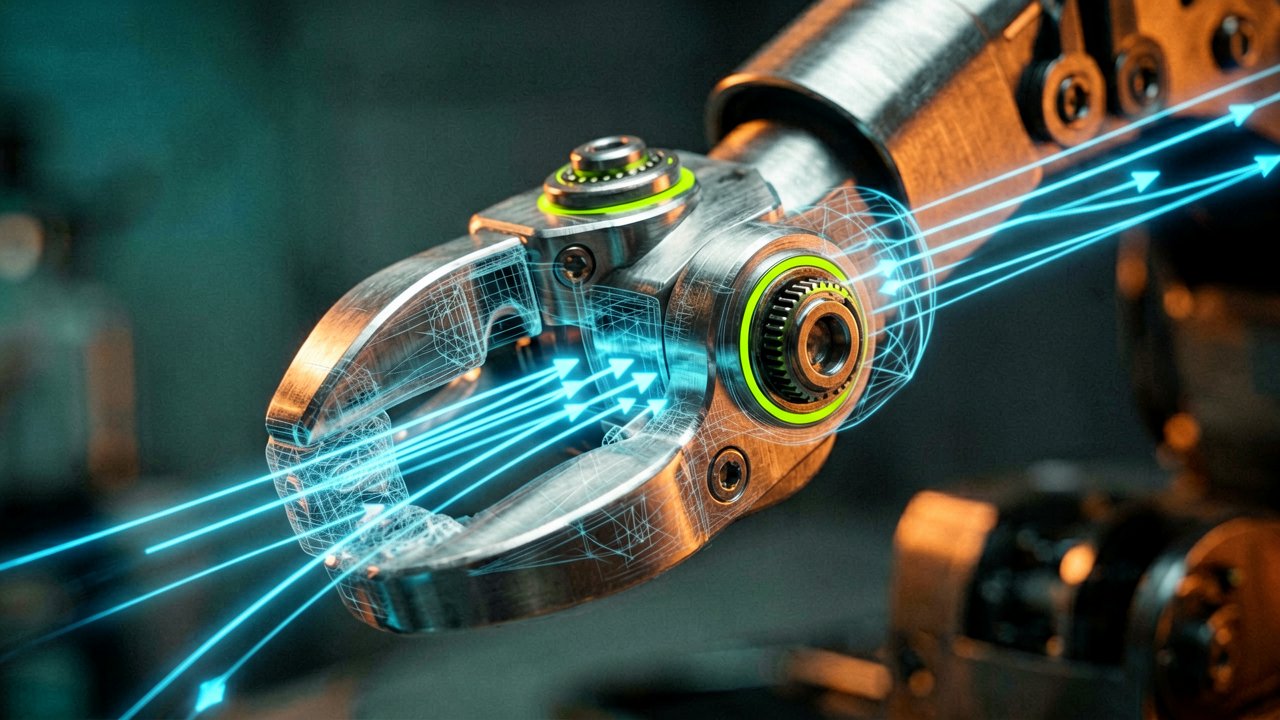
This isn't just another incremental upgrade to the creative engines powering modern digital design; it is a deliberate pivot toward physical computing. While the model is natively capable of synthesizing high-fidelity images alongside 20-second video clips complete with synchronized audio, its most groundbreaking feature is its explicit extension into robotic vision and physical manipulation. By utilizing the exact same underlying multimodal flow matching architecture to predict physical actions as it does to generate video frames, the team is working toward a cohesive "world model" that genuinely understands the laws of the physical environment.
From Pixels to Physical Production Tasks
Rather than letting the technology languish in pure simulation, Black Forest Labs has already moved its latest architecture into industrial application through highly focused collaborations. The company partnered with the automation specialists at mimic robotics to pioneer FLUX-mimic, a dedicated video-action variation of the core model that translates spatial understanding into dexterous mechanical movements. According to initial details shared by the developers, this specialized system is already undergoing rigorous field testing on real production tasks at Audi facilities, proving that generative intelligence can survive the transition from a GPU cluster to a modern factory floor.
A Phased Rollout for a Multimodal World
As detailed by reports from VentureBeat, the full capabilities of FLUX 3 won't all arrive on day one. Black Forest Labs is executing a highly structured, multi-stage rollout plan to ensure appropriate safety testing and gather developer feedback. The model is entering the wild via an early access phase, initially offering its video and audio generation tools via API alongside the action prediction systems managed by partner networks, while standalone image generation, editing suites, and highly anticipated open-weight community editions are scheduled to drop over the coming weeks and months.

The Architectural Synthesis of Action and Aesthetics
The Real Architectural Breakthrough: By embedding physical manipulation vectors directly into the latent space of a diffusion transformer, Black Forest Labs has sidestepped the primary bottleneck of modern robotics. Traditionally, a robot requires discrete vision models, mapping algorithms, and kinematics engines to interact with an object. FLUX 3 treats a robotic arm's pathing as just another structural sequence, processing spatial coordinates and torque adjustments much like it predicts the trajectory of pixels in a high-definition video. This shared representational framework means the model’s understanding of material properties—such as how a plastic bottle deforms under pressure or how a metal tool reflects light—is intrinsically tied to how it physically manipulates those same objects.
This unified approach addresses a critical flaw that has long plagued generative video: the lack of true physical common sense. Standard video generators often depict objects morphing, clipping through one another, or violating basic laws of gravity because they are only trained to predict what the next frame should look like visually. By enforcing a training regime where the model must also predict the tactile, physical consequences of structural interactions, the system develops an internal simulation of real-world physics. Industry insiders note that this dual-training methodology yields video outputs with remarkably stable geometry, while simultaneously granting the robotic variants an intuitive grasp of object permanence and weight distribution.
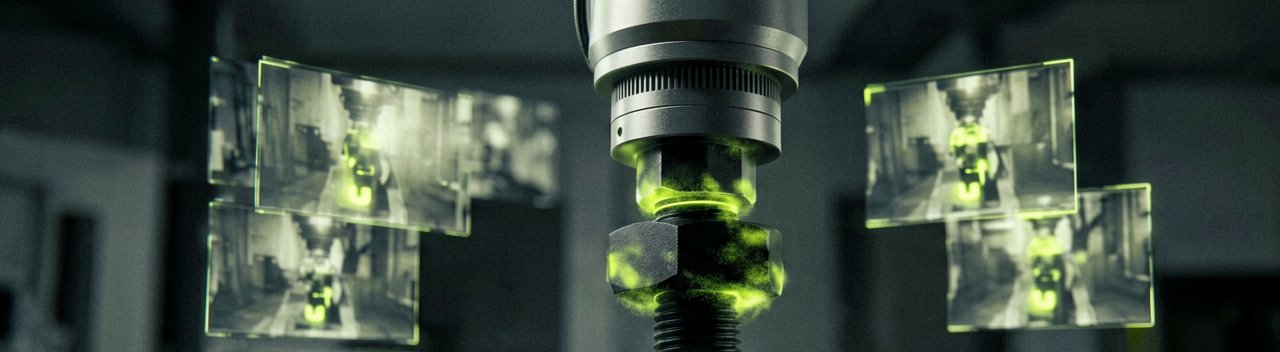
The implications for industrial automation are immediate, shifting the conversation away from rigid, pre-programmed routines toward true adaptability. On factory floors like those at Audi, traditional automation requires millions of dollars in custom tooling and weeks of programming just to alter a single step on an assembly line. The FLUX-mimic variant bypasses this rigidity by utilizing imitation learning, allowing operators to demonstrate a task physically while the model translates the visual data into actionable motor commands. This allows a single mechanical setup to transition from sorting complex, delicate components to executing heavy lifting tasks with minimal recalibration.
However, this convergence of digital synthesis and physical execution introduces unprecedented safety and alignment challenges that the broader AI community is only beginning to untangle. If a model can generate a photorealistic video of an event and simultaneously calculate the real-world mechanical forces required to replicate that event, the boundary between digital misinformation and physical risk blurs. Engineers close to the project emphasize that the phased rollout is not just a commercial strategy, but a necessary buffer to implement rigorous spatial bounding boxes and behavioral guardrails, ensuring the model's physical outputs remain strictly predictable within industrial environments.
Ultimately, Black Forest Labs is positioning this release as a foundational stepping stone toward a comprehensive world model. The strategy signals a profound shift in how tech journalists and researchers define the trajectory of artificial intelligence. It moves the goalpost from purely digital assistants that write code or paint pictures to embodied agents capable of understanding, navigating, and restructuring the tangible world, marking the definitive end of the era where generative media could be dismissed as mere digital illusion.
The Friction Between Digital Fluidity and Physical Reality
The Friction in the Hype Engine: While the engineering feat of binding video generation and physical robotics into a single model is undeniable, it forces an immediate collision between two radically different operational tolerances. In the digital realm, a generative video model can be considered a triumph if it maintains visual consistency ninety percent of the time, as the remaining ten percent simply results in a discarded render or an amusing digital artifact. On an active automotive assembly line, however, a ten percent error rate is not a minor quirk; it is a multi-million-dollar catastrophic failure that halts production, damages expensive machinery, and compromises worker safety. Black Forest Labs is attempting to bridge a world where mistakes are costless with a world where mistakes are costly, and the structural tension between those two paradigms remains unresolved.
This dichotomy exposes a deeper contradiction in the current push for universal "world models" driven by pure scale. The underlying assumption is that ingestive training on millions of hours of video will naturally endow a network with an absolute grasp of physical mechanics. Yet, video data is fundamentally flat and lacks the immediate feedback loop of tactile resistance, gravity, and material degradation. By relying on a unified architecture to solve both problems, the developers risk saddling their robotic control systems with the same hallucinations and erratic logic that still plague generative media, potentially requiring so many narrow, hard-coded safety guardrails that the theoretical flexibility of the model is choked out in practice.
Furthermore, the economic reality of deploying these massive multimodal transformers on the factory floor challenges the narrative of rapid, democratic industrial revolution. Running a model as complex as FLUX 3 requires immense, localized computational infrastructure, or a ultra-low-latency cloud connection that introduces severe cybersecurity vulnerabilities to critical industrial hardware. For the vast majority of manufacturing enterprises outside of massive conglomerates like Audi, the capital expenditure required to host and secure these advanced AI workflows will likely outweigh the costs of traditional, deterministic automation for years to come, turning what is marketed as a universal tool into a luxury exclusive to the tech-elite.
Looking ahead, this convergence will inevitably trigger a complex regulatory bottleneck that could stall deployment long before the technology itself matures. Existing frameworks for robot safety are built on predictable, deterministic software where every edge case can be mapped and mathematically constrained. Introducing an opaque, probabilistic transformer that fundamentally "improvises" its physical pathing creates a massive liability vacuum for insurers and regulators alike, raising difficult questions about accountability when a generative robotic system makes an unpredictable, non-repeatable error during physical execution.
Teaching an artificial mind to paint a flawless cinematic sunset and manipulate a heavy wrench simultaneously is a breathtaking achievement, though we should perhaps hold off on the celebrations until we are absolutely certain the robot can tell the difference between tightening a loose bolt on the chassis and tightening a loose bolt on its human supervisor.
Artūras Malašauskas is an AI Systems Integrator with 20+ years of production-grade web engineering experience. He has designed, shipped, and scaled enterprise Python/PHP systems for logistics, SaaS, and public-sector clients. For the past year, he has focused exclusively on AI integrations: deploying open-source LLMs, building generative media pipelines (image, audio, video), and engineering multi-agent workflows for real production environments. His standard: reproducibility, security, cost-efficient inference—no vaporware. He documents and evaluates emerging AI tooling, separating verified capabilities from marketing noise. Technical editor at: muza-ai.eu, ai-verslas.lt, ai-naujinos.lt Connect on LinkedIn
Comments