AMD Helios AI Rack Launch Signals a $1.4 Trillion Shift in Global Accelerator Market Dynamics
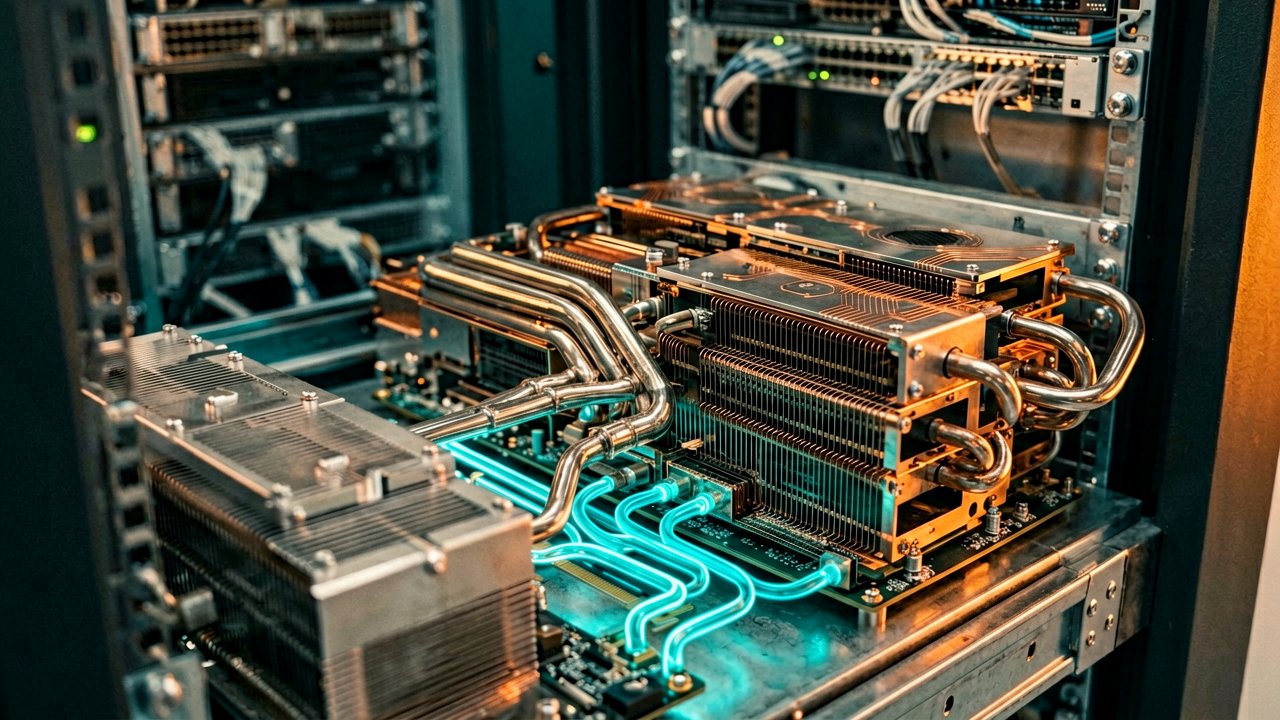
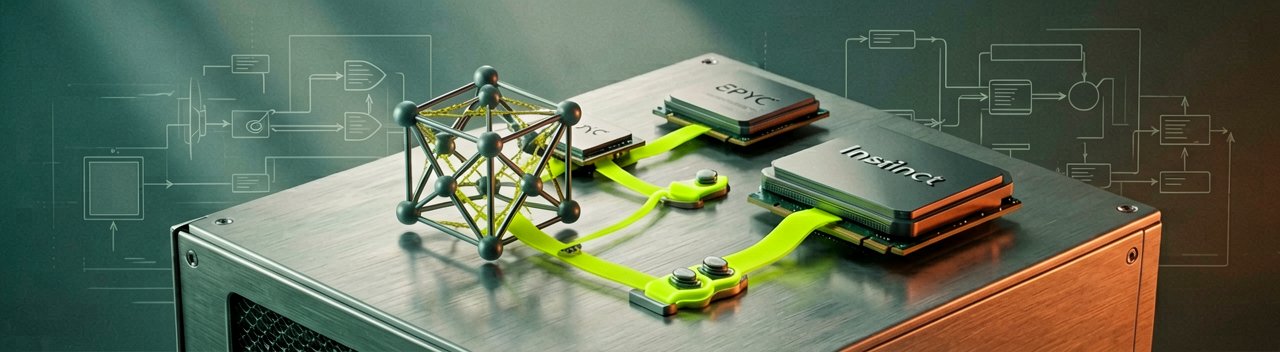
Advanced Micro Devices has officially unveiled its new Helios AI Rack system at the Advancing AI 2026 conference, shifting its corporate strategy from individual silicon sales to integrated, full-stack data center infrastructure. By packaging its Instinct GPUs, next-generation EPYC server CPUs, Pensando networking components, and ROCm software into a singular rack-scale ecosystem, AMD is launching a head-on offensive against competitors. This rollout underscores a broader pivot among hardware hyperscalers who must deliver comprehensive computing architectures to satisfy the modern enterprise market.
During the product unveiling, AMD CEO Lisa Su drastically revised the company's long-term market outlook, projecting that the global AI accelerator market will scale to a staggering $1.4 trillion valuation by 2030, a figure documented on the AMD Investor Relations Press Room. This milestone reflects an aggressive surge from previous industry estimates and implies that accelerator demand alone will soon rival the size of the entire contemporary semiconductor market. Crucially, early commercial validations have already emerged, with tech giants like Microsoft committing to deploy Helios architectures within their global Azure infrastructure alongside planned enterprise integrations from Meta, OpenAI, and Anthropic, as outlined by TechCrunch.
The Rise of Agentic Workloads and the Inference Shift
The core catalyst behind this massive $1.4 trillion market expansion is a structural evolution in how artificial intelligence operates. Global data center utilization has officially hit a inflection point where inference tasks—the execution of completed, live models—surpassed training requirements, representing roughly 60% of total AI compute allocation, as noted by Yahoo Finance . This shift is heavily accelerated by the rise of agentic AI frameworks, which replace simple, prompt-and-response queries with autonomous multi-step reasoning, real-time data access, and continuous iterative tool calls.
Systems-Level Architecture as the Crucial Competitive Frontier
Because agentic workflows require sophisticated background orchestration, data centers now demand tightly coupled clusters of both serial and parallel processors. AMD is capitalizing on this trend by using Helios to target its competitors' margins, engineering a combined hardware footprint designed to lower the aggregate cost per token. Industry dynamics indicate that building standalone fast silicon is no longer sufficient; the competitive frontier has migrated entirely to unified rack-level performance, cooling efficiency, open-source software libraries, and rapid plug-and-play hyperscale deployment.
Anatomy of a Silicon Siege
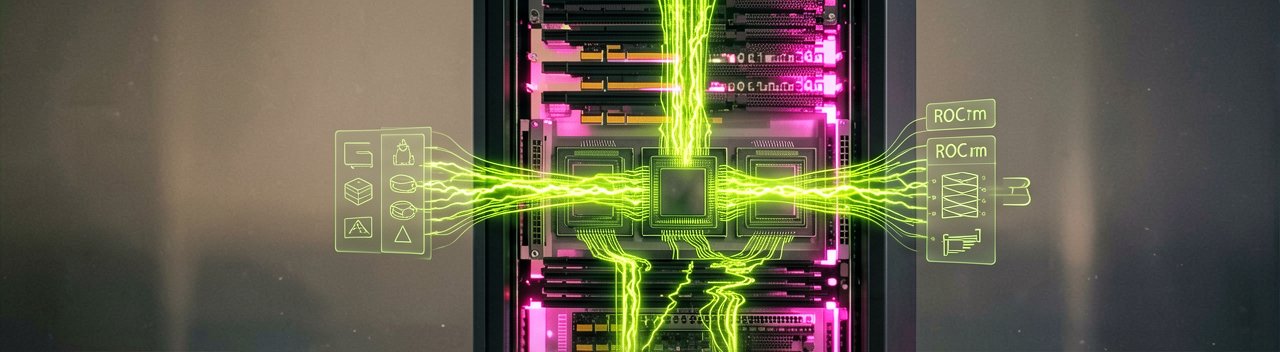
Beneath the Headline Numbers: The race to capture the projected $1.4 trillion market value highlights a fundamental transition from component-level manufacturing to integrated structural design. For nearly a decade, hyperscalers assembled their AI clusters using a piecemeal strategy, purchasing graphics processors from one vendor, network switches from another, and host central processing units from a third. This disjointed design often introduced massive latency bottlenecks at the physical interconnect level. AMD engineered the Helios architecture specifically to eliminate these networking frictions by locking memory pipelines, fabric switches, and computing engines into a native, pre-optimized rack topography.
Enterprise cloud architects indicate that the modern data center floor has reached its physical limits in terms of thermal dissipation and grid delivery. As a result, capital expenditure decisions are no longer guided solely by raw floating-point operations per second, but rather by the work delivered per watt at a rack-wide scale. By pre-integrating liquid-cooling manifests directly into the Helios platform, engineering teams are attempting to lower the total cost of ownership for cloud operators who face spiraling operational costs. This operational focus addresses a major pain point for large enterprise infrastructure providers who need to deploy dense computing clusters without forcing local power grids to overhaul their supply configurations.
This rollout also marks a major milestone in the long-term maturation of the open-source software ecosystem. Historically, alternative silicon faced significant software integration hurdles because proprietary computing platforms held a near-monopoly on production-grade machine learning frameworks. Years of sustained community investment into open-source developer toolkits, compilers, and runtimes have finally bridged this usability gap. By establishing software parity, enterprises can migrate workloads across disparate hardware architectures with minimal code modifications, effectively breaking vendor lock-in and allowing hyperscalers to run diverse, multi-vendor infrastructure strategies.
The geopolitical and supply chain implications of this infrastructure push are reshaping global component sourcing. Securing the specialized high-bandwidth memory chips and advanced advanced packaging technologies required for these systems remains a major industry bottleneck. By moving toward standardized, rack-scale delivery models, hardware providers are absorbing the logistical complexities of multi-source component procurement on behalf of their customers. This systemic shift guarantees predictable deployment timelines for tier-one cloud providers, allowing them to scale their next-generation agentic service clusters exactly when enterprise demand peaks.
Skepticism in the Silicon Valley Supply Chain
Reading Between the Lines: A $1.4 trillion market valuation sounds revolutionary on a balance sheet, but it relies on the assumption that enterprise software revenue will grow fast enough to justify this massive capital expenditure. Silicon providers are building hardware infrastructure at a pace that assumes corporations will indefinitely buy expensive computing power. However, many enterprise buyers are still struggling to turn generative AI pilots into profitable, scaled business applications. If the software monetization curve flattens over the next twenty-four months, cloud providers may suddenly slow down their hardware orders, leaving chipmakers with expensive, unsold inventory.
There is also a glaring contradiction between the tech industry's open-source marketing and the practical reality of data center operations. AMD promotes its platform as an open alternative that saves companies from proprietary vendor lock-in. Yet, delivering a fully integrated, pre-configured rack system creates a new kind of architectural dependence. Once a data center designs its power delivery, liquid-cooling loops, and management software around a specific vendor's rack ecosystem, swapping out those systems becomes incredibly difficult and expensive. The open-source software layer may offer code flexibility, but the physical hardware architecture remains highly restrictive.
Furthermore, the physical limitations of global energy grids could stall these optimistic growth projections long before a lack of market demand does. A single modern AI data center can require as much electricity as a small city, and utility companies cannot upgrade transformers or build clean energy plants fast enough to keep up. While chip designers boast about energy efficiency per token, the sheer volume of planned deployments will inevitably strain aging power infrastructures. Hardware manufacturers can optimize their silicon all they want, but their trillion-dollar market forecasts will mean very little if hyperscalers cannot get the permits to plug their new server racks into the electrical grid.
"Building a trillion-dollar sandbox for autonomous digital agents is a magnificent achievement, provided we can find enough electricity to keep the lights on—and enough profitable human enterprises to actually foot the bill."
Artūras Malašauskas is an AI Systems Integrator with 20+ years of production-grade web engineering experience. He has designed, shipped, and scaled enterprise Python/PHP systems for logistics, SaaS, and public-sector clients. For the past year, he has focused exclusively on AI integrations: deploying open-source LLMs, building generative media pipelines (image, audio, video), and engineering multi-agent workflows for real production environments. His standard: reproducibility, security, cost-efficient inference—no vaporware. He documents and evaluates emerging AI tooling, separating verified capabilities from marketing noise. Technical editor at: muza-ai.eu, ai-verslas.lt, ai-naujinos.lt Connect on LinkedIn
Comments