AMD Helios and $5 Billion Anthropic Deal Disrupt Nvidia’s AI Compute Monopoly
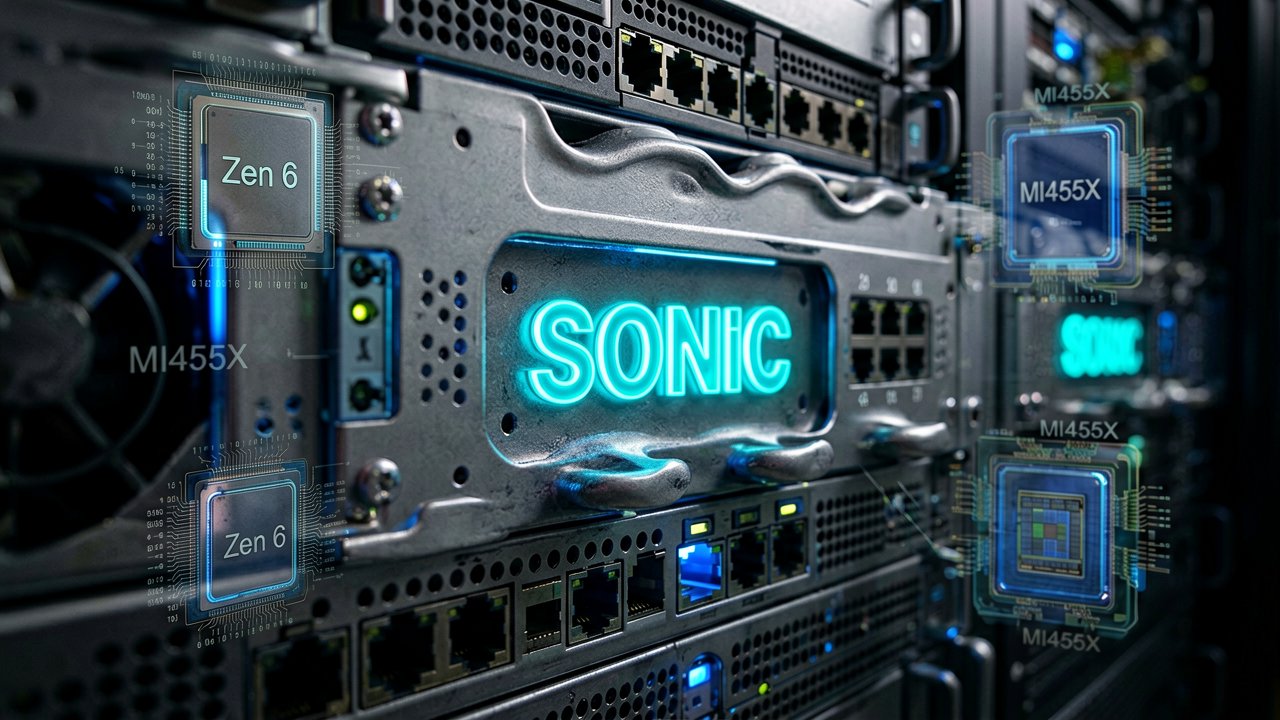
Advanced Micro Devices has initiated a monumental shift in the artificial intelligence hardware ecosystem at its AMD Advancing AI 2026 conference. By launching its highly anticipated AMD Helios rack-scale AI platform alongside a massive strategic equity investment of up to $5 billion in Anthropic, the company is systematically dismantling Nvidia's long-standing monopoly on hyperscale AI infrastructure. The full portfolio introduction demonstrates AMD's transition from a component supplier into a dominant provider of comprehensive, turnkey AI factories.
The market impact of this strategy is underscored by massive consumer commitments, featuring roughly 14 gigawatts of aggregate AI compute customer bookings across the industry. This include a landmark 2-gigawatt deployment pact with Anthropic to power future generations of its Claude foundation models using AMD Instinct MI455X GPUs. Additional multi-gigawatt infrastructure scaling plans with tech titans such as Meta and Microsoft signal that the world's largest AI cloud spenders are aggressively diversifying their supply chains away from proprietary hardware lock-ins.
From a financial and macroeconomic perspective, these announcements validate an exponential expansion of the high-performance computing market. Driven by the transition toward agentic AI frameworks, AMD executives revised their long-term server market outlook upward, projecting the data center Total Addressable Market (TAM) to swell toward approximately $2 trillion by 2030. By achieving immense, validated system sales and offering high token-per-dollar economics, AMD is establishing itself as a co-dominant force in the next era of infrastructure buildouts.
The Architecture of Helios and the Rack-Scale Strategy
The core of AMD's assault on Nvidia's data center business is Helios, a fully integrated, open-networking rack architecture engineered specifically for frontier-model training and massive large-scale inference workloads. Built to compete directly with Nvidia’s upcoming Vera Rubin platform, Helios unifies Zen 6-based 6th Generation AMD EPYC "Venice" processors, Instinct MI455X accelerators, Pensando data processing units (DPUs), and an ultra-fast backend interconnect. According to data released by Analytics India Magazine, the production-ready Helios configuration yields up to 15% more compute performance and 50% more memory capacity than Nvidia’s comparative NVL72 architectures, giving cloud builders an immediate upgrade in resource density.
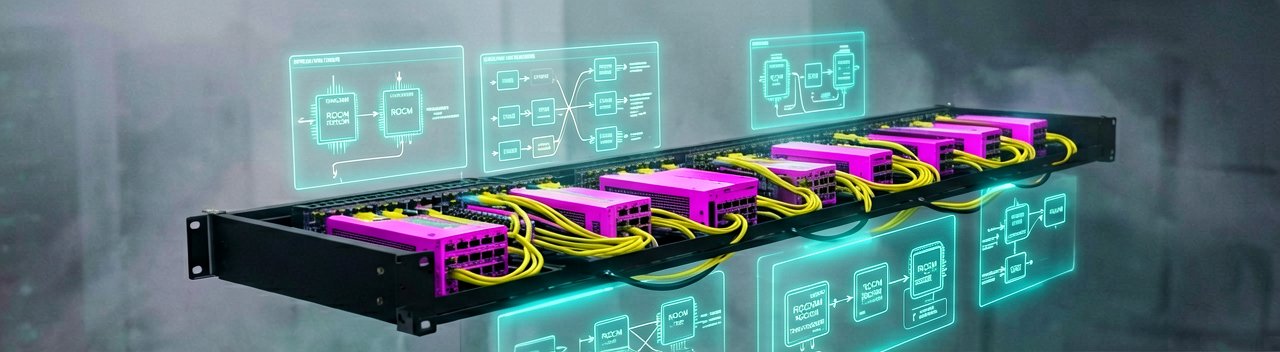
Crucially, AMD is leveraging open networking standards to undermine Nvidia’s high-margin InfiniBand ecosystem. Helios builds its entire high-throughput communications fabric on open Ethernet, utilizing the open-source SONiC (Software for Open Networking in the Cloud) operating system stack to allow seamless integration into existing hyperscale data centers without proprietary networking equipment. This architecture delivers up to 30% more inference tokens per dollar than competitive products, dramatically lowering the total cost of ownership for hyper-growth AI companies and enterprise operations alike.
The Anthropic Alliance and Deep Software Co-Development
AMD’s $5 billion investment in Anthropic represents more than a mere capital deployment; it is a deep, symbiotic engineering alliance designed to neutralize Nvidia's strongest moat: the CUDA software ecosystem. Under this multiyear agreement, Anthropic will extensively integrate the AMD ROCm open software framework into its research and production pipelines. Anthropic’s frontier model, Claude, will be utilized natively by AMD engineers to accelerate internal kernel engineering, optimize hardware workloads, and automate complex chip design sequences, building a self-improving development loop.
This software optimization blueprint is mirrored in AMD's expanding tier-one customer matrix. Hyperscalers and pioneer research labs, including OpenAI and Microsoft, are actively collaborating with AMD to maximize performance on GPT-class workloads by pairing OpenAI's open-source Triton framework with ROCm. As major infrastructure operators prepare to bring multi-gigawatt Helios clusters online between late 2026 and 2028, the collaborative optimization of open software layers effectively erases the historical ease-of-use advantages that previously kept developers bound to Nvidia hardware.
Behind the Scenes of the Compute Realignment
The sudden shift in capital toward AMD's architecture highlights a growing friction point between hyperscalers and Nvidia's vertically integrated business model. For years, major cloud providers tolerated premium margins and strict allocations because no viable alternative existed for frontier model training. By injecting $5 billion directly into Anthropic, AMD did not just buy a customer; it fundamentally altered the venture dynamics of the AI industry. This massive capital injection provides Anthropic with the balance sheet autonomy to break away from exclusive cloud-hardware dependencies, creating a structural blueprint for other independent labs seeking to diversify their infrastructure stacks.
Industry insiders indicate that the 14-gigawatt booking figure represents a historic pivot in how data center capacity is planned and provisioned. Historically, power allocations were secured incrementally as hardware became available. The forward-booking of gigawatt-scale power specifically tailored for the Helios platform proves that hyperscalers are now architecting entire physical facilities around AMD’s open networking roadmap. This long-term real estate commitment effectively ensures that even if competitor silicon improves in the short term, AMD has locked in a substantial portion of the global data center footprint for the next half-decade.
This market transition also marks the maturity of the open-source software movement as a counterweight to proprietary ecosystems. The collaborative optimization of the ROCm framework alongside OpenAI’s Triton and Anthropic’s internal tooling has dissolved the developer friction that once protected Nvidia's market share. Engineering teams are no longer forced to rewrite foundational code to run on non-CUDA hardware. As frontier models transition from research experiments to enterprise-grade agentic workflows, the metric that matters most to boardrooms has shifted from raw theoretical compute peaks to predictable tokens-per-dollar efficiency, an area where AMD's aggressive pricing strategy is gaining massive traction.
Ultimately, the multi-gigawatt agreements with Meta, Microsoft, and Anthropic signal the beginning of a true duopoly in the high-performance compute market. By aligning its hardware directly with open Ethernet standards and the SONiC operating system, AMD has positioned itself as the vendor of choice for an industry deeply fearful of monopoly lock-in. The next phase of this hardware race will not be won merely by manufacturing faster chips, but by securing the global energy reserves and engineering alliances necessary to keep those chips running at scale.
Reading Between the Lines of the Hardware Hype
While the market has reacted with immense enthusiasm to AMD’s 14-gigawatt booking figure, a measured analysis reveals significant operational contradictions that could temper these long-term projections. Securing verbal or contractual commitments for data center capacity is fundamentally different from illuminating live silicon on a data center floor. The global energy grid is facing unprecedented strain, and the actual timeline required to bring 14 gigawatts of power online stretches well into the next decade, irrespective of AMD's production capacity. There is a distinct possibility that these historic bookings act more as an insurance policy for hyperscalers than a guaranteed near-term revenue stream for AMD.
Furthermore, the high-profile $5 billion investment in Anthropic exposes a delicate tension within the AI ecosystem. By directly financing a major foundation model developer, AMD is treading dangerously close to competing with its own primary customer base—namely Microsoft and Meta, who are heavily invested in their own proprietary and open-source models. Hyperscalers have traditionally looked askance at chip vendors who venture into the application and model layers, as it disrupts the neutral supplier dynamic. AMD must carefully manage this delicate balancing act to ensure its alliance with Anthropic does not inadvertently alienate the cloud titans driving its multi-gigawatt pipeline.
There is also the matter of execution risk regarding the Helios platform's total reliance on open Ethernet networking. While championing open standards like SONiC appeals to enterprise buyers eager to escape Nvidia’s high-margin InfiniBand lock-in, open systems inherently lack the tightly coupled, hyper-optimized performance characteristics of a single proprietary stack. At ultra-large clusters scaling to hundreds of thousands of GPUs, even minor latency variances in networking fabrics can lead to severe degradation in training efficiency. AMD is betting that its superior memory capacity and competitive tokens-per-dollar economics can offset the raw execution advantages of a fully vertical stack, a thesis that will only be proven once these massive clusters are operating under peak workloads.
"In the end, the tech industry's frantic dash to break Nvidia's monopoly has cost billions of dollars, reshaped the global energy grid, and forced chipmakers to become venture capitalists overnight—proving that the only thing more expensive than buying proprietary AI hardware is trying to build a cheaper alternative."
Artūras Malašauskas is an AI Systems Integrator with 20+ years of production-grade web engineering experience. He has designed, shipped, and scaled enterprise Python/PHP systems for logistics, SaaS, and public-sector clients. For the past year, he has focused exclusively on AI integrations: deploying open-source LLMs, building generative media pipelines (image, audio, video), and engineering multi-agent workflows for real production environments. His standard: reproducibility, security, cost-efficient inference—no vaporware. He documents and evaluates emerging AI tooling, separating verified capabilities from marketing noise. Technical editor at: muza-ai.eu, ai-verslas.lt, ai-naujinos.lt Connect on LinkedIn
Comments