AMD Bridges Edge and Data Center Ecosystems in Major Physical AI Infrastructure Expansion
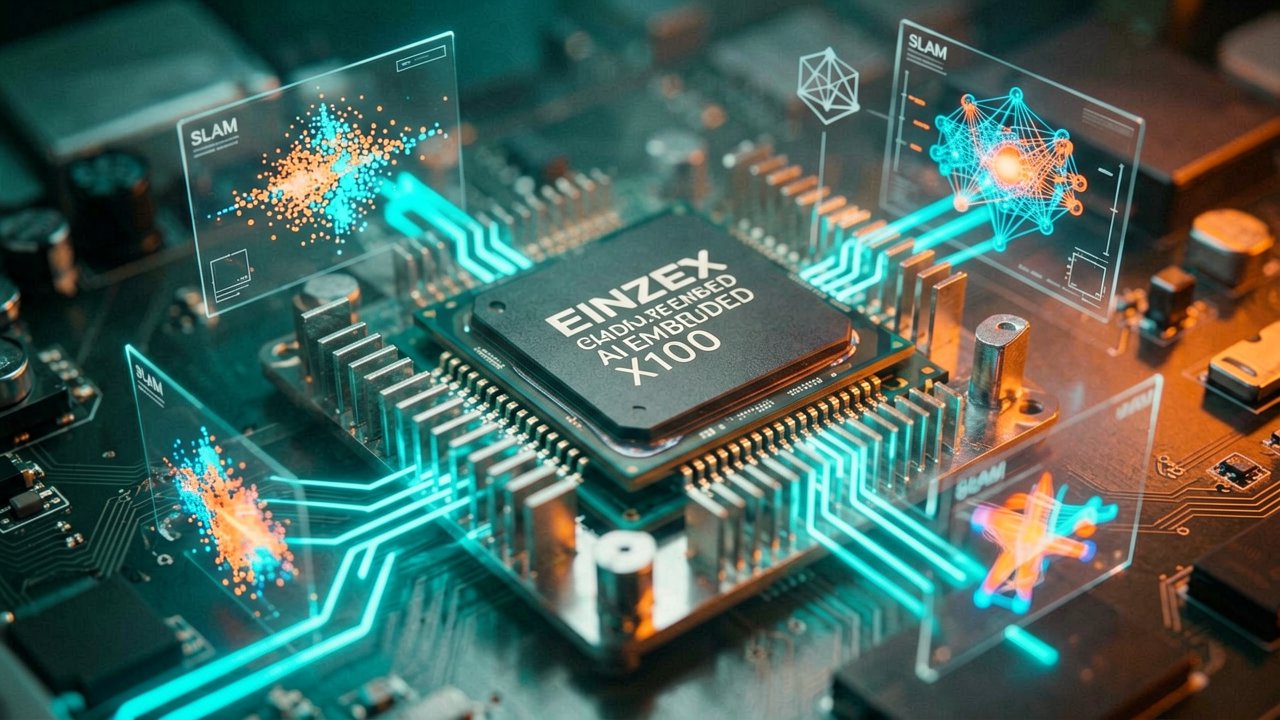
Advanced Micro Devices has enacted a major tactical expansion into the burgeoning physical AI and industrial robotics sectors. By introducing a comprehensive stack of hardware that stretches from silicon optimized for autonomous machines to massive rack-scale data center infrastructure, AMD is repositioning itself to challenge entrenched silicon incumbents. This multi-tiered product rollout underscores a profound industry pivot, where the focus of artificial intelligence is expanding rapidly from cloud-based large language models toward embodied edge intelligences operating in the physical world.
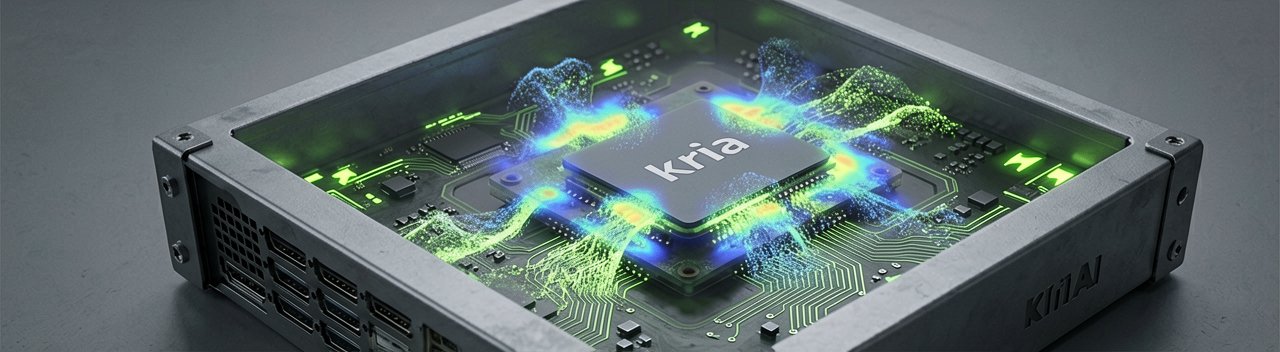
The centerpiece of this edge-computing offensive is the Ryzen AI Embedded X100 Series processors. These chips combine high-performance Zen 5 compute cores, advanced graphics architectures, and dedicated Neural Processing Units (NPUs) onto a single piece of silicon tailored for heavy-duty autonomous machines. Accompanying this architecture is the Kria AI System-on-Module (SoM) ecosystem, a developer-friendly deployment platform engineered to supercharge edge inference. According to documentation tracked by CNX Software , testing indicates the Kria AI SoM can scale to support up to 234 concurrent agents and execute up to 8,000 real-time decisions per second when integrated with industrial control systems.
Simultaneously, AMD addressed the backend data processing pipelines required to train and coordinate these distributed fleets by expanding its core data center matrix. At its milestone industry showcase, the semiconductor pioneer unveiled refreshed Instinct GPUs, next-generation EPYC server CPUs, and the specialized Helios rack-scale AI platform. This double-sided launch strategy demonstrates AMD's intent to capture the entire lifecycle of physical AI, processing raw data at the core while executing complex neural workloads at the extreme edge.
Heterogeneous Architecture Driving the Robotics Frontier
In physical AI, processing bottlenecks lead directly to kinetic failures, making workload consolidation a safety-critical design metric. AMD’s silicon architecture meets this challenge by relying on a heterogeneous engine that segregates tasks across specialized compute blocks. The Ryzen AI Embedded X100 processors handle high-level logic and deterministic decision-making via the CPU, offload spatial mapping and multi-camera Simultaneous Localization and Mapping (SLAM) routines to the integrated GPU, and route computer vision inference to a dedicated 50 TOPS XDNA 2 NPU. This unified processing model drastically lowers latency by eliminating the bandwidth penalties associated with routing data between disparate chips on a circuit board.
Ecosystem Integration and Standardized Deployments
To accelerate commercial adoption, AMD is leaning on a network of hardware partners to package its technology into industrial-grade, standardized form factors. A prime example of this market integration is the new COMX-C710 module developed by ARBOR Technology. As detailed by PR Newswire, this module utilizes the standardized COM-HPC Client Size C form factor to offer a combined 126 TOPS of total AI computing performance. By securing immediate partner integration, AMD lowers engineering barriers for system integrators building Autonomous Mobile Robots (AMRs), collaborative factory arms, and advanced medical imaging equipment that must operate reliably in harsh, wide-voltage environments.
Data Center Synergy and Market Disruption
AMD’s holistic design ethos is clearly visible in how its edge components tie back into massive data center deployments. The enterprise-grade Helios rack-scale platforms are designed to process the structural data collected by millions of edge nodes worldwide. Tech analysis from SiliconANGLE confirms that this infrastructure buildout addresses a critical demand for cohesive, turnkey enterprise fabrics that support agentic AI workloads and heavy foundation model training. By delivering open, scalable building blocks across both the data center and the physical edge, AMD is effectively executing a squeeze play against Nvidia's dominant market position, leveraging open standards to court cost-conscious, hyper-scale industrial clients.
The Hidden Architecture of the Physical AI Transition
Beyond the Silicon Hype: AMD’s aggressive infrastructure play marks a vital course correction for an industry increasingly bottlenecked by cloud-centric AI models. While the tech sector has spent years funneling capital into massive data centers to train LLMs, the actual monetization of agentic AI requires these digital minds to act within physical environments. Moving AI from pristine server racks to unpredictable factory floors introduces punishing real-world constraints like variable power supplies, thermal spikes, and the immediate threat of kinetic collisions. By engineering a synchronized stack that handles training in the cloud and deterministic processing at the edge, AMD is attempting to build the nervous system for an era where software must safely navigate three-dimensional space.
The strategic deployment of the Ryzen AI Embedded X100 and the Kria AI SoMs addresses a massive pain point for robotics engineers who have long struggled with fragmented hardware architectures. Historically, building an autonomous machine meant cobbling together a CPU for general logic, a discrete GPU for spatial mapping, and an auxiliary accelerator for computer vision inference. This fractured approach introduced severe latency penalties and compounded system power consumption. AMD’s heterogeneous design consolidates these disparate processing nodes onto a single piece of silicon, dramatically slashing the time it takes for a machine to sense, decide, and act. For industrial stakeholders, this latency reduction is not just a performance metric—it is the difference between a collaborative factory robot stopping safely before a human worker or causing an onsite injury.
This hardware convergence is also forcing an evolution in developer ecosystems, where AMD has historically trailed behind Nvidia's proprietary CUDA platform. By aligning its new physical AI hardware with open standards and expanding its ROCm software ecosystem to bridge the gap between edge silicon and data center GPUs, AMD is executing a classic ecosystem squeeze play. Industrial system integrators are notoriously risk-averse and value long-term hardware availability over raw peak performance benchmarks. AMD's collaboration with embedded computing veterans to deliver standardized modules ensures that factory managers can upgrade their processing power without entirely redesigning their existing mechanical chassis or rewriting decades of legacy operational technology automation software.
Ultimately, this holistic deployment strategy positions AMD to capitalize on the next major wave of enterprise capital expenditure. As the initial speculative fervor around purely digital chat interfaces matures into pragmatic industrial automation, the market demand is shifting toward vendors who can provide end-to-end data lifecycle pipelines. The structural data captured by autonomous fleets on the factory floor will inevitably be routed back to the Helios rack-scale systems to retrain foundational vision-language-action models. By securing both ends of this data loop, AMD ensures it remains indispensable to the industrial enterprise, transforming itself from a mere chip component vendor into a foundational architect of the physical AI revolution.
The Friction Between Silicon Ambition and Operational Reality
Reading Between the Lines: AMD’s dual-pronged hardware offensive paints a compelling picture of a seamless, end-to-end AI feedback loop, but it quietly glints past the massive architectural friction points built into modern industrial enterprises. The assumption that factory operators and warehouse logisticians will eagerly swap out their reliable, legacy operational technology for cutting-edge agentic hardware ignores the deep-seated conservatism of industrial engineering. In the physical world, a software bug does not just crash an application—it destroys million-dollar machinery or halts global supply chains. AMD’s rapid-fire release of high-TOPS silicon addresses raw processing muscle, yet it does little to soothe the anxiety of system integrators who prioritize multi-decade reliability and deterministic predictability over the statistical probabilities inherent in neural network inference.
Furthermore, AMD’s strategy highlights an underlying structural contradiction in the current physical AI boom: the push for massive compute density at the edge directly clashes with the thermal and power realities of harsh industrial environments. Packing Zen 5 compute cores, advanced graphics architectures, and 50-TOPS NPUs onto a single embedded module sounds revolutionary on a tech journalist's spec sheet. However, deploying these thermal-heavy architectures inside unventilated, IP67-rated sealed enclosures on a dusty factory floor introduces brutal engineering trade-offs. If these modules must constantly throttle their clock speeds to avoid overheating under continuous real-time processing loads, the theoretical performance advantages over lower-power, highly specialized microcontrollers evaporate rapidly.
There is also the unresolved elephant in the room regarding software maturity and developer lock-in. While AMD deserves credit for aggressively expanding its ROCm ecosystem and embracing open standards to counter Nvidia’s dominant proprietary stack, a software ecosystem cannot be willed into maturity overnight through hardware press releases. The robotics community remains deeply entrenched in workflows optimized for competing architectures over the course of a decade. For AMD to truly displace the incumbent, it must convince thousands of historically skeptical embedded developers that its software tools are not just capable of running training workloads in the cloud, but are flawlessly dependable when executing split-second, safety-critical computer vision pipelines at the extreme edge.
Looking ahead, the long-term success of this infrastructure gamble relies entirely on whether enterprise buyers view the physical AI revolution as a genuine productivity driver or a highly pressurized corporate trend. If the market experiences an "AI winter" or a contraction in capital expenditure, the demand for complex rack-scale infrastructure like the Helios platforms could soften dramatically before edge-device ecosystems have a chance to mature. AMD has successfully engineered a technologically impressive bridge between the data center and the physical robot, but the company must now survive the grueling, slow-moving reality of industrial sales cycles to prove that this bridge can actually sustain heavy commercial traffic.
"We are told that the future belongs to autonomous machines capable of making thousands of real-time decisions per second, which is certainly a comforting thought for anyone who has ever watched a premium cloud-based AI struggle to format a basic spreadsheet without losing its mind."
Artūras Malašauskas is an AI Systems Integrator with 20+ years of production-grade web engineering experience. He has designed, shipped, and scaled enterprise Python/PHP systems for logistics, SaaS, and public-sector clients. For the past year, he has focused exclusively on AI integrations: deploying open-source LLMs, building generative media pipelines (image, audio, video), and engineering multi-agent workflows for real production environments. His standard: reproducibility, security, cost-efficient inference—no vaporware. He documents and evaluates emerging AI tooling, separating verified capabilities from marketing noise. Technical editor at: muza-ai.eu, ai-verslas.lt, ai-naujinos.lt Connect on LinkedIn
Comments