Breaking the Patch Cycle: Lineaje Launches AI Factory to Systematically Kill Software Exploits
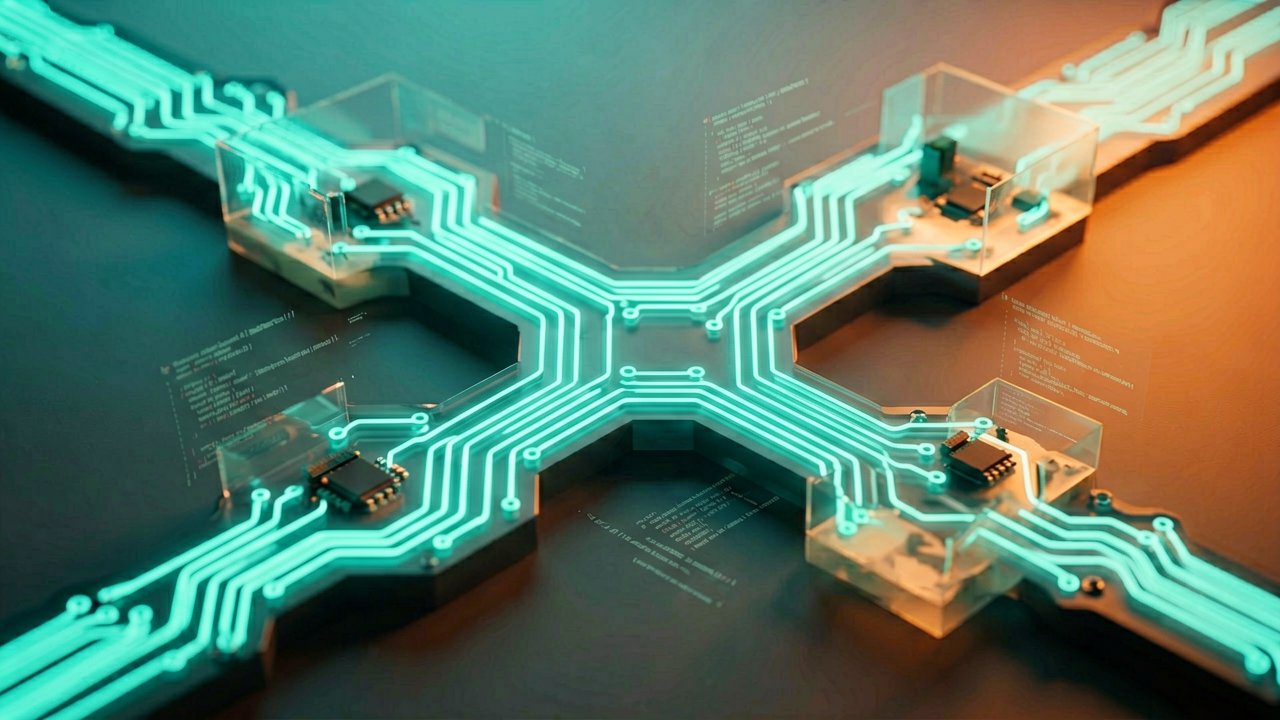
The traditional corporate cycle of software patching has long been an exhausting game of whack-a-mole, but software security pioneer Lineaje thinks it has found a way to pull the plug on the game entirely. On July 21, 2026, the company officially launched its Continuous Vulnerability Elimination Factory (CVEF), a fully automated platform engineered to proactively find, fix, and verify software flaws before malicious actors ever get the chance to weaponize them. According to a press release detailed on Business Wire , this new enterprise-grade system attempts to move the security industry away from standard, reactive scanning and push it into a state of continuous, automated hardening.
The urgency behind this roll-out stems from a staggering reality shift in application security. Lineaje Labs recently revealed that when malicious actors use frontier AI models, the percentage of software vulnerabilities that are practically exploitable skyrockets from a mere 1.5% to more than 90%. Because advanced AI can rapidly generate functional code exploits, flaws that human engineers previously dismissed as too obscure or un-exploitable have suddenly become open highways for enterprise attacks.
Inside the Autonomous Find-and-Fix Engine
At the center of this defense infrastructure is an add-on module called Frontier Defense. This capability operates as an agentic AI harness, running nine fortified AI sandboxes simultaneously to detect complex, AI-generated vulnerabilities, build temporary proof-of-concept exploits to confirm the threat, and then output verified, compatible code patches. Lineaje is aiming to compress the standard, chaotic timeline of enterprise patch management into a tight, autonomous 24-hour cycle.
While the heavy lifting is handled by autonomous agents, the architecture leaves final execution authority in human hands. The system orchestrates testing and delivers pre-tested, ready-to-approve code fixes directly into existing developer pipelines, which Lineaje claims can shrink engineering workloads by up to 90%. As software development leans heavily on open-source dependencies and AI-assisted generation, the ultimate goal of the system is to help overwhelmed enterprises achieve a baseline of zero exploitable vulnerabilities within 90 days and keep them there safely.

What Most Reports Miss: The Structural Trap of Legacy Remediation
For decades, Chief Information Security Officers have operated under a dangerous fiction: that finding a vulnerability is the same thing as fixing it. In reality, the industry has spent billions of dollars on sophisticated scanning tools that do little more than generate endless, anxiety-inducing spreadsheets for developer teams. This reactive approach has broken the relationship between security operations and software engineering. While security teams demand immediate remediation, developers are left to manually hunt down obscure dependencies, decipher cryptic alerts, and hope that implementing a generic patch won't inadvertently crash an entire production environment.
By shifting the burden of remediation onto an automated system, Lineaje is tackling the systemic bottleneck of human fatigue. The traditional workflow relies on engineers manually reviewing code, writing patches, and running regression tests—a process that routinely takes weeks, if not months, per vulnerability. When weaponized AI enters the equation, this human latency becomes a fatal flaw. Security teams simply cannot type fast enough to outrun an algorithm that can scan, identify, and exploit a code base in a matter of minutes. Automated elimination is no longer a luxury for overstretched teams; it has become the baseline requirement for enterprise survival.
The engineering philosophy behind this autonomous factory relies on a concept known as "clean source," ensuring that every component within the software supply chain is verified down to its foundational DNA. Modern enterprise applications are rarely built from scratch; they are digital patchworks of open-source libraries, third-party packages, and legacy components. Lineaje’s architecture addresses this by treating the software bill of materials not as a static compliance document, but as a living map that requires constant, automated upkeep. By isolating vulnerabilities within sandboxes and generating precise, contextual code fixes, the system mitigates the fear of "breaking changes" that historically caused developers to delay critical security updates.
Industry analysts view this shift toward agentic AI defense as a turning point for corporate risk management. Historically, regulatory compliance frameworks allowed organizations to maintain a backlog of unresolved flaws, provided they were classified as low or medium risk. However, with adversarial AI converting previously benign bugs into viable attack vectors overnight, that risk calculus has completely collapsed. Security leaders are now forced to recognize that any unpatched flaw is a ticking time bomb, forcing a industry-wide migration toward platforms that can guarantee continuous hardening without paralyzing development velocity.

Reading Between the Lines: The Mirage of the Frictionless Patch
While the promise of a self-healing software ecosystem is undeniably attractive, enterprise leaders must temper their enthusiasm with healthy skepticism. The marketing narrative surrounding autonomous remediation implies a seamless integration into existing developer workflows, but history suggests otherwise. Automated code generation, even when guided by sophisticated agentic frameworks, introduces a new layer of trust and validation issues. Software engineers are notoriously protective of their codebases, and convincing them to blindly trust an AI factory to inject patches directly into production pipelines requires a massive leap of faith that many conservative enterprises may be unwilling to make.
Furthermore, the reliance on nine simultaneous AI sandboxes to validate patches raises significant questions about operational overhead and resource consumption. Simulating complex enterprise environments to prove an exploit or verify a fix is an incredibly compute-heavy endeavor. For massive organizations managing thousands of applications, the sheer volume of continuous testing could generate substantial cloud computing costs, potentially shifting the financial burden from security engineering hours to infrastructure invoices. Enterprises will need to carefully calculate whether the cost of running an AI factory ultimately undercuts the savings gained from reducing human developer workloads.
There is also the inevitable paradox of the defensive arms race to consider. As security vendors deploy AI factories to eliminate vulnerabilities, adversarial groups will undoubtedly use the exact same underlying technologies to stress-test their exploits against those automated fixes. If an AI engine can generate a patch in twenty-four hours, an offensive AI might find a way around that patch in twelve. This continuous loop of automated measure and countermeasure threatens to accelerate the speed of cyber warfare to a pace where human oversight becomes completely ceremonial, leaving corporations dependent on a black box to defend another black box.
Ultimately, Lineaje’s bold attempt to permanently disrupt the exploit cycle will live or die by its accuracy rate. In software development, a false positive that breaks a critical business application is often viewed as a greater sin than an unpatched vulnerability sitting quietly in the background. If the automated factory introduces subtle logic bugs or regression failures into enterprise software, developers will quickly flip the safety switch to manual, reverting the organization right back to the chaotic, spreadsheet-driven patching cycle they were trying to escape.
"We are rapidly approaching a future where enterprise security consists of our AI tirelessly fixing code that a different AI accidentally broke, while everyone prays the whole digital house of cards doesn't collapse during the next software update."
Artūras Malašauskas is an AI Systems Integrator with 20+ years of production-grade web engineering experience. He has designed, shipped, and scaled enterprise Python/PHP systems for logistics, SaaS, and public-sector clients. For the past year, he has focused exclusively on AI integrations: deploying open-source LLMs, building generative media pipelines (image, audio, video), and engineering multi-agent workflows for real production environments. His standard: reproducibility, security, cost-efficient inference—no vaporware. He documents and evaluates emerging AI tooling, separating verified capabilities from marketing noise. Technical editor at: muza-ai.eu, ai-verslas.lt, ai-naujinos.lt Connect on LinkedIn
Comments