Black Forest Labs FLUX 3 Reshapes the Visual AI Landscape with Unprecedented Multimodal Capabilities
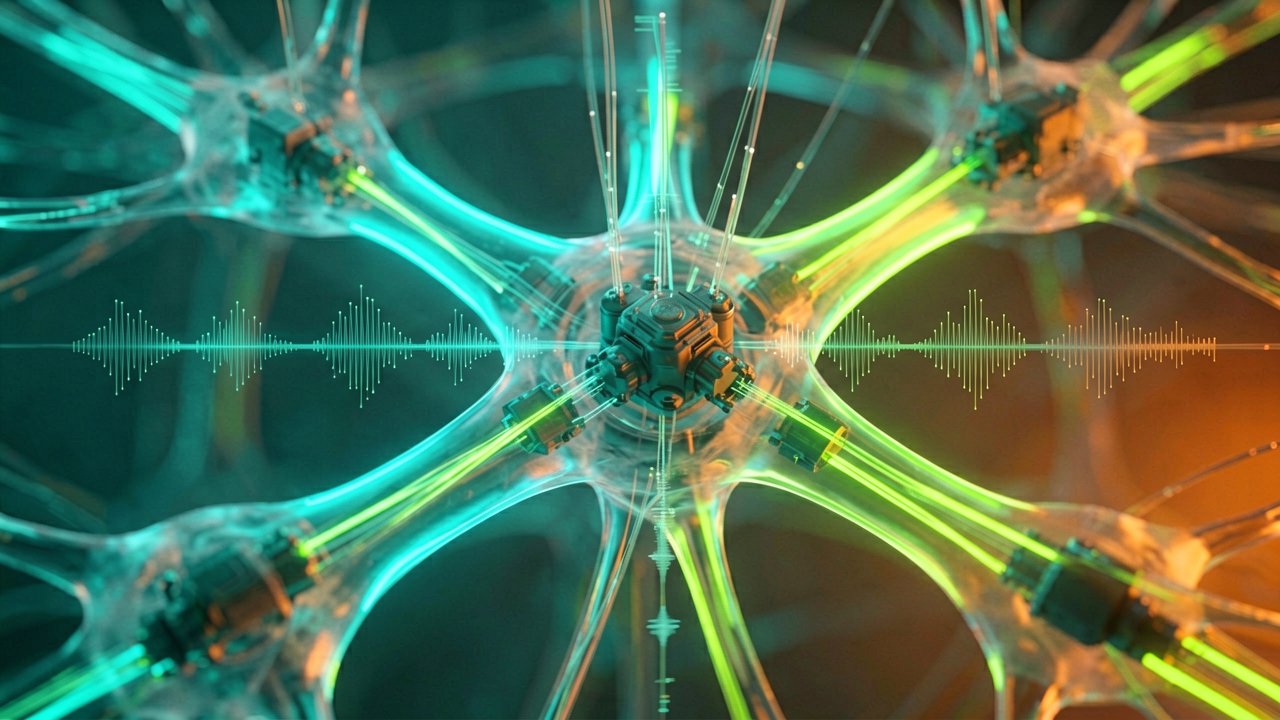
Freiburg-based generative AI pioneer Black Forest Labs has officially launched FLUX 3, a natively multimodal frontier model that fundamentally unifies content creation and physical AI. Moving beyond isolated text-to-image systems, FLUX 3 simultaneously learns from images, video, and audio within a single, cohesive architecture. This strategic milestone transitions the enterprise paradigm away from disjointed single-modality tools toward integrated world models capable of perceiving, predicting, and interacting across digital and physical spaces alike. The baseline announcement and technical philosophy are detailed via the Black Forest Labs Blog.
The release marks a massive structural shift for the creative technology ecosystem. Backed by a $3.25 billion valuation and over $450 million in capital from strategic heavyweights like Andreessen Horowitz, NVIDIA, Salesforce Ventures, and Adobe Ventures, Black Forest Labs has built an architecture engineered for commercial-grade deployment. By consolidating image generation, multi-lingual dialogue, and 20-second high-fidelity video generation paired with natively synchronized audio into one system, FLUX 3 eliminates the friction of translating assets between fragmented models. Enterprise platforms like Canva, Picsart, and Magnific are already actively piloting the model to stabilize identity and material consistency across complex production pipelines, as noted by .
The Architecture of Self-Flow and Physical Simulation
At the core of the FLUX 3 framework is "Self-Flow," a breakthrough training approach developed to efficiently align multimodal generation and contextual understanding under one backbone. By scaling compute resources across multiple training inputs simultaneously, the model bypasses traditional generation errors. The practical result is an unprecedented leap in spatial intelligence: the model recognizes causal relationships, such as syncing mechanical impacts with native acoustics, while maintaining zero-drift facial expressions and precise multilingual typography across moving frames. This capability allows the model to act as a simulator of real-world physics rather than a simple pixel aggregator.
Bridging Pixels to Machinery via FLUX-mimic
The most industry-disrupting aspect of FLUX 3 lies in its extension into physical AI and robotics automation. Developed in close collaboration with mimic robotics, Black Forest Labs introduced FLUX-mimic, a specialized video-action model built directly atop the FLUX 3 foundation. According to the deployment documentation on the mimic robotics Blog, the system leverages massive video pre-training to inherit spatial and behavioral priors, drastically reducing the amount of task-specific demonstration data required to train hardware. The technology has already progressed to real-world industrial validation, undergoing active testing on factory floors with automotive partners like Audi to handle soft-body manipulation tasks historically deemed impossible for rigid automation systems.
Market Rollout Strategy and Open-Weight Disruption
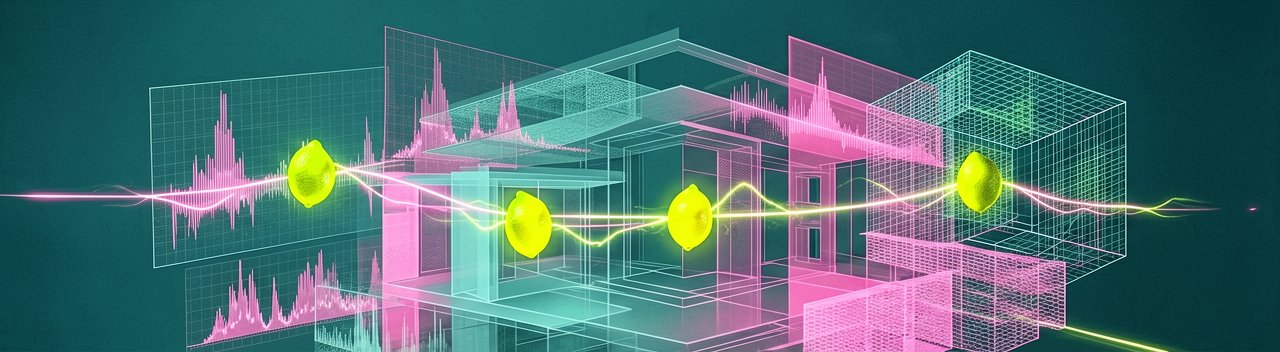
Black Forest Labs is deploying FLUX 3 through a tiered release matrix consisting of FLUX 3 Video, FLUX 3 Image, FLUX 3 Action, and FLUX 3 Dev. While commercial access to image and video generation is initially launching via restricted developer APIs and private weight access, the upcoming "Dev" version will provide open-weight access to the multimodal backbone. This calculated open-ecosystem strategy positions Black Forest Labs directly against proprietary, closed-loop alternatives. Providing a unified open-weight license covering image, audio, video, and action prediction allows global enterprises to securely host, fine-tune, and run low-latency local deployments on private corporate data and robotic control frameworks.
Behind the Scenes of the Multimodal Monolith
The acceleration of Black Forest Labs into a dominant position reveals a carefully calculated strategy to outmaneuver the structural limitations of early generative AI. In the initial wave of AI development, tech conglomerates built siloed ecosystems, requiring enterprises to stitch together disparate models for text, image, and motion. This fragmented pipeline caused immediate compounding errors; spatial geometry from an image generator would break the moment a physics engine attempted to animate it. By building FLUX 3 from the ground up as a singular, unified world model, the engineering team bypassed these translation layers entirely, creating an environment where spatial boundaries, material textures, and temporal audio are understood natively by the same underlying neural network.
Industry insiders emphasize that the architectural shift toward the unified "Self-Flow" mechanism changes the competitive dynamic for compute infrastructure. Previously, training multi-billion parameter models required massive, disparate data pipelines that struggled with synchronizing audio and visual elements during backpropagation. FLUX 3 solves this by evaluating video, sound waves, and physical constraints in the same latent space, allowing the model to learn cause-and-effect relationships simultaneously. Venture capitalists backing the firm have noted that this efficiency drastically lowers the cost of training, transforming what used to be a prohibitively expensive R&D cycle into an approachable, highly scalable commercial platform.
The enterprise adoption pattern highlights how deeply corporate partners are relying on this architectural consistency. Leading design suites and creative agencies had grown fatigued by the unpredictability of early text-to-video tools, which frequently caused brand assets or human figures to warp across frames. Early testing cohorts within major digital design platforms indicate that FLUX 3 maintains precise identity retention across extended, high-definition sequences. For global brands, the ability to generate a 20-second cinematic asset where typography remains legible, lighting respects physics, and audio automatically syncs to sudden movements removes the need for extensive manual post-production.
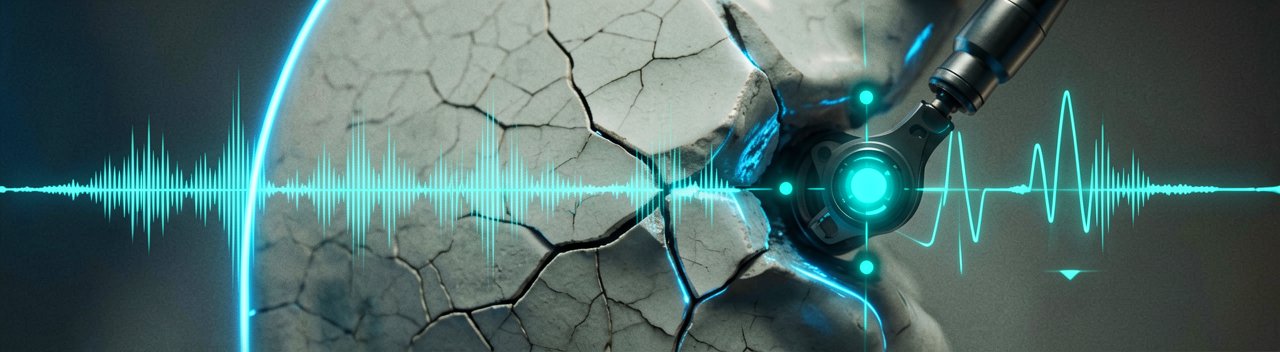
Beyond the creative sphere, the collaborative work on the FLUX-mimic platform signals a profound convergence between digital pixels and industrial machinery. Traditional robotics companies spent years programming specific logic loops or collecting millions of physical trial-and-error demonstrations just to teach a robotic arm how to grasp a flexible wire or soft component. By injecting the massive visual and behavioral intelligence of FLUX 3 directly into robotic control systems, factory automation can now interpret unstructured environments instantly. For manufacturing partners, this reduces initial programming timelines from months to days, creating an entirely new market category where a vision model is the primary operating system for heavy industry.
This aggressive rollout of an open-weight developer variant simultaneously disrupts the geopolitical and corporate positioning of closed-source AI vendors. While market competitors continue to lock their most capable multimodal models behind proprietary, metered APIs, the availability of FLUX 3 Dev allows enterprises to keep sensitive operational workflows completely local. Aerospace, defense, and healthcare industries, which face rigid regulatory barriers regarding data privacy, can now fine-tune a frontier-class multimodal world model on their own private servers. This positioning establishes Black Forest Labs not merely as an alternative asset provider, but as the foundational infrastructure for the next generation of sovereign enterprise automation.
Reading Between the Lines: The Friction of Perfect Physics
The aggressive positioning of FLUX 3 as an all-encompassing world model introduces a fundamental tension between absolute physical accuracy and creative utility. While training a single architecture simultaneously on video, sound, and action vectors prevents temporal drift, it imposes a rigid determinism on what has traditionally been a fluid creative process. If the underlying neural network dictates that a specific visual impact must strictly trigger a single synchronized acoustic wave, the capacity for abstract, non-literal artistic expression becomes structurally constrained. Filmmakers and digital artists may find themselves fighting a model that favors hard physics over cinematic imagination, a dilemma that even advisor Martin Scorsese noted as a shift in how directors must communicate what they see in their heads, per the Black Forest Labs Advisor Portal.
Furthermore, the operational bridge from pixels to factory floors via FLUX-mimic highlights an overlooked commercial bottleneck: the disparity in tolerance for failure. A slight generation error in an enterprise marketing asset on Canva or Picsart results in a discarded frame; a similar spatial miscalculation by an automated robotic arm on an Audi assembly line can cause hardware damage or stop production entirely. By forcing a single foundation model to scale from casual image manipulation to rigid industrial automation, Black Forest Labs is gambling that the spatial priors required for video generation can translate seamlessly into high-stakes physical mechanics, a claim currently being scrutinized by early testers who note a lack of exhaustive, publicly verified enterprise benchmarking details on VentureBeat.
The final complexity lies in the sustainability of the open-weight strategy amid soaring infrastructure demands. While providing local, low-latency access via the upcoming FLUX 3 Dev model appeals directly to corporate privacy mandates, local inference of a massive, natively multimodal network requires hardware configurations that remain out of reach for average developers. By decentralizing deployment, Black Forest Labs shifts the massive compute burden onto the client, which could inadvertently restrict practical adoption to a small cadre of well-funded enterprises. This creates a paradox where an open-access model remains functionally walled off by the sheer scarcity of high-tier local silicon, forcing smaller teams back toward the metered APIs controlled by the very tech conglomerates the company seeks to disrupt.
"We have officially reached the era where an AI can simultaneously generate a cinematic masterpiece, compose its orchestral score, and program an industrial robot to build the camera rig—leaving humans with the highly prestigious, albeit mildly terrifying task of figuring out who to blame when it all occasionally fabricates a loose gear."
Artūras Malašauskas is an AI Systems Integrator with 20+ years of production-grade web engineering experience. He has designed, shipped, and scaled enterprise Python/PHP systems for logistics, SaaS, and public-sector clients. For the past year, he has focused exclusively on AI integrations: deploying open-source LLMs, building generative media pipelines (image, audio, video), and engineering multi-agent workflows for real production environments. His standard: reproducibility, security, cost-efficient inference—no vaporware. He documents and evaluates emerging AI tooling, separating verified capabilities from marketing noise. Technical editor at: muza-ai.eu, ai-verslas.lt, ai-naujinos.lt Connect on LinkedIn
Comments