Beyond the Prompt: How Vibe Directing Is Flipping the Script on Generative Video
For the past few years, dominating generative AI meant mastering the obscure art of prompt engineering. Creators spent hours treating complex text boxes like fragile code repositories, stacking hyper-specific technical modifiers just to stop a generated character from morphing into a completely different person five seconds later. It was an efficiency killer that traded genuine artistic intuition for rigid, parameter-tweaking frustration.
The paradigm officially shifted when creative studio Yahoo Finance highlighted a massive structural evolution in generative entertainment. On June 23, 2026, San Francisco-based startup OpenArt AI introduced Director, a pioneering interface built specifically to bypass static prompting in favor of what the industry calls vibe directing. Instead of generating fragmented clips one at a time, creators can now build up to five minutes of continuous, cinematic visual storytelling through simple back-and-forth chat conversation.
The Death of the Fragmented Workflow
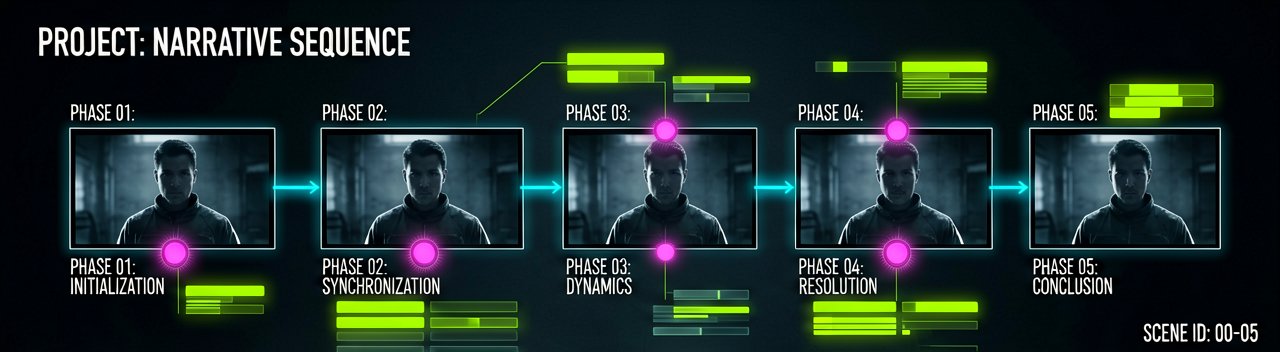
The baseline difference between traditional prompt engineering and this new era of vibe directing comes down to narrative cohesion. Older tools treat video generation as an isolated lottery where each prompt renders an independent, short clip, leaving creators to manually stitch disjointed assets together using heavy post-production software. OpenArt AI handles the backend heavy lifting by establishing an underlying narrative intelligence that locks in character faces, vocal tones, and visual styles dynamically across multiple scenes.
By treating the AI agent as a collaborative production crew rather than a stubborn calculator, filmmakers and marketers can steer the camera, adjust environmental pacing, or pivot the emotional tone on the fly. It is a fundamental realignment of creative control. Instead of adjusting technical parameters to see what the machine gives you, the creator simply dictates a vision, reviews the automated storyboard, and shapes the evolving project entirely by feel.
Technical Specifications Matrix
| Feature | Traditional Prompt Engineering (Per-Frame Models) | Vibe Directing (Continuous Agentic Models) |
|---|---|---|
| Speed/Latency | Fast per-clip rendering; high latency during manual stitching and post-production iteration. | Higher initial context-loading time; rapid sequential rendering across extended timelines. |
| Model Size/Parameters | 2 billion to 7 billion parameters optimized for isolated spatial frame accuracy. | 10 billion+ parameters integrating multi-modal text, video, audio, and memory tokens. |
| Hardware Requirements | Consumer-grade GPUs (e.g., NVIDIA RTX 4090 with 24GB VRAM) for local deployment. | Enterprise-grade cloud infrastructure (multi-node NVIDIA H100 clusters) for contextual state tracking. |
Decoding the Hardware and Infrastructure Divide
The stark contrast in hardware demands stems directly from how these two systems handle memory. Traditional prompt-engineered models process video in isolated, short-burst chunks, completely forgetting the previous shot the moment a new generation cycle begins. Because the AI does not need to store past visual data or lookahead narrative tokens, the memory footprint remains small enough to run comfortably on high-end consumer hardware. Creators can manage the entire generation process locally because the machine only worries about spatial layout for a few seconds of footage at a time.
Vibe directing entirely flips this dynamic by introducing persistent state memory. When an interface like OpenArt's Director manages a five-minute cinematic arc, the underlying architecture must constantly reference previously established character models, lighting setups, and vocal baselines. Tracking these deep contextual dependencies across a massive time window requires an astronomical number of active parameters. Consequently, local consumer hardware falls short, forcing the generation pipeline to rely heavily on distributed, multi-node cloud clusters that can process audio, text, and video elements simultaneously without crashing under the weight of the context window.
This architectural shift changes the operational bottleneck from local processing speed to cloud infrastructure efficiency. In the older prompt-heavy workflow, users spend most of their time waiting for individual renders to finish on their own machines, only to realize the prompt failed to maintain continuity. Vibe directing moves that latency to the initial setup phase while the agent initializes the narrative canvas. Once the cloud environment maps out the overarching creative intent, rendering complex, multi-shot sequences occurs with fluid continuity, trading local hardware strain for optimized server-side orchestration.
Editorial Pros & Cons
| Approach | Operational Advantages | Operational Disadvantages |
|---|---|---|
| Prompt Engineering | Granular frame-by-frame control; predictable seed-based modification; lower operational costs. | Severe narrative drift; exhausting trial-and-error workflows; requires deep technical prompt expertise. |
| Vibe Directing | Flawless long-form continuity; intuitive natural language adjustments; automated holistic rendering. | Reduced micro-level steering; heavy reliance on cloud availability; potential for systemic creative hallucinations. |
The Creative Trade-off in Practice
Reading Between the Lines: Shifting the burden of narrative continuity from the human operator to an agentic AI system changes the very nature of digital craftsmanship. Prompt engineering turns creators into rigid syntax checkers, forcing them to treat natural language like software code just to keep a character's jacket the same color between cuts. It is an exhausting process that yields high precision for a single three-second clip but falls apart completely when scaled to an entire commercial spot or short film.

Vibe directing solves this structural headache by allowing the creator to act as a proper director rather than a pixel technician. By handing the heavy lifting of contextual memory over to cloud-hosted agent networks, filmmakers can maintain consistent visual styles across multiple scenes using conversational commands. The paradigm shift is liberating for long-form storytelling, but it comes at the cost of micro-level autonomy. When the AI controls the broader creative vibe, getting the system to tweak a single, hyper-specific pixel or exact camera angle can feel like arguing with a stubborn Hollywood cinematographer.
Ultimately, the choice between these competing methodologies depends entirely on the scope of the production. Independent artists who demand absolute, uncompromising control over a single frame will likely cling to the pedantic world of precise prompt formulas. Meanwhile, studios racing to build long-form marketing campaigns, animated storyboards, and episodic content will naturally gravitate toward conversation-driven orchestration. The industry is rapidly dividing into those who want to sculpt every individual wave and those who just want to steer the ship.
"We spent years learning to speak fluent machine code disguised as poetic prompts, only to realize the machines just wanted to sit down, grab a coffee, and talk about the general mood of the piece over a casual chat."
Artūras Malašauskas is an AI Systems Integrator with 20+ years of production-grade web engineering experience. He has designed, shipped, and scaled enterprise Python/PHP systems for logistics, SaaS, and public-sector clients. For the past year, he has focused exclusively on AI integrations: deploying open-source LLMs, building generative media pipelines (image, audio, video), and engineering multi-agent workflows for real production environments. His standard: reproducibility, security, cost-efficient inference—no vaporware. He documents and evaluates emerging AI tooling, separating verified capabilities from marketing noise. Technical editor at: muza-ai.eu, ai-verslas.lt, ai-naujinos.lt Connect on LinkedIn
Comments