The Songai Launches New Custom Platform, Driving Generative Audio into the Hyper-Personalized Gift Economy

The consumer gifting market is undergoing a structural realignment as digital-first assets displace traditional physical tokens. The launch of a dedicated custom music platform by The Songai represents a significant monetization shift for generative artificial intelligence. By allowing users to transform personal anecdotes, milestones, and specific lyrical themes into studio-quality musical gifts, the platform moves generative audio away from open-ended creation tools toward specialized consumer use cases. This commercial rollout reflects an expanding appetite for sentimental digital property that can be delivered instantaneously and scaled globally without inventory constraints.
The business model utilized by modern audio platforms depends on abstracting complex production pipelines into simple consumer interfaces. Rather than requiring users to understand prompt engineering or musical arrangements, platforms like Barchart (via Songive) and The Songai convert raw, text-based inputs into fully orchestrated audio tracks featuring synthetic vocals, melodies, and instrumental backing. This democratization eliminates the traditional financial barrier to bespoke music production, creating a high-margin digital service that targets major consumer spending events, including birthdays, anniversaries, and holidays.
The Convergence of Generative AI and Consumer Gifting
The economic viability of hyper-personalized digital gifts relies heavily on rapid generation times and low infrastructure costs. Consumers are increasingly favoring direct-to-consumer software applications that turn unique life stories into permanent digital keepsakes over conventional greeting cards or off-the-shelf merchandise. This trend is accelerated by advancements in large audio models that minimize generation artifacts, ensuring that the final output sounds indistinguishable from human-produced studio tracks.
Disrupting Traditional Media and IP Frameworks
The commercialization of AI-generated music presents a clear challenge to established intellectual property frameworks and stock audio platforms. By utilizing custom platforms, consumers bypass traditional music licensing restrictions and expensive human agency commissions to claim individual ownership over personalized media. This shifts consumer expectations; music is no longer viewed solely as a static, mass-distributed product, but rather as an on-demand, infinitely customizable utility tailored to private relationships.

Strategic Imperatives for Digital Gift Platforms
To retain long-term market share against open-source alternatives, dedicated custom audio utilities must build comprehensive ecosystems around their core generation engines. This includes offering supplementary multimedia features such as synchronized video gifts, custom digital artwork, and private, persistent web links for recipients. Furthermore, platforms must navigate evolving copyright environments regarding training data transparency and synthetic voice ownership to remain viable as corporate gifting solutions and consumer services.
An Analytical Deep Dive into the Generative Audio Infrastructure
Beyond the Immediate Trend: The commercial infrastructure underwriting platforms like The Songai is not merely a novelty application of generative audio, but a sophisticated response to the plateauing retention rates seen in general-purpose AI chat and generation interfaces. Early iterations of generative audio forced users to act as prompt engineers, requiring deep familiarity with musical genres, temporal structures, and vocal registers. By wrapping complex underlying architectures—often relying on diffusion models or transformer-based audio autoencoders—in a frictionless consumer gift interface, tech companies have cracked a fundamental monetization barrier. They have successfully shifted the value proposition from tech-hobbyist experimentation to an emotionally driven consumer transaction.
This technical evolution surfaces critical challenges in storage, latency, and platform stickiness. Unlike textual data, real-time generation and hosting of high-fidelity stereo audio require robust cloud computing resources and substantial bandwidth. Startups competing in the hyper-personalized gift sector are discovering that computing costs during peak consumer seasons, such as Valentine's Day or the December holidays, can strain infrastructure margins. To counter this, platforms are quietly forming strategic partnerships with decentralized compute networks and hyperscale cloud providers to smooth out operational spikes, ensuring that track generation takes minutes rather than hours.
From a product positioning standpoint, the long-term viability of custom music engines hinges on user data telemetry and the depth of personalization. A seasoned look at the industry reveals that the most successful systems do not just parse text; they analyze sentiment. Advanced natural language processing layers screen user-submitted stories for emotional tone, automatically mapping upbeat memories to major scales and nostalgic anecdotes to softer acoustic arrangements. This granular calibration creates a distinct competitive advantage, preventing the output from feeling like a sterile, algorithmic template and elevating it to a genuine digital heirloom.
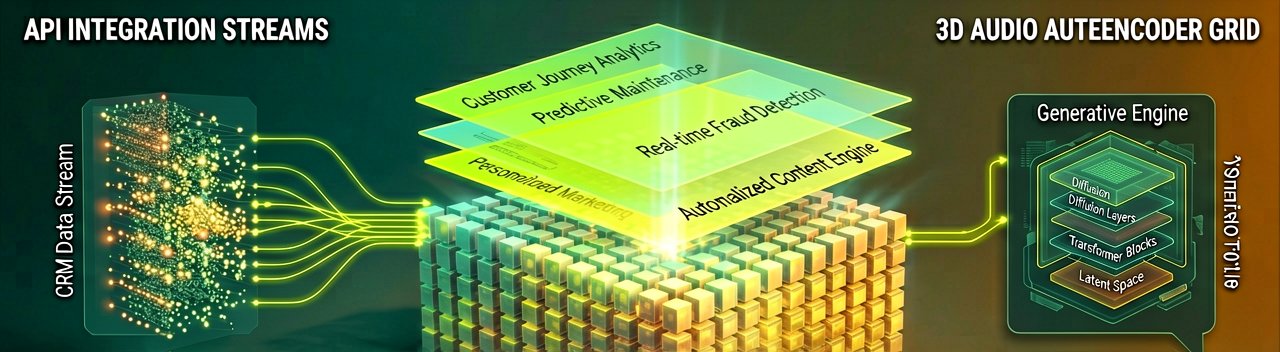
Furthermore, corporate enterprises are rapidly overtaking everyday consumers as the primary revenue drivers for these platforms. Human resources departments and brand managers are utilizing hyper-personalized music for employee recognition milestones, customized customer onboarding experiences, and bespoke audio branding for high-value clients. This institutional shift requires platforms to deploy enterprise-grade security protocols, robust intellectual property indemnification policies, and API integrations that allow corporate systems to trigger automated song creation directly from customer relationship management databases.
Ultimately, the rapid adoption of custom audio platforms forces a reckoning for traditional creative industries and streaming ecosystems. Independent musicians and traditional jingle-writing agencies face a shifting landscape where low-tier commercial commissions are completely automated. However, industry insiders view this disruption not as an extinction event for human artists, but as a redistribution of labor. Human creators are increasingly being brought in upstream to consult on the development of proprietary datasets, license their unique vocal profiles under strict legal guardrails, and train the next generation of audio models to achieve unprecedented levels of emotional nuance.
The Hidden Cost of Automated Sentimentality
Reading Between the Lines: The rapid commercialization of hyper-personalized gift platforms exposes a profound structural paradox at the heart of the digital economy. Platforms promise to elevate gift-giving by providing a unique, data-driven artifact tailored to a single individual, yet this uniqueness is achieved through mass-standardized algorithms trained on aggregated human culture. This friction creates a fundamental contradiction where the currency of deep personal intimacy is outsourced to algorithmic efficiency. As these platforms proliferate, the psychological value of a custom song may depreciate rapidly; when bespoke media requires only a three-sentence prompt and a credit card transaction, the signaling mechanism of effort that underpins traditional gift-giving is entirely erased.
This monetization of sentiment also introduces unprecedented liabilities regarding data commodification and private surveillance. To generate a truly hyper-personalized song, users routinely feed highly specific, intimate biographical details—including names, private jokes, specific medical triumphs, and mourning periods—into proprietary machine learning models. There is a glaring lack of regulatory transparency regarding how this deeply emotional data is handled post-generation. While current marketing narratives position these platforms as benign portals for joy, the underlying business models remain vulnerable to the data-broker ecosystems, where highly nuanced emotional profiles could eventually be leveraged for hyper-targeted behavioral advertising.
Furthermore, the long-term technical sustainability of these audio startups remains highly volatile when contrasted with the platform monopolies of Big Tech. Specialized gift platforms are currently burning venture capital to maintain proprietary consumer interfaces, but they remain entirely dependent on underlying foundational models that can be easily replicated or absorbed. Tech giants with existing music streaming infrastructure, massive cloud processing superiority, and pre-negotiated artist licensing agreements could render independent custom-song utilities obsolete by introducing a "generate gift track" button directly into dominant global software suites, effectively squeezing out independent pioneers before they achieve profitability.
From a creative standpoint, the industry faces an impending cultural saturation point that could trigger severe consumer fatigue. The initial novelty of hearing a high-fidelity pop song sung by a synthetic voice about one's specific pet or local hometown is undeniably high, but the aesthetic formula of generative audio remains bound by statistical averages. Over time, the uniform perfection of AI-generated melodies risks creating an auditory monoculture where every personalized track shares the same pristine, mathematically optimal, yet emotionally detached sonic gloss, eventually driving consumers back toward the imperfect, high-friction charm of physical, human-made alternatives.
"We have finally achieved the ultimate industrial milestone: the total automation of human affection, proving that nothing says 'I care deeply about your unique existence' quite like delegating your love to a server farm that processes your anniversary memories between high-frequency stock trades and crypto mining."
Artūras Malašauskas is an AI Systems Integrator with 20+ years of production-grade web engineering experience. He has designed, shipped, and scaled enterprise Python/PHP systems for logistics, SaaS, and public-sector clients. For the past year, he has focused exclusively on AI integrations: deploying open-source LLMs, building generative media pipelines (image, audio, video), and engineering multi-agent workflows for real production environments. His standard: reproducibility, security, cost-efficient inference—no vaporware. He documents and evaluates emerging AI tooling, separating verified capabilities from marketing noise. Technical editor at: muza-ai.eu, ai-verslas.lt, ai-naujinos.lt Connect on LinkedIn
Comments