Starbucks Taps Proprietary AI to Break Free from Microsoft and IBM Vendor Lock-In
In a bold move reshaping enterprise IT architecture, Starbucks is actively developing proprietary artificial intelligence software designed to severely diminish its operational dependence on technology giants Microsoft and IBM. The coffee behemoth currently spends an estimated $400 million annually on external software licenses alone. This massive line item has prompted a strategic pivot under the leadership of Chief Technology Officer Anand Varadarajan, who has identified definitive opportunities to slash corporate overhead by insourcing core technical capabilities.
Historically, Starbucks has utilized Microsoft infrastructure to track inventory and manage stock levels across its global retail footprint, while relying on dedicated IBM tools to handle predictive and preventative facility maintenance. By constructing its own AI-powered internal systems, the coffee chain intends to directly replace these legacy vendor applications. According to industry reports, initial components of this homegrown intelligence suite are slated for a live rollout by the end of next year, marking an aggressive timeline for an organization of its operational scale.
This technical transition is not merely a cost-cutting measure; it represents a fundamental reclamation of the company's data infrastructure. Over the past several years, Starbucks built out its foundational Deep Brew machine learning platform, which largely depended on Microsoft Azure cloud infrastructure to scale localized mobile app recommendations and optimize labor scheduling. By graduating from vendor-packaged solutions to true proprietary AI models, Starbucks is positioning itself to bypass restrictive licensing models, escape enterprise vendor lock-in, and retain uncompromised control over its highly valuable transactional and logistical datasets.
The Financial and Operational Drivers Behind the Strategic Pivot
The enterprise tech market is witnessing a growing trend of major corporations rebelling against escalating cloud and software-as-a-service (SaaS) licensing costs. For Starbucks, the economic incentive to develop in-house software is starkly highlighted by its massive $400 million annual technical expenditure, as reported by Bloomberg. Building and operating highly localized, fine-tuned AI models can prove far more economical over a multi-year horizon than maintaining sweeping enterprise agreements with traditional legacy vendors.
Operationally, substituting Microsoft and IBM software with bespoke AI helps synchronize a disjointed supply chain. Instead of feeding operational data through third-party platforms that may require custom, expensive API integrations, a fully vertically-integrated internal platform connects the point-of-sale system, inventory tracking, and facility maintenance schedules directly. This real-time visibility allows the coffee retailer to run highly accurate predictive models, which can determine everything from localized cold brew steeping schedules to the automated rerouting of perishable deliveries without paying an external vendor for the privilege.
Market Impact on Enterprise Software and Big Tech Partnerships
The strategic shift by Starbucks acts as a disruptive signal to the wider enterprise software market, where tech providers like Microsoft and IBM have long enjoyed stable, high-margin revenue streams from Fortune 500 companies. Following early reports of the coffee giant's architectural migration, wider tech stock indices experienced a noticeable dip, illustrating Wall Street's anxiety over potential copycat movements across other retail and hospitality giants. If massive consumer-facing corporations can successfully substitute enterprise software suites with specialized, in-house AI, the long-term defensibility of traditional enterprise licensing contracts will inevitably decay.
Furthermore, this move alters the nature of big tech partnerships. While Starbucks will likely continue to consume raw compute power and cloud hosting from major hyperscalers, it is aggressively vacating the higher layers of the software stack where vendors capture the most margin. This shift redefines the modern enterprise as an independent software builder rather than a passive software buyer, establishing a precedent where proprietary data and customized AI models serve as the ultimate corporate moat.
Behind the Scenes of the Deep Brew Evolution
A Look Behind the Digital Counter: The current push to bypass external software architectures is the logical evolution of a technical foundation laid nearly a decade ago. In 2019, the coffee chain publicly unveiled "Deep Brew," an ambitious internal machine learning initiative designed to handle everything from personalizing drive-thru menus to predicting when an espresso machine required a descaling cycle. However, early iterations of Deep Brew relied heavily on Microsoft's cloud ecosystem and Azure-based cognitive services. While this arrangement accelerated the initial rollout, it ultimately tied the retailer’s operational intelligence to the pricing structures, API changes, and product roadmaps of an outside vendor, limiting true architectural autonomy.
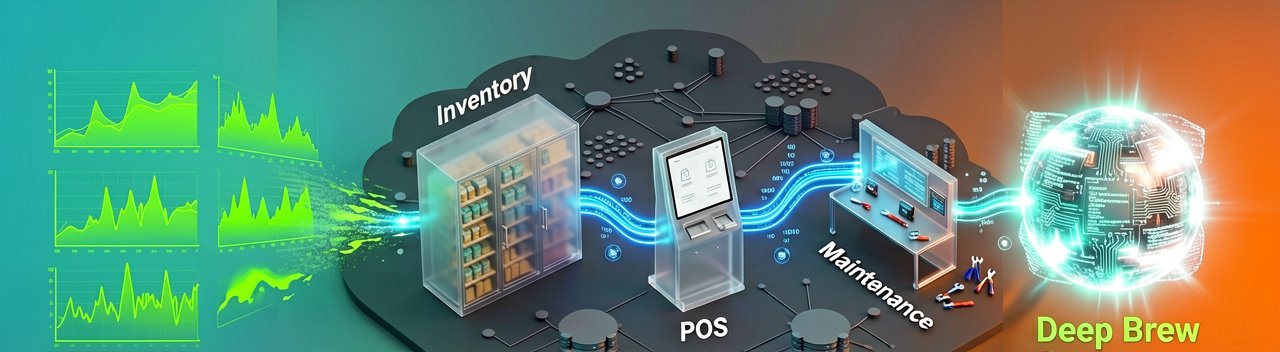
Insiders familiar with the current transition note that the technical leadership group became increasingly frustrated by the friction of data siloes created by traditional enterprise agreements. Maintaining separate contracts with Microsoft for core logistics and IBM for asset management meant that vast repositories of transactional, supply chain, and retail telemetry data remained fragmented. Bridging these systems required expensive, custommiddleware that frequently suffered from latency issues. By engineering a unified, proprietary AI layer to sit directly on top of raw cloud infrastructure, technical teams can eliminate these operational bottlenecks and run predictive models that simultaneously evaluate store traffic, inventory velocity, and equipment wear.
From a stakeholder perspective, this architectural migration reflects a broader, highly calculated risk assessment by executive leadership regarding data sovereignty. In an era where proprietary data is the lifeblood of competitive AI development, letting third-party vendors process millions of daily hyper-local retail transactions effectively helps those vendors train models that could later be commercialized for competitors. Retaining absolute control over the data pipeline ensures that the company's unique operational insights—such as how weather patterns interact with regional oat milk consumption—remain a closely guarded, uncompromised corporate asset.
The financial community remains acutely focused on how this shift will impact the company's capital allocation and long-term operating margins. Transitioning from predictable, albeit expensive, software-as-a-service fees to the variable, compute-heavy expenses of training and maintaining proprietary large-scale models carries inherent financial volatility. While slashing a massive portion of the annual external software spend will immediately free up corporate capital, the long-term success of the pivot relies entirely on the internal engineering team's ability to maintain enterprise-grade uptime and system security without the safety net of a legacy tech giant’s dedicated support structure.
Reading Between the Lines of the Enterprise Independence Myth
Reading Between the Lines: The corporate narrative of total technical independence rarely aligns with the messy realities of modern cloud infrastructure. While declaring a break from Microsoft and IBM vendor lock-in makes for a compelling headline of corporate self-reliance, it overlooks a foundational dependency. Starbucks is not building its own server farms or manufacturing its own silicon; it is merely shifting its dependencies down the technology stack. The proprietary AI models the company builds must still run on the massive, hyper-scale cloud computing environments owned by the very tech giants it claims to be escaping, substituting software licensing fees for equally steep, variable cloud compute bills.
This strategic pivot also introduces a stark contradiction in organizational competency. Starbucks is fundamentally a retail and hospitality company optimized for supply chain efficiency and consumer experience, not a specialized software house. By insourcing complex artificial intelligence development, the company is voluntarily stepping onto a relentless tech-talent treadmill. It must now compete directly with Silicon Valley for top-tier machine learning engineers, data scientists, and infrastructure architects. The long-term costs of recruiting, retaining, and continuously compensating this highly specialized workforce could easily cannibalize the projected savings gained from cutting legacy software licenses.
Furthermore, legacy enterprise systems from providers like IBM and Microsoft offer a hidden value that internal development teams often underestimate: a shared burden of liability and global compliance. When an internally developed proprietary inventory system suffers a catastrophic outage during a peak holiday rush, the financial blame and technical remediation fall entirely on the corporate IT department. Legacy vendors provide robust service-level agreements and global support networks designed to absorb these operational shocks. Trading this institutional safety net for complete architectural control is a high-stakes gamble that assumes an internal team can match the operational uptime of companies whose entire business models depend on it.
Ultimately, the success of this migration will serve as a bellwether for the broader corporate world, testing whether non-tech enterprises can truly transform into self-sustaining digital entities. If the coffee giant stumbles under the weight of system maintenance, skyrocketing cloud compute costs, or talent attrition, it will likely trigger a swift retreat back to the predictable, packaged arms of legacy vendors. For now, the strategy represents an aggressive, expensive bet that the unique nuances of brewing coffee and managing global retail foot traffic are distinct enough to justify rewriting the enterprise software playbook from scratch.
"In its quest to brew a perfectly independent digital future, corporate leadership may find that escaping big tech is a lot like ordering a complex espresso beverage: by the time you customize every single ingredient to avoid the standard menu, you end up paying twice as much for something that still requires someone else's expensive machinery to make."
Artūras Malašauskas is an AI Systems Integrator with 20+ years of production-grade web engineering experience. He has designed, shipped, and scaled enterprise Python/PHP systems for logistics, SaaS, and public-sector clients. For the past year, he has focused exclusively on AI integrations: deploying open-source LLMs, building generative media pipelines (image, audio, video), and engineering multi-agent workflows for real production environments. His standard: reproducibility, security, cost-efficient inference—no vaporware. He documents and evaluates emerging AI tooling, separating verified capabilities from marketing noise. Technical editor at: muza-ai.eu, ai-verslas.lt, ai-naujinos.lt Connect on LinkedIn
Comments