The Open-Source Robotics Paradigm Shift: How the NVIDIA and Hugging Face Alliance Upends Physical AI
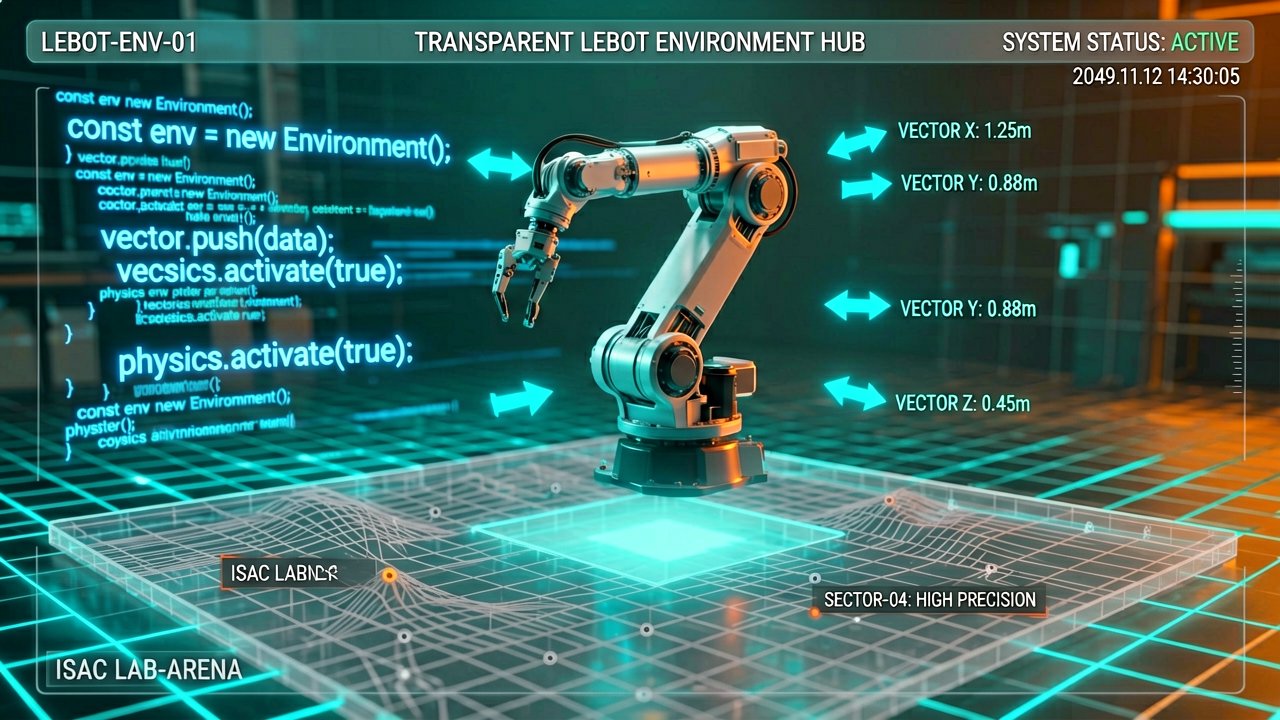
The landscape of physical AI has reached a critical inflection point as NVIDIA and Hugging Face announced a deep technical expansion of their partnership, systematically embedding advanced foundation models and robust simulation frameworks directly into NVIDIA Blog LeRobot. LeRobot, Hugging Face’s premier open-source robotics library, has quickly become the developer standard for building, training, and deploying end-to-end learning policies on physical hardware. By injecting its specialized tooling into this open ecosystem, NVIDIA is radically democratizing access to complex physical AI workflows that were previously restricted to well-funded corporate research labs.
This strategic integration eliminates the fragmented, high-cost barriers that have historically stalled open-source robotics development. Developers now gain open access to high-tier assets including NVIDIA Isaac GR00T 1.7 for humanoid control, Isaac Teleop data-collection utilities, and the Isaac Lab-Arena prototyping environment, with future integration mapped out for frontier world models via RoboticsTomorrow NVIDIA Cosmos 3. This massive injection of pre-trained architectures, simulation resources, and expansive data frameworks fundamentally redefines how autonomous systems are designed, shifting the industry from hard-coded, deterministic engineering to flexible, vision-language-action (VLA) driven intelligence.
Market Context and Strategic Imperatives
From a market standpoint, NVIDIA's alliance with Hugging Face is as much an infrastructure defense mechanism as it is an open-source contribution. As major silicon competitors like Qualcomm and Intel accelerate their own edge-robotics offerings, cultivating developer loyalty within an accessible, open ecosystem ensures that the standard software stack remains optimized for AI Business NVIDIA GPUs. By providing the tools to collect telemetry data, validate behaviors in hyper-realistic simulations, and seamlessly deploy models onto edge hardware like the Jetson Thor platform, NVIDIA establishes its compute architecture as the indispensable backbone of the emerging physical AI economy.
De-fragmenting the Physical AI Pipeline
The collaboration addresses the greatest bottleneck in modern robotics: data scarcity and environmental simulation. The combination links LeRobot's flexible training library with massive physical AI datasets containing millions of trajectories and grasps, allowing generalist robot policies to scale rapidly. Furthermore, the ability to build and register complex environments in the LeRobot Environment Hub via Isaac Lab-Arena enables continuous testing loops. This significantly shortens the sim-to-real gap, ensuring that open-source humanoid and robotic arms can transition from virtual training environments to flawless execution in real-world environments without requiring cost-prohibitive proprietary software.
Reading Between the Lines: The Friction of Simulated Realities
While the marketing narrative paints a seamless picture of decentralized innovation, seasoned industry observers recognize the inherent contradiction in building an "open-source" robotics ecosystem that remains fundamentally dependent on a closed, proprietary hardware monopoly. NVIDIA’s philanthropic embrace of LeRobot ensures that the future of open physical AI is completely tethered to its proprietary CUDA ecosystem and high-margin silicon like the Jetson Thor platform. The open-source community is essentially acting as a massive, free R&D department, refining algorithms and gathering telemetry data that ultimately entrenches NVIDIA's compute dominance and creates a vendor lock-in that will be incredibly difficult to break.
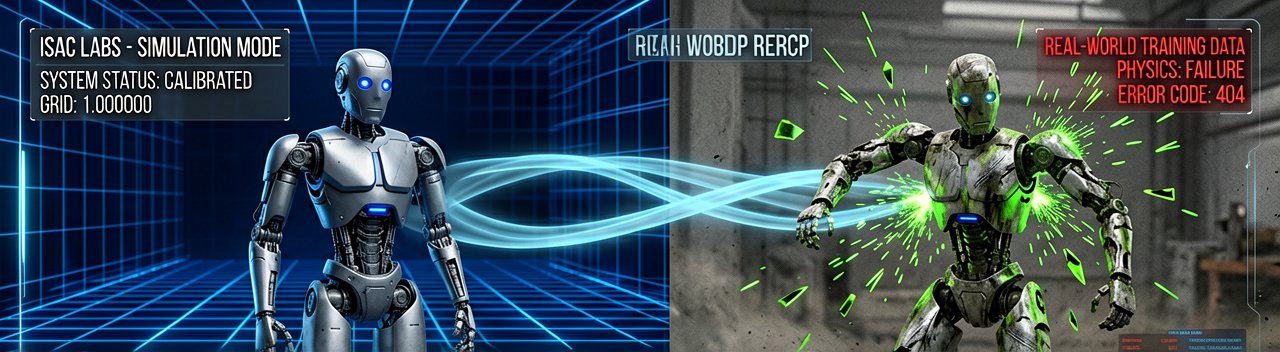
Furthermore, the industry's reliance on synthetic data and Sim2Real translation to solve the data scarcity problem introduces a high degree of technical skepticism. Simulating a digital universe where physics operates flawlessly is a stark contrast to the chaotic reality of a physical workshop, where varying ambient lighting, surface friction, and hardware degradation introduce unpredictable anomalies. Critics point out that over-indexing on virtual environments like Isaac Lab-Arena risks producing models that are incredibly intelligent in theory, yet notoriously fragile when confronted with the unpolished dynamics of a real-world factory floor or domestic setting.
This technical gap highlights a stark divide between the hobbyist developer and the realities of commercial deployment. An affordable, 3D-printed robotic arm running LeRobot is excellent for academic research and desk-bound prototyping, but it cannot handle the continuous, high-stress workloads required by heavy industry. Consequently, this democratization may inadvertently create a dual-class system in robotics: an enthusiastic, open-source community operating low-cost, experimental hardware, while the truly transformative, highly lucrative industrial deployments remain locked behind the proprietary, tightly guarded walls of enterprise tech giants.
"We are rapidly approaching a future where an AI model can flawlessly simulate the precise quantum physics of a robotic hand making a perfect cup of coffee, right up until the moment the physical robot encounters a slightly damp countertop, panics, and ejects the mug across the room."
Artūras Malašauskas is an AI Systems Integrator with 20+ years of production-grade web engineering experience. He has designed, shipped, and scaled enterprise Python/PHP systems for logistics, SaaS, and public-sector clients. For the past year, he has focused exclusively on AI integrations: deploying open-source LLMs, building generative media pipelines (image, audio, video), and engineering multi-agent workflows for real production environments. His standard: reproducibility, security, cost-efficient inference—no vaporware. He documents and evaluates emerging AI tooling, separating verified capabilities from marketing noise. Technical editor at: muza-ai.eu, ai-verslas.lt, ai-naujinos.lt Connect on LinkedIn
Comments