CoLab 4.0 Redefines Enterprise Strategy by Placing Human Judgment at the Center of Automated Workflows
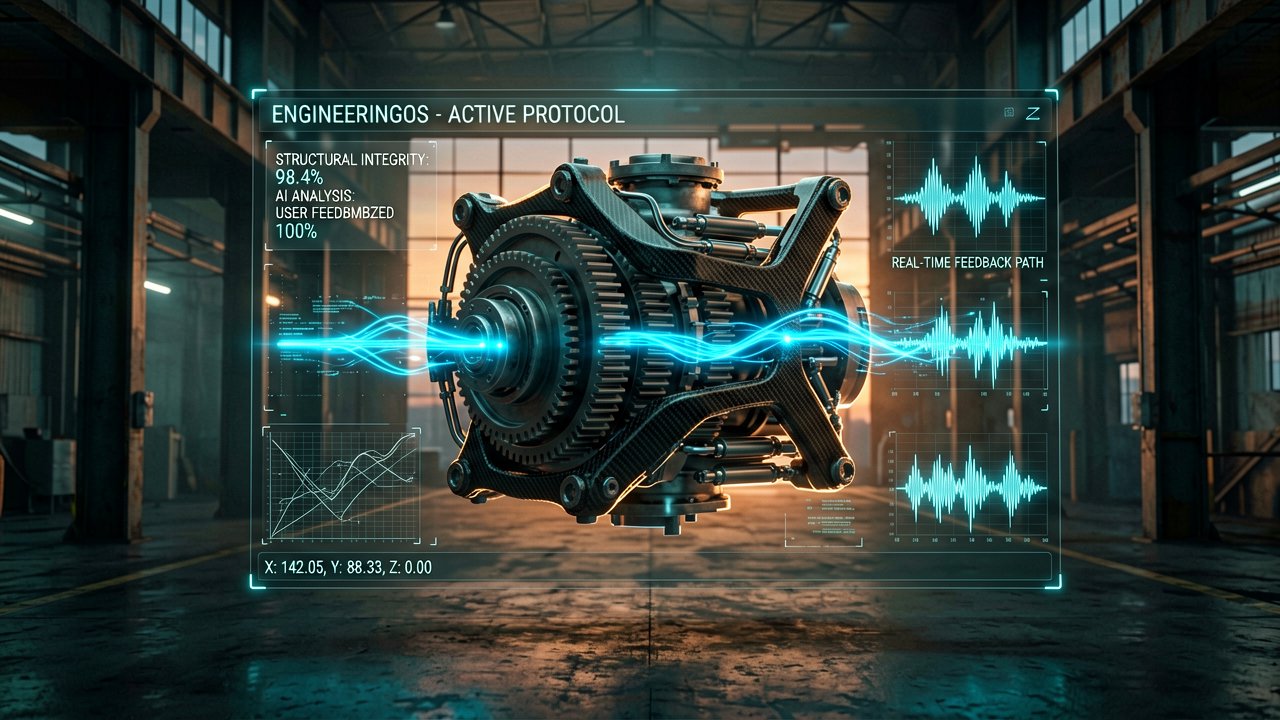
The enterprise automation landscape is undergoing a critical paradigm shift, moving away from the autonomous replacement of knowledge workers toward a model of human-centric augmentation. CoLab Software has officially unveiled version 4.0 of its flagship platform, establishing a sophisticated decision-centric interface designed specifically for human decision-makers navigating complex, AI-driven technical environments. By integrating complex product data, computer-aided design (CAD) files, and automated engineering workflows into a unified EngineeringOS, the company addresses a vital gap in modern industrial AI strategy where purely automated systems lack contextual oversight.
This major deployment highlights a broader corporate trend where global manufacturing and industrial sectors demand high-velocity decision-making without sacrificing quality control or safety standards. According to the product announcement documented by Business Wire , CoLab 4.0 unifies cross-functional collaboration, internal corporate standards, and live expert feedback directly alongside built-in AI agents. By capturing tacit expert knowledge naturally during daily operational cycles, the platform serves as an enterprise infrastructure model that mitigates the risks of hallucination and misaligned automated decisions.
The Strategic Pivot Toward Augmented EngineeringOS Systems
Market forces are demonstrating that fully autonomous AI agents cannot function effectively in high-stakes hardware development and mechanical engineering sectors without continuous human verification. The rollout of CoLab 4.0 signals a strategic pivot for industrial software architectures, transforming traditional, siloed design repositories into interoperable data ecosystems. Industry data tracked on Yahoo Finance indicates that leading global manufacturers rely heavily on structured human-in-the-loop workflows to protect intellectual property and maintain regulatory compliance. This release sets a clear precedent for enterprise software providers to prioritize sophisticated user experiences and contextual data integrations over purely algorithmic automation.
The Technical Reality of the Human-in-the-Loop Imperative
Behind the Engineering Dashboard: While the broader tech sector frequently champions absolute automation, heavy manufacturing and complex hardware development operate under vastly different tolerances. In these environments, an undetected algorithmic anomaly in a structural design file can result in millions of dollars in scrapped physical materials or severe operational liabilities. CoLab 4.0 acknowledges this friction by transforming the role of the engineer from a manual data entry technician into an active supervisor of automated agents. This shift requires a highly specialized software architecture that can translate deep, multi-layered CAD metadata into clear, actionable notifications for human review.
Historically, enterprise teams spent up to half of their billable hours searching for design variations, mining legacy systems for previous feedback, and manually compiling review documentation. This administrative burden created a significant operational bottleneck, driving engineering organizations to seek automated solutions that often lacked specialized industrial context. Early iterations of general-purpose AI agents struggled with these niche datasets, frequently missing the subtle design intent that human specialists spot instantly. By designing an enterprise-grade interface tailored specifically to these mechanical workflows, the platform resolves the historical tension between velocity and accuracy.
From a stakeholder perspective, corporate leadership faces growing pressure to accelerate product release cycles while simultaneously navigating shrinking talent pools of senior engineering experts. Chief Technology Officers are increasingly realizing that the core value of an industrial enterprise resides within the unwritten contextual knowledge of their senior design teams. CoLab 4.0 builds a continuous bridge over this talent gap by logging and indexing human feedback directly alongside automated design evaluations. Consequently, every design variance, approval, and modification becomes part of a structured, internal training ecosystem that preserves institutional knowledge for future projects.
Ultimately, this architectural strategy redefines how global engineering teams manage accountability in an automated world. Rather than expecting AI agents to operate in a vacuum, the platform creates an auditable trail of human verification that ensures regulatory compliance across international supply chains. This hybrid model stabilizes the deployment of automation in high-stakes industries, proving that the future of industrial scaling relies on software that elevates human expertise rather than trying to automate it out of the equation.
The Paradox of Augmented Automation in Enterprise Strategy
Reading Between the Lines: The corporate rush to market CoLab 4.0 as a safeguard for human decision-making exposes a deeper systemic contradiction in enterprise software design. For years, the explicit promise of automation was the wholesale reduction of overhead through the elimination of human bottlenecks. Now, as the unpredictable realities of autonomous system errors and algorithmic hallucinations set in, vendors are rapidly pivoting to rebrand the human worker as the ultimate fail-safe. This strategic shift effectively transfers the liability of automated errors back onto the human supervisor, who must now monitor an unceasing torrent of AI-generated suggestions without developing automation bias.
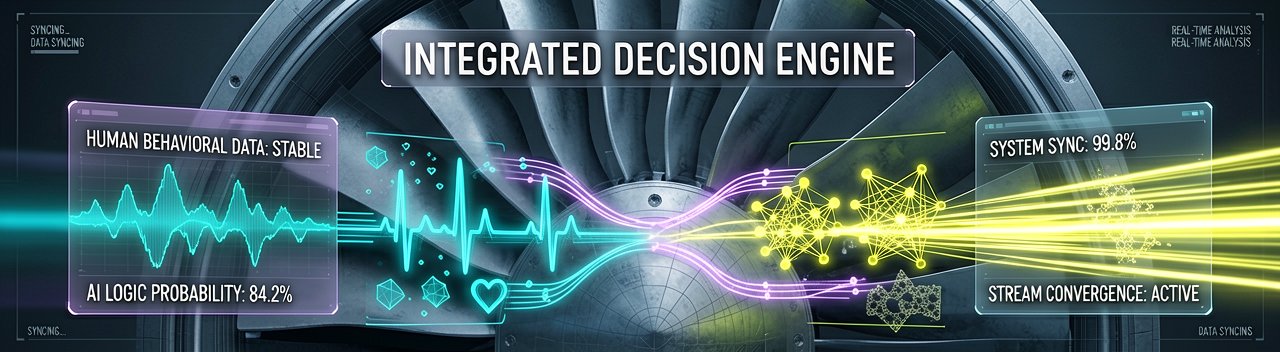
This dynamic introduces a psychological friction that many enterprise strategies fail to account for in their deployment roadmaps. When engineers are transformed into passive reviewers of automated outputs, cognitive fatigue inevitably sets in, eroding the very critical thinking skills required to spot subtle flaws. Organizations risk creating an operational environment where senior experts spend more time auditing and correcting imperfect AI drafts than they would have spent designing the system from scratch. The corporate narrative champions this as human-centric empowerment, but in practice, it often resembles a sophisticated form of administrative chaperoning.
Furthermore, the long-term projection for institutional knowledge retention under this hybrid model remains highly speculative. If the platform successfully captures tacit human judgment to train internal data ecosystems, it raises inevitable questions regarding the future commoditization of that expertise. Enterprises may find themselves in a cyclical trap where they rely on senior engineers to train the system, only to discover that the resulting automation diminishes the onboarding opportunities for junior engineers to develop that very same high-level judgment. Without entry-level workers manually wrestling with design problems, the pipeline for generating future human experts begins to dry up.
Ultimately, the success of an EngineeringOS like CoLab 4.0 depends less on its technical specifications and more on an organization's willingness to define the boundaries of automated authority. True strategic maturity requires corporate leaders to resist the temptation of measuring success purely by the volume of automated tasks completed. Instead, skepticism remains the healthiest tool for tech executives who must balance the undeniable velocity of AI workflows against the irreplaceable, unquantifiable value of a seasoned human engineer looking at a blueprint and simply knowing something is wrong.
Enterprise software has officially come full circle: we spent a decade and billions of dollars trying to automate the human out of the workflow, only to realize we now need to invent a brand-new category of software just to help the human keep the robots from accidentally hallucinating a bridge into a river.
Artūras Malašauskas is an AI Systems Integrator with 20+ years of production-grade web engineering experience. He has designed, shipped, and scaled enterprise Python/PHP systems for logistics, SaaS, and public-sector clients. For the past year, he has focused exclusively on AI integrations: deploying open-source LLMs, building generative media pipelines (image, audio, video), and engineering multi-agent workflows for real production environments. His standard: reproducibility, security, cost-efficient inference—no vaporware. He documents and evaluates emerging AI tooling, separating verified capabilities from marketing noise. Technical editor at: muza-ai.eu, ai-verslas.lt, ai-naujinos.lt Connect on LinkedIn
Comments