Musk’s Flywheel Spins: SpaceXAI Drops Grok 4.5 to Force an AI Price War
SpaceXAI has officially launched Grok 4.5, an advanced artificial intelligence model heavily trained on developer data to dominate coding and autonomous agentic workflows. Released globally on July 8, 2026, the model marks the first major collaborative output since Elon Musk’s venture finalized its massive $60 billion acquisition of the AI coding platform Cursor. By positioning the software squarely as a high-speed, cost-efficient tool for engineers and enterprise infrastructure rather than a generic consumer chatbot, SpaceXAI is making a aggressive bid to undercut established rivals like Anthropic and OpenAI.
The release timing is anything but accidental, hitting the market precisely as OpenAI prepared the wider rollout of its heavily scrutinized GPT-5.6 model. Elon Musk took to X to frame Grok 4.5 as an "Opus-class" model, explicitly name-checking Anthropic’s top-tier Claude family while bragging that his system is significantly faster and more token-efficient. According to the official announcement on the SpaceXAI News Blog, the engineering architecture relies on a massive 1.5-trillion-parameter foundation that allows it to solve complex software tasks in fewer computational steps than its primary competitors.
Aggressive Pricing Under有意 Undercuts the Frontier
Instead of trying to capture a nominal victory on pure benchmark leaderboards, SpaceXAI is weaponizing its massive industrial compute infrastructure to trigger an aggressive price war. Grok 4.5 is entering the developer market priced at $2 per million input tokens and $6 per million output tokens. As reported by Yahoo Finance , this structure severely undercuts Anthropic's Claude Opus 4.8, which demands a much steeper $5 per million input and $25 per million output tokens, though it sits just slightly above OpenAI's baseline pricing for its GPT-5.6 Luna variant.
The Cursor Synergy and Enterprise Integration
What truly separates Grok 4.5 from its predecessors is its deeply integrated training lineage. The model was trained jointly using trillions of tokens representing real-world developer interactions, telemetry, and debugging traces harvested directly from Cursor’s ecosystem. In a technical breakdown published on the Cursor Blog, developers noted that this distinct dataset instructs the model to reason through multi-file edits, complex diffs, and terminal environments exactly like an experienced human programmer. Beyond raw software engineering, the model has been intentionally optimized for broader knowledge tasks, ranking highly on specialized legal benchmarks and demonstrating an ability to generate native data models inside office productivity suites.
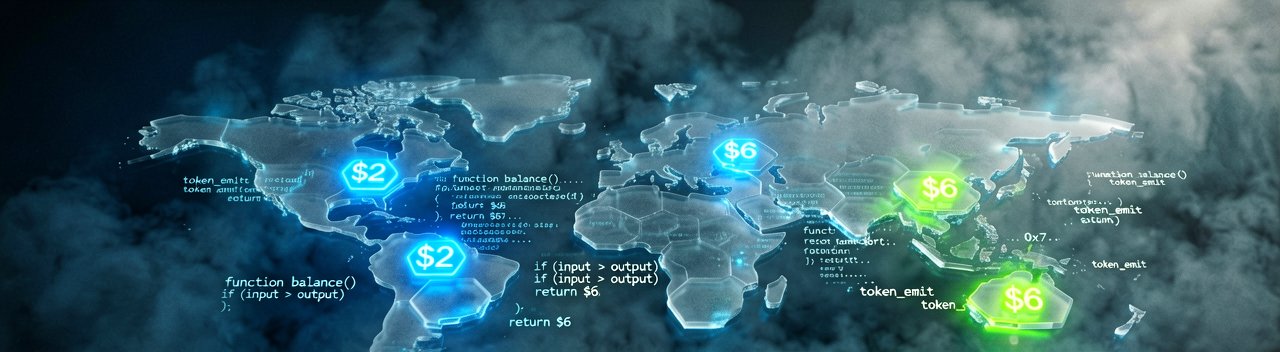
The model has been rolled out as the default engine within Grok Build, across all individual and enterprise Cursor subscription tiers, and via the standard developer API console. However, regional regulatory hurdles continue to dictate the pace of deployment. While domestic engineers can interact with the system immediately, documentation from SpaceXAI Developer Docs confirms that availability within the European Union remains temporarily delayed, with an official regional rollout projected for mid-July.
What Most Reports Miss: The launch of Grok 4.5 is not just another incremental iteration in the silicon arms race; it represents a fundamental pivot in how Elon Musk views the endgame of generative software. For the past two years, mainstream tech media focused heavily on the ideological posturing of xAI, framing the venture as an eccentric billionaire’s reactive attempt to build an unfiltered, anti-woke consumer chatbot. However, the architecture underpinning this release proves that the long-term roadmap was always aimed directly at enterprise infrastructure. By consolidating under the SpaceXAI banner and leveraging the massive technical pipeline of Cursor, the organization has shifted its sights away from conversational novelties and toward the trillion-dollar plumbing of automated software engineering.
Veteran silicon valley insiders note that the integration of Cursor’s specialized training telemetry fundamentally changes the economics of developer acquisition. Traditional foundation models are trained on passive code repositories, which often teaches them how code looks but not necessarily how code is built, debated, and debugged in real-time. By utilizing active interaction traces from hundreds of thousands of engineers, Grok 4.5 functions less like a search index and more like an experienced senior developer sitting over an entry-level programmer's shoulder. This structural advantage allows it to execute multi-file refactoring and handle autonomous, long-running agentic workflows with a degree of context-awareness that rivals struggle to replicate without expensive, custom fine-tuning wrapper software.
The Structural Math of Compute Dominance
Behind this aggressive pricing model lies a brutal hardware reality that competitors like Anthropic and smaller open-source consortia are finding difficult to match. Because SpaceXAI operates within the broader Musk ecosystem, its data centers are tightly decoupled from third-party cloud service provider premiums. The company's massive GPU clusters are built with custom, localized power delivery systems and proprietary cooling infrastructure optimized alongside aerospace-grade hardware engineers. This vertical integration means that while a rival must charge a premium to cover the compounding margin stack of cloud compute leases, SpaceXAI can afford to run at near-cost, turning raw electricity and compute directly into market-disrupting developer pricing strategies.

This predatory token pricing has sent a clear shockwave through early-stage AI startups that built their business models on top of existing API frameworks. Founders who spent the last year engineering complex multi-agent coding platforms are now realizing that a single, unified foundation model can natively execute the exact same multi-step debugging tasks for a fraction of the operating cost. According to early feedback trickling out of closed developer channels, the sheer speed of Grok 4.5 reduces the typical developer inner loop from minutes to seconds, turning what used to be slow, asynchronous background processing into an immediate, real-time interactive pairing experience.
Geopolitical Bottlenecks and the Enterprise Horizon
Despite the technical bravado, the path forward for SpaceXAI remains complicated by an increasingly fragmented global regulatory landscape. The conscious choice to delay the model's release within the European Union highlights a growing operational friction between aggressive, frontier deployment cycles and stringent international data-privacy protections. Because Grok 4.5 is explicitly designed to operate autonomously across complex enterprise file systems, its agentic capabilities naturally trigger deep compliance scrutiny regarding data provenance, code ownership, and regional telemetry transmission laws.
How the enterprise market responds to these compliance bottlenecks over the coming quarters will determine whether Grok 4.5 can successfully displace its entrenched peers. Large-scale financial institutions and defense contractors are notoriously risk-averse when it comes to granting autonomous agents write-access to core repositories. However, if the promised 2x token efficiency and massive cost reductions hold true under heavy production workloads, the sheer gravity of the engineering economics may force conservative IT departments to reconsider their developer toolchains much sooner than anyone anticipated.
Reading Between the Lines: The tech sector has a notorious habit of mistaking an aggressive capital deployment for a definitive architectural victory, and the frantic celebrations surrounding Grok 4.5 are no exception. While the narrative of a vertically integrated Musk ecosystem undercutting the Silicon Valley establishment makes for a compelling corporate thriller, the economic realities of this specific price war deserve a healthy dose of skepticism. Offering frontier-class tokens at near-cost is an effective way to buy developer mindshare, but it obscures a fundamental contradiction: subsidizing enterprise infrastructure is a multi-billion-dollar game of chicken where the winner simply earns the right to host everyone else's low-margin compute liabilities.
Furthermore, the claim that Grok 4.5’s developer-first pedigree makes it inherently superior to generalized models overlooks the cyclical nature of software engineering data. By training heavily on Cursor's telemetry and active debugging traces, SpaceXAI has built an engine that excels at navigating current programming paradigms, legacy code refactoring, and popular framework configurations. However, this hyper-specialization carries an architectural risk of over-fitting, potentially turning the model into a highly efficient echo chamber for existing software patterns. When programming languages evolve or entirely new architectural paradigms emerge, a model trained predominantly on the historical behavior of current developers may struggle to innovate beyond the boundaries of its specialized telemetry pool.
The Realities of the Agentic Lock-In
There is also an evident friction between the marketing promise of fully autonomous, cross-file agentic workflows and the pragmatic realities of modern enterprise security architecture. Tech executives are historically terrified of letting unverified software touch core intellectual property, and a model tied to an ecosystem known for breaking things fast does little to soothe those anxieties. The technical friction of integrating an autonomous agent into a legacy corporate codebase goes far beyond token costs; it requires deep, institutional trust that a software agent will not inadvertently introduce subtle security vulnerabilities or violate regional data compliance laws while executing an unsupervised multi-file edit.
Ultimately, the long-term success of this launch will not be measured by the initial spike in API adoption, but by how long SpaceXAI can maintain its predatory pricing structure before capital constraints force a retreat. If history is any guide, the open-source community will continue to narrow the capabilities gap, compressing the premium margins that proprietary systems rely on to survive. By entering the market with razor-thin margins from day one, Musk's venture has left itself very little operational runway to absorb the inevitable shocks of hardware depreciation and shifting chip availability, turning a triumphant product launch into a high-stakes gamble on absolute market capitulation.
"We are officially entering the golden age of software development, where a machine can write ten thousand lines of code in seconds, and a human engineer must then spend three weeks trying to figure out why the database is suddenly trying to order a rocket payload to a suburban data center."
Artūras Malašauskas is an AI Systems Integrator with 20+ years of production-grade web engineering experience. He has designed, shipped, and scaled enterprise Python/PHP systems for logistics, SaaS, and public-sector clients. For the past year, he has focused exclusively on AI integrations: deploying open-source LLMs, building generative media pipelines (image, audio, video), and engineering multi-agent workflows for real production environments. His standard: reproducibility, security, cost-efficient inference—no vaporware. He documents and evaluates emerging AI tooling, separating verified capabilities from marketing noise. Technical editor at: muza-ai.eu, ai-verslas.lt, ai-naujinos.lt Connect on LinkedIn
Comments