Ditching LiDAR: How Mistral AI Intends to Dominate Warehouse Floor Plans With a Single Camera
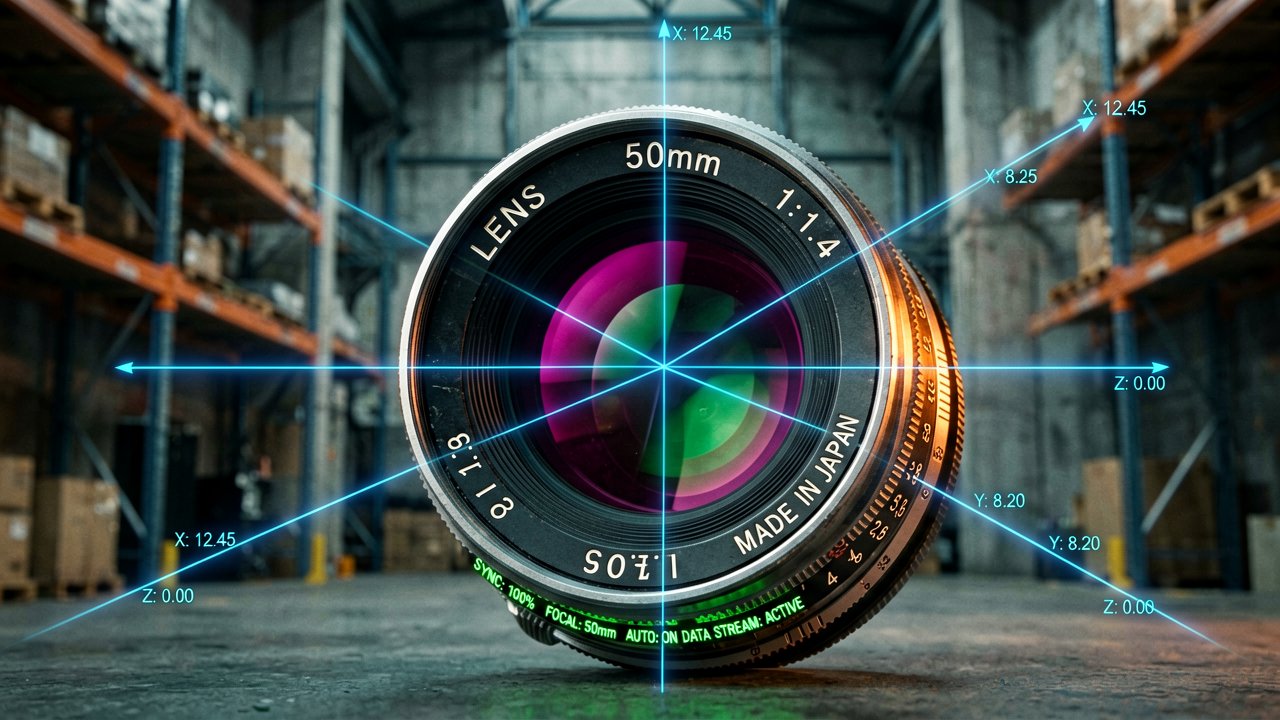
The race toward physical AI just took an unexpected, hardware-lean turn. On July 8, 2026, French AI pioneer Mistral AI officially broke into the robotics market by launching Robostral Navigate, an 8-billion-parameter vision-language-action model meticulously crafted to guide autonomous machines through complex industrial spaces using nothing more than a standard, budget-friendly RGB camera. By completely bypassing the need for heavy multi-camera setups, costly LiDAR rigs, or depth sensors, Mistral is signaling a massive shift in how warehouse fleets interpret and move through the real world.
Instead of mapping environments through intense geometric data processing, the model handles navigation by interpreting plain English commands. It leverages a technique the company calls "pointing"—inferring the precise image coordinates of where a robot needs to go relative to its current camera view. According to the official announcement on the Mistral AI Blog, the engineering team built this model entirely from the ground up, training it on roughly 400,000 simulated trajectories across 6,000 virtual scenes. This approach allowed them to use advanced prefix-caching to shrink a process that typically takes months down to just a few days.
A Massive Leap for Flexible, Hardware-Agnostic Fleets
What makes this release a true headline-grabber for tech journalists isn't just the minimalist hardware requirements; it's how the model stands up against bulkier systems. On the strict Room-to-Room in Continuous Environments (R2R-CE) benchmark, Robostral Navigate pulled off a staggering 76.6% success rate in completely unseen environments. Data compiled by Heise online highlights that this performance eclipses previous single-camera methods by 9.7 percentage points, while comfortably beating the best depth-sensor and multi-camera frameworks by 4.5 percentage points.
Because the architecture is entirely hardware-agnostic, the software can theoretically drop right into existing wheeled, legged, or flying industrial robots without forcing companies into expensive retrofits. As reported by Bloomberg, the push comes right on the heels of major commercial deals with key European manufacturing giants like Airbus and BMW, proving that Mistral isn't just dropping research papers—it's actively angling to secure the digital backbone of next-generation logistics and warehouse automation.
What Most Reports Miss: The High-Stakes Gamble on Data Over Hardware
Behind the sleek marketing of a single-camera solution lies a fundamental philosophical shift in the robotics industry. For years, the gold standard for autonomous industrial navigation has been an expensive, sensor-heavy stack dominated by LiDAR and depth-sensing arrays. Mistral’s decision to relies entirely on a standard RGB camera is a direct bet that software intelligence can out-compute hardware limitations. While traditional setups rely on pixel-perfect geometric mapping to prevent collisions, Robostral Navigate relies heavily on semantic understanding—essentially teaching a machine to recognize a forklift or a loading dock the same way a human driver does, rather than just calculating distance vectors.
This software-first methodology solves a massive bottleneck that has quietly plagued warehouse managers for a decade: deployment friction. In typical industrial automation setups, introducing a new fleet of robots requires teams of specialized field engineers to spend weeks meticulously mapping a facility's layout and hardcoding boundaries into a localized server. By shifting the heavy lifting to an 8-billion-parameter vision-language-action model, Mistral allows facilities to bypass this setup phase entirely. A floor manager can simply instruct a machine to "move past the blue pallets and park next to the conveyor," and the model translates that conversational cue into precise steering actions in real time.
However, this reliance on simulated training trajectories introduces a classic machine learning vulnerability known as the reality gap. Because the model honed its skills on 400,000 virtual paths, critics in the hardware community remain deeply skeptical about how it will handle the unpredictable, high-contrast environments of real-world logistics hubs. A stray piece of plastic wrapping reflecting harsh fluorescent lighting, or a sudden power outage that dims a corridor, can easily blind a standard RGB camera. To mitigate this, Mistral integrated a "pointing" mechanic that continuously cross-references the robot's target coordinates with its visual field, though field testing across diverse enterprise environments will be the true test of this fail-safe.
From a market perspective, this launch marks the opening salvo in a fierce regional rivalry over European industrial dominance. Mistral's aggressive push into physical AI is a tactical maneuver to capture local enterprise clients before Silicon Valley giants can lock down the continent's manufacturing hubs. By securing early validation from heavyweight industrial players like Airbus and BMW, the French startup is positioning itself as a sovereign, GDPR-compliant alternative to American cloud-reliant robotics platforms. The broader implication is clear: the future of industrial automation may not belong to the companies building the most sophisticated machines, but to those who control the lightweight brains driving them.
Reading Between the Lines: The Friction Between Simulation and Scalability
While the technical achievements of Robostral Navigate are undeniable on paper, the tech industry's history is littered with models that excelled in synthetic benchmarks but faltered under the messy realities of enterprise deployment. Mistral boasts a 76.6% success rate in unseen virtual environments, which is an impressive feat for an academic paper, but a 23.4% failure rate on a factory floor is a financial liability. In a fast-paced logistics hub, a robot that freezes or misinterprets a command nearly a quarter of the time is not an asset; it is a bottleneck that actively disrupts production pipelines and demands human intervention.
Furthermore, the narrative of "democratizing robotics" through cheaper hardware presents a stark paradox. By stripping out expensive LiDAR sensors to lower the upfront hardware cost, Mistral is effectively shifting the financial burden from physical components to computational overhead. Running an 8-billion-parameter vision-language-action model locally on a mobile robot requires high-end, power-hungry edge-AI silicon. If a warehouse operator has to trade a $500 depth sensor for a premium, thermal-throttling onboard GPU that drains battery life twice as fast, the promised cost efficiency quickly dissolves into a marketing illusion.
There is also an ongoing structural contradiction in the enterprise strategy itself. Mistral is pitching an elegant, single-camera solution to highly conservative industries like automotive manufacturing and aerospace, where safety margins are measured in fractions of a millimeter. Giants like BMW and Airbus did not achieve their automation scale by trusting unvetted neural networks to guess where a multi-ton machine should steer based on a visual "pointing" mechanic. The regulatory hurdles of deploying a purely probabilistic navigation system alongside human workers will likely limit this model to low-risk, isolated sorting zones for the foreseeable future.
Ultimately, this release reveals Mistral’s broader geopolitical ambitions more than it addresses immediate warehouse needs. By moving rapidly into physical AI, the company is attempting to carve out an irreplaceable niche before generalized multimodal models from larger competitors turn basic navigation into a commoditized software layer. It is a calculated defensive play designed to keep European industrial data within European borders. Whether warehouse managers are actually willing to ditch their reliable, laser-guided hardware for a flashy, camera-only upgrade remains the multi-billion-dollar gamble.
Replacing a reliable $1,000 laser sensor with an 8-billion-parameter neural network that might mistake a discarded sandwich wrapper for a concrete barrier feels exactly like the kind of progress only a software engineer could love.
Artūras Malašauskas is an AI Systems Integrator with 20+ years of production-grade web engineering experience. He has designed, shipped, and scaled enterprise Python/PHP systems for logistics, SaaS, and public-sector clients. For the past year, he has focused exclusively on AI integrations: deploying open-source LLMs, building generative media pipelines (image, audio, video), and engineering multi-agent workflows for real production environments. His standard: reproducibility, security, cost-efficient inference—no vaporware. He documents and evaluates emerging AI tooling, separating verified capabilities from marketing noise. Technical editor at: muza-ai.eu, ai-verslas.lt, ai-naujinos.lt Connect on LinkedIn
Comments