OpenAI Redefines the AI Frontier with the Dual Launch of GPT-5.6 and Full-Duplex GPT-Live-1

After a tense, government-requested intermission that kept the tech world on the edge of its seat, OpenAI finally flipped the switch on Thursday, July 9, 2026, unleashing its heavily anticipated GPT-5.6 flagship intelligence models alongside a groundbreaking vocal counterpart, GPT-Live-1. It's a massive, double-barreled release that permanently alters how we interact with machines. By rolling out the three-tiered GPT-5.6 family—composed of the Sol, Terra, and Luna models—together with a truly fluid, continuous voice ecosystem, the company isn't just playing catch-up; it's actively trying to corner the enterprise and consumer markets in one swift motion.
The global launch comes immediately after federal regulators wrapped up intensive national security reviews, effectively lifting the temporary deployment caps that had bottlenecked OpenAI's most potent neural networks. This sudden burst of availability is already intensifying the frantic industry-wide arms race for compute infrastructure and token allocation. Tech giants are scrambling to match a suite that simultaneously addresses hyper-complex reasoning and lightweight, cost-effective edge computing.
Three Tiers of Pure Logic
Instead of forcing users into a one-size-fits-all framework, OpenAI split its powerhouse update into three distinct tiers tailored to different workloads and budgets. The crown jewel is GPT-5.6 Sol, a heavy-duty model designed for cutting-edge coding, scientific research, and raw knowledge synthesis. According to initial details shared in the OpenAI Official Preview, Sol acts as the primary engine for high-end reasoning tasks. For developers who need high performance without burning through capital, Terra offers a balanced mid-tier alternative that cuts operational costs roughly in half compared to Sol. Meanwhile, Luna anchors the bottom of the stack, offering a nimble, low-latency option perfect for rapid, high-volume tasks.
Vocal Fluidity Through Full-Duplex Architecture
While the raw cognitive leap of GPT-5.6 is impressive, the concurrent rollout of GPT-Live-1 represents a profound paradigm shift in conversational AI. Unlike traditional voice assistants that rely on rigid, alternating turn-taking, this new system is built on a full-duplex architecture. It processes incoming audio feeds while generating vocal outputs at the exact same time. The model actively decides multiple times per second whether it should continue speaking, pause, acknowledge a point with an intuitive "mhmm," or politely stay silent when it detects a human train of thought.
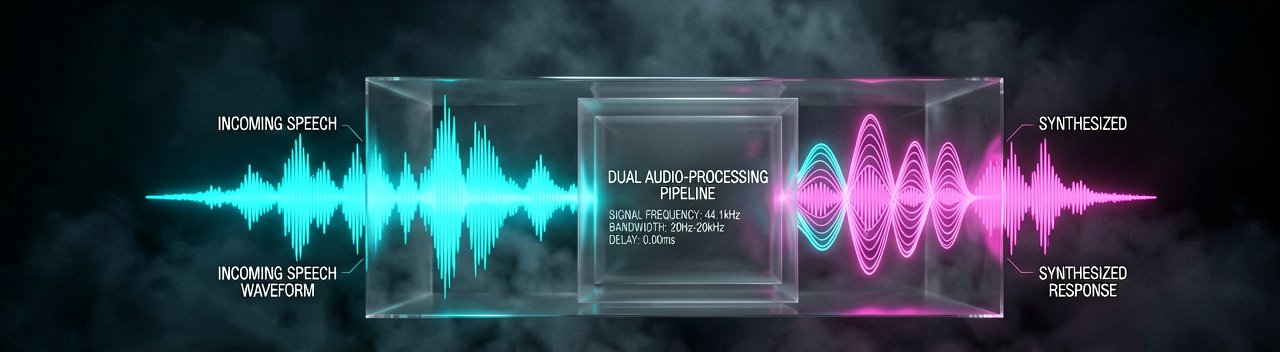
According to the official OpenAI GPT-Live System Card, the architecture also introduces an intelligent delegation framework. When a user asks an intricate question mid-conversation that demands deep web searches or intense mathematical computation, GPT-Live-1 doesn't stumble or freeze. It seamlessly hands off the heavy lifting to backend models like GPT-5.6 in the background while keeping the verbal interaction smooth, natural, and uninterrupted. Paid subscribers are receiving immediate access to the premium GPT-Live-1 model, while free users are being transitioned to the streamlined GPT-Live-1 mini variant.
Under the Hood of the Token Crunch
Beyond the Headlines: The dual release of GPT-5.6 and GPT-Live-1 is exposing a fierce, hidden bottleneck in global tech infrastructure. For months, industry insiders whispered about an impending "token crunch" as data centers groaned under the weight of frontier model training. By launching a three-tiered architecture alongside a continuous voice stream, OpenAI isn't just offering user flexibility; it is executing a calculated survival strategy for computing power. Moving low-stakes queries to the lightweight Luna model preserves precious high-tier silicon clusters for the massive reasoning demands of the Sol engine.
This resource balancing act highlights a widening rift among Silicon Valley elite and enterprise buyers. Corporate Chief Information Officers have grown increasingly vocal about the skyrocketing costs of running unoptimized generative models at scale. While tech evangelists celebrate the raw intellectual leap of advanced reasoning, chief financial officers are demanding strict cost predictability. The mid-tier Terra model directly targets this corporate anxiety, acting as a defensive buffer to prevent enterprise clients from migrating to cheaper, open-source alternatives.
Meanwhile, the engineering feat behind GPT-Live-1 pushes infrastructure to its absolute absolute limits. True full-duplex communication requires real-time audio processing with sub-hundred-millisecond latency, a threshold where even minor network jitter ruins the illusion of human conversation. To pull this off, engineers had to redesign how data packets travel between edge devices and centralized servers. The system essentially runs two parallel pipelines—one constantly analyzing the user’s incoming emotional tone and verbal interruptions, while the other synthesizes contextual responses on the fly.
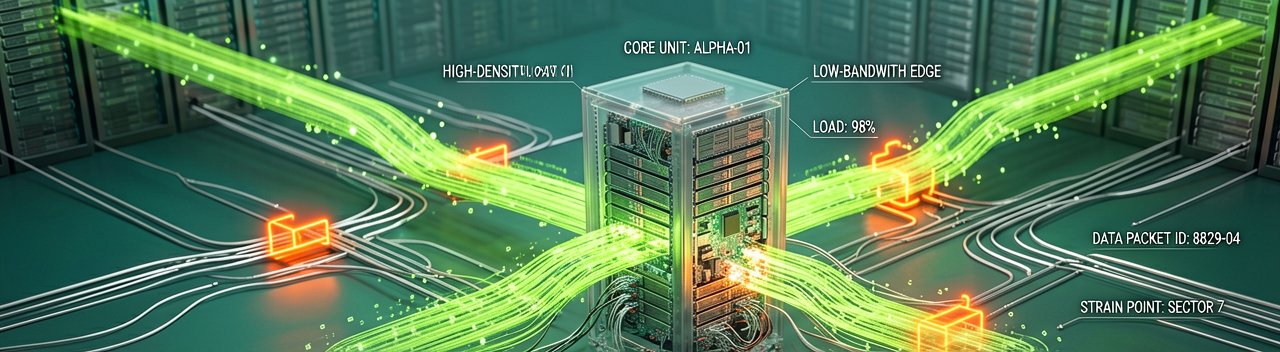
This technical balancing act raises the stakes for the broader AI ecosystem. Competitors are now forced to choose between chasing raw text-based intelligence benchmarks or investing heavily in low-latency voice networks. By merging both tracks into a single, coordinated Thursday update, OpenAI effectively reset the baseline expectations for consumer applications. The industry is no longer just measuring how smart an AI is on paper, but how fluidly it can think, listen, and adapt in the middle of a spoken sentence.
The Illusion of Interactivity
Reading Between the Lines: The breathless praise surrounding full-duplex communication conveniently glosses over a deeper architectural tension. While OpenAI pitches GPT-Live-1 as a triumph of fluid, human-like interaction, the underlying mechanics reveal a system fundamentally at war with its own intelligence. True conversational fluidity requires instantaneous, split-second reflexes, yet deep, reliable reasoning demands deliberate computational time. By forcing a high-logic engine to masquerade as an elite conversationalist, the system risks delivering confidently flawed assertions at supersonic speeds, prioritizing the theater of banter over factual integrity.
This friction exposes a glaring contradiction in the tech giant's current safety narrative. For months, the public was told that prolonged government-mandated security reviews were essential to ensure these models would not cause systemic societal disruption. Yet, the immediate response to lifting these regulatory caps was not a cautious, metered rollout, but a massive, multi-tiered commercial product dump. It signals that despite all the high-minded rhetoric surrounding alignment and caution, the relentless pressure of venture capital and market share still dictates the operational timeline.
Furthermore, the introduction of the mid-tier Terra model and the stripped-down Live-1 mini variant lays bare a stark democratization divide. Behind the marketing promise of AI ubiquity lies a highly stratified ecosystem where premium, hallucination-resistant logic is locked behind steep corporate payrolls, while the general public is left with faster, cheaper, and inherently less reliable alternatives. This tiering creates a feedback loop where the users who most need robust, verified data are the ones routed to lightweight models designed primarily to optimize OpenAI’s server overhead rather than user accuracy.
Looking ahead, the long-term viability of this dual architecture hinges entirely on a infrastructure gamble that the grid might not be able to cash. Running continuous, bidirectional audio streams for millions of concurrent users consumes an astronomical amount of bandwidth and energy, far outpacing traditional text prompts. If the enterprise adoption of Terra and Sol fails to offset the staggering operational deficit of keeping Live-1 running in real time, the entire ecosystem may face an aggressive wave of monetization and restrictive throttling, proving that even the most advanced digital minds are ultimately bound by the cold reality of the electric bill.
"We were promised an artificial superintelligence that would solve climate change and cure disease, but at least we can now politely interrupt a machine while it hallucinations a recipe for vegan lasagna at ninety frames per second."
Artūras Malašauskas is an AI Systems Integrator with 20+ years of production-grade web engineering experience. He has designed, shipped, and scaled enterprise Python/PHP systems for logistics, SaaS, and public-sector clients. For the past year, he has focused exclusively on AI integrations: deploying open-source LLMs, building generative media pipelines (image, audio, video), and engineering multi-agent workflows for real production environments. His standard: reproducibility, security, cost-efficient inference—no vaporware. He documents and evaluates emerging AI tooling, separating verified capabilities from marketing noise. Technical editor at: muza-ai.eu, ai-verslas.lt, ai-naujinos.lt Connect on LinkedIn
Comments