Couchbase Launches AI Data Plane to Unify Fragmented Architecture for Autonomous Enterprise Agents

The race to construct reliable, production-grade data foundations for autonomous enterprise agents just received a massive injection of infrastructure utility. Database pioneer Couchbase has announced the general availability of its new AI Data Plane. This platform serves as a unified operational stratum engineered specifically to move autonomous agentic applications out of brittle, chat-style corporate pilot phases and into full-scale enterprise production. The roll-out addresses a severe architectural bottleneck: the high-stakes data complexity that throttles multi-step AI systems running across distributed cloud and edge networks.
In the broader enterprise landscape, the market has shifted dramatically from single-prompt chatbots to complex, goal-oriented autonomous systems. This transition has exposed a fundamental mismatch between the heavy multi-step demands of AI agents and legacy data architectures. Until now, platform engineering teams have had to manually stitch together disconnected point solutions—including distinct vector databases, specialized document stores, and standalone caching layers—for every individual agent deployed. This fragmented approach adds devastating operational complexity, spikes token costs, and induces severe latency lag, which frequently stalls corporate AI projects before they can ever scale.
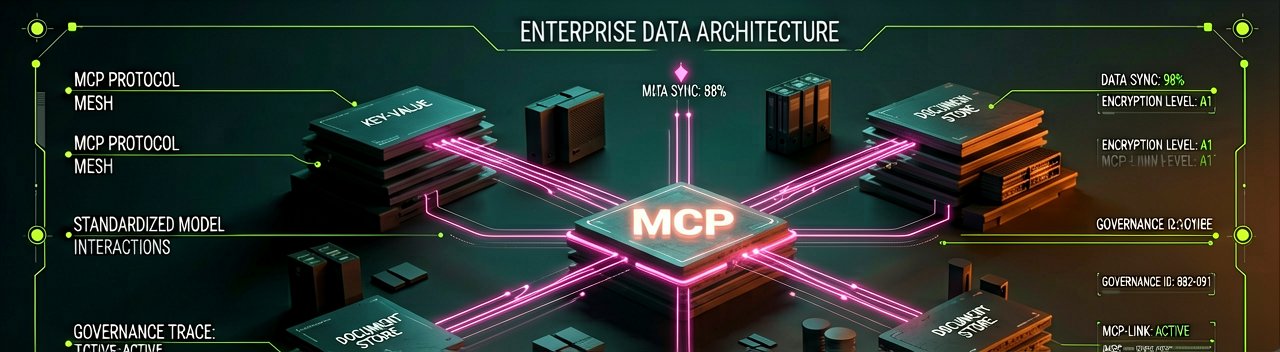
Couchbase’s strategic counter-move is to collapse these isolated tools into a single, governed architecture that operates identically across managed cloud, self-managed enterprise clusters, and disconnected edge systems. According to statements by Chief Product and Strategy Officer Barry Morris published via SDxCentral, the database layer is precisely where agentic AI either scales or stalls. By creating a framework-agnostic persistence layer, Couchbase aims to significantly reduce total cost of ownership (TCO) so Global 2000 enterprises can repurpose their infrastructure savings directly into funding net-new AI initiatives.
Solving the Persistence Problem With Agent Memory
At the center of this release is Couchbase Agent Memory, a persistent and reusable storage layer that addresses the industry’s tendency to treat AI memory as an afterthought. Without a dedicated memory plane, autonomous agents treat corporate users like strangers during every new session, losing critical context and forcing developers to dump massive conversation histories back into LLM prompts. By maintaining structured, session-spanning context in close proximity to live operational data, enterprise agents can retain historical business context across system restarts. This localized, memory-first approach ensures sub-millisecond retrieval speeds while naturally curbing redundant inference calls to external LLM providers.
Standardizing Connectivity and Tool Governance
To eliminate bespoke integration code, Couchbase has incorporated an enterprise-supported self-managed Model Context Protocol (MCP) server directly into the fabric of the platform. This implementation standardizes how AI models securely interact with underlying documents, vectors, and key-value pairs through a highly regulated, unified interface. Furthermore, the newly introduced Agent Catalog provides necessary operational observability by managing prompts, system tools, and end-to-end trace metadata. As noted by market analysts at TechTarget, the real brilliance of this framework lies in what it removes rather than what it adds, effectively satisfying a widespread enterprise demand to consolidate sprawling software stacks.
Extending Agent Operations to the Data Lakehouse and Edge
Recognizing that autonomous workloads must frequently run in hybrid environments, Couchbase has paired the AI Data Plane with its Enterprise Analytics 2.2 release, introducing native Apache Iceberg lakehouse federation. This enables operational data layers to be queried seamlessly alongside open lakehouse tables without executing expensive, high-maintenance ETL pipelines. Simultaneously, the company has integrated its mobile portfolio—including Couchbase Lite and Sync Gateway—into the architecture. This edge strategy ensures that autonomous agents deployed on remote devices can execute local vector searches, reconcile conflicting cross-session profiles, and manage memory states even when network connectivity becomes entirely intermittent.
The Hidden Overhead of Agentic Ambition
Reading Between the Lines: While the promise of a unified AI data plane is structurally alluring, it deliberately sidesteps a messy reality in corporate IT: enterprise data is rarely clean enough to be unified by a simple infrastructure upgrade. Couchbase is banking on the idea that organizations will eagerly migrate their sprawling vector, document, and key-value workloads into a single NoSQL ecosystem to feed their autonomous agents. Yet, history suggests that large enterprises treat database consolidation like a trip to the dentist—universally agreed upon as a good idea, but avoided until absolute agony forces the issue. The real obstacle to building autonomous agents is not always the lack of a standardized memory plane, but the deeply entrenched political silos and fragmented schemas that have resisted consolidation for decades.
There is also a palpable architectural contradiction in the industry’s current rush toward Model Context Protocol (MCP) standardization. By embedding an MCP server directly into the operational database layer, Couchbase aims to commoditize the glue that binds LLMs to corporate data. However, the rapidly shifting LLM landscape is notoriously fickle. The dominant AI labs modify their API structures, context windows, and tool-calling paradigms at a pace that fundamentally clashes with the slow, deliberate release cycles of enterprise infrastructure software. IT leaders now face a delicate balancing act: anchoring their agentic architectures to a foundational database layer brings stability, but it may also introduce a new form of technical debt if the underlying AI protocols pivot unexpectedly.
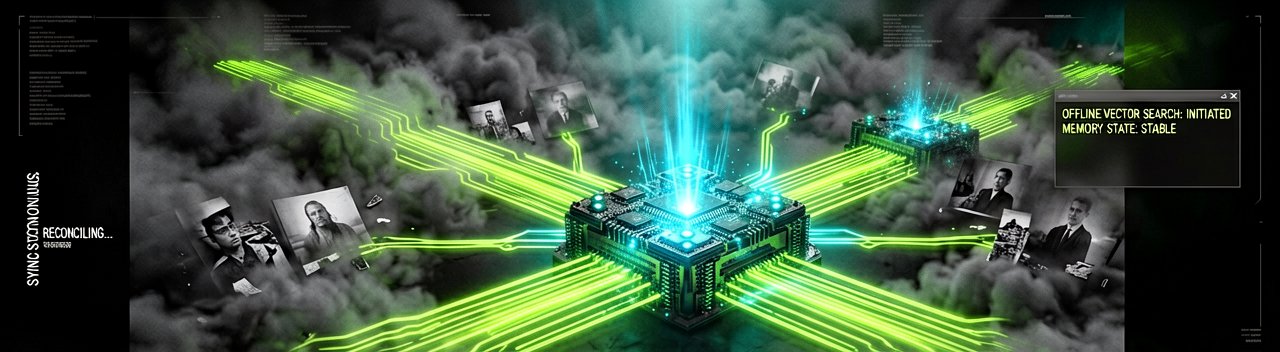
Furthermore, extending autonomous agent operations down to disconnected edge systems via Couchbase Lite introduces immense data reconciliation risks. Running localized vector searches and maintaining historical memory states on remote field devices sounds optimal for operational continuity, but merging those conflicting, time-delayed contexts back into a central database is an asynchronous nightmare. If two field agents modify conflicting customer profiles or inventory logs during an offline window, the system must rely on complex conflict-resolution algorithms. Enterprise buyers must weigh whether the marginal gains of running truly autonomous agents at the edge are worth the inevitable headaches of distributed data consistency.
Ultimately, Couchbase's strategy cleverly shifts the AI conversation away from the models themselves and back to the data pipelines that sustain them, which is exactly where an infrastructure incumbent wants the battle to be fought. By wrapping vector capabilities, lakehouse federation, and agent memory into a single licensing model, they present an aggressive cost-saving argument to CFOs weary of skyrocketing token bills. Whether enterprises can successfully untangle their legacy data webs quickly enough to take advantage of this unified plane remains the multi-million-dollar question for the next phase of corporate AI adoption.
"We spent the last decade convincing enterprises that breaking their monolithic systems into microservices was the path to salvation, only to realize that an autonomous agent cannot function without total corporate omniscience. It turns out the ultimate destiny of AI infrastructure is to painstakingly rebuild the central monolith we just finished tearing down, just with better branding and a vastly higher token budget."
Artūras Malašauskas is an AI Systems Integrator with 20+ years of production-grade web engineering experience. He has designed, shipped, and scaled enterprise Python/PHP systems for logistics, SaaS, and public-sector clients. For the past year, he has focused exclusively on AI integrations: deploying open-source LLMs, building generative media pipelines (image, audio, video), and engineering multi-agent workflows for real production environments. His standard: reproducibility, security, cost-efficient inference—no vaporware. He documents and evaluates emerging AI tooling, separating verified capabilities from marketing noise. Technical editor at: muza-ai.eu, ai-verslas.lt, ai-naujinos.lt Connect on LinkedIn
Comments