Beyond the Dashboard: How Meta’s Developer Tools MCP Institutionalizes Autonomous AI Workflows
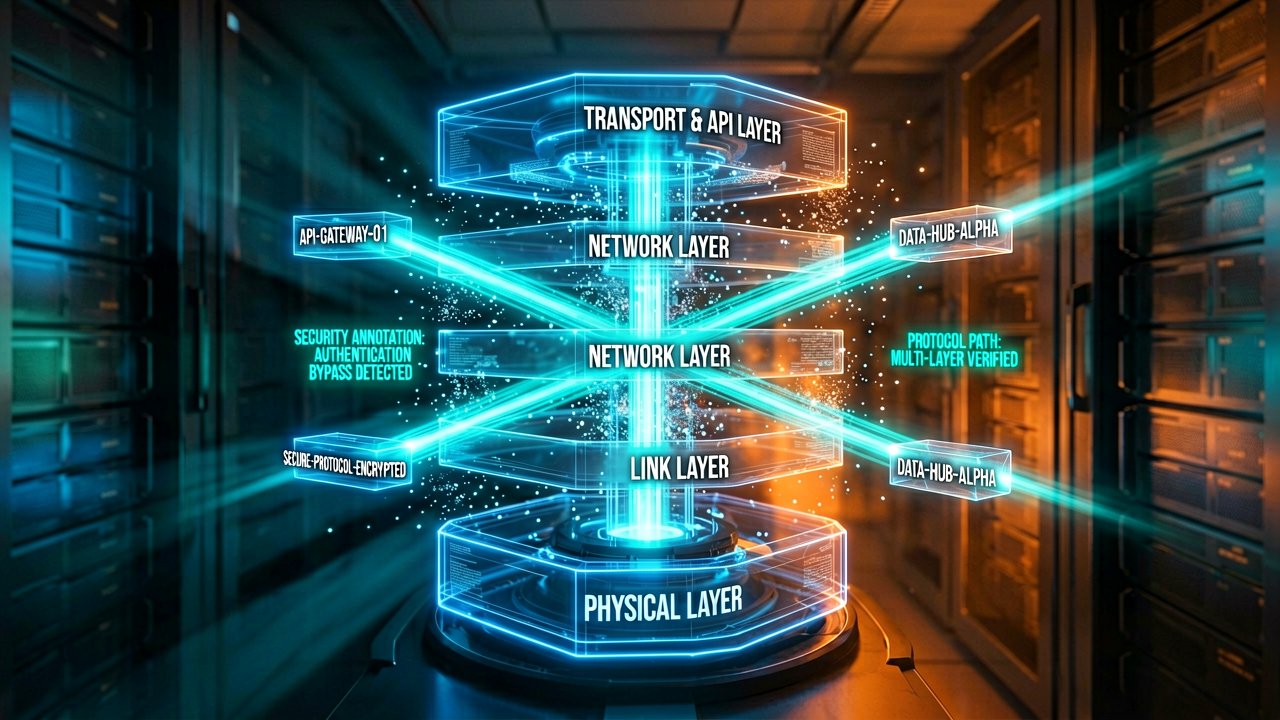
The traditional developer dashboard, for years the primary control center for managing application program interfaces (APIs), is facing a structural decline. Meta has fundamentally altered this landscape by officially launching its (Model Context Protocol), an infrastructure shift that eliminates manual dashboard logins in favor of zero-login integration. By adopting the open-source Model Context Protocol framework, Meta is establishing a direct, standardized bridge between large language models (LLMs) and platform architectures, allowing autonomous AI agents to interact with developer resources natively without human-in-the-loop web authentication.
This deployment transitions corporate API utilization from fragmented, custom-scripted integrations to a unified protocol layer. Under the previous ecosystem paradigms, deploying non-human autonomous workflows required brittle API token provisioning, specialized SDK configurations, and frequent browser-based manual oversight to maintain system states. By providing remote, dedicated MCP servers, Meta allows engineering ecosystems to expose core utilities—such as devtools_app_list and devtools_api_changelog—directly to an AI assistant's context window. This architectural pivot repositions AI agents from isolated code generators to fully integrated operations managers capable of reading, configuring, and executing platform commands in real time.
The strategic implications ripple across both developer operations and the broader enterprise software market. Meta's introduction of specialized nodes for ecosystem platforms like the Meta Horizon OS Developer Tools and advertising segments marks a clear push to commoditize agentic workflows. By standardizing backend pathways through a protocol originally pioneered by Anthropic, Big Tech is establishing a reality where software products must naturally accommodate autonomous agent interactions as primary citizens, rather than treating them as secondary web-scraping or automated macro processes.
The Architecture of Zero-Login Tooling
The foundation of Meta's Developer Tools MCP is the deliberate separation of context management from traditional user interfaces. Instead of relying on manual account authorization layers for every session, developers connect their AI assistants, IDEs, or automated pipelines directly to Meta's remote MCP servers. The AI agent queries a predefined list of capabilities natively, instantly establishing what parameters it can manipulate. This architecture significantly minimizes security threat vectors associated with hardcoded tokens while expanding execution speed by bypassing the graphical user interface entirely.

Market Shifts in the Agentic Era
Meta's rollouts across both its core developer ecosystem and specialized divisions like the illustrate a broader market consolidation around standardized agent protocols. As companies compete to build the most capable AI workforce, infrastructure that simplifies context delivery will dominate developer mindshare. Platforms failing to provide native protocol layers like MCP risk being left behind by developers who increasingly delegate routine tasks—ranging from system debugging to ad reporting and asset library queries—to autonomous software agents.
Expert Commentary: Driving Towards Absolute Autonomy
Meta's launch of the Developer Tools MCP is not merely a technical utility update; it represents a philosophical shift in software engineering. By engineering the platform to be fully operational without an active human dashboard login, Meta is signaling that the future of enterprise software consumption belongs to autonomous agents. While traditional SaaS architectures remain heavily dependent on human point-and-click actions, this infrastructure deployment demonstrates how modern platforms can optimize for high-velocity, machine-to-machine operations. Moving forward, the velocity of product iterations will be dictated not by how fast an engineer can navigate an admin console, but by how fluidly an autonomous agent can orchestrate platform APIs through standardized protocols.Anatomy of a Silent Infrastructure Revolution
Beneath the Layer of Convenience: The transition away from traditional developer dashboards exposes a structural reorganization of how enterprise software functions at its core. For decades, the industry treated human-facing administrative panels as the ultimate source of truth for platform control. Meta's decision to bypass this legacy layer acknowledges that human oversight is fast becoming a bottleneck in high-frequency engineering environments. By deploying remote servers tailored for the Model Context Protocol, the platform removes the visual abstraction layer, allowing software pipelines to read system documentation and modify operational states without human translation or manual clicks.
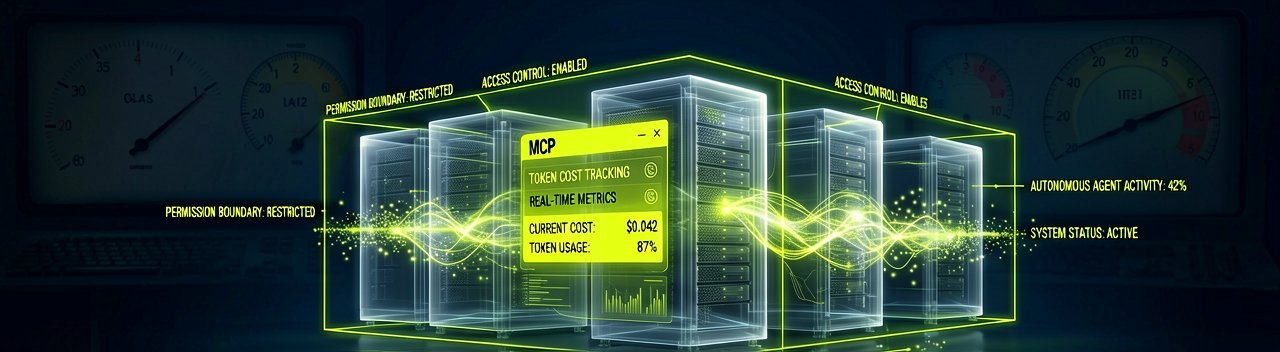
This architectural shift carries significant implications for corporate data compliance and security engineering. Historically, granting external automation tools or scripts access to internal developer environments required the creation of complex, long-lived API tokens or service accounts that frequently created security vulnerabilities. By standardizing communication through the open-source protocol framework, engineering teams can implement granular, session-based permission models specifically calibrated for machine intelligence. This allows platforms to authorize an autonomous agent to perform precise tasks, such as inspecting application error logs or auditing API changelogs, while completely restricting its ability to alter sensitive billing details or core organizational settings.
From a market perspective, this rollout intensifies an infrastructure race among ecosystem providers aiming to capture early developer mindshare in the agentic era. When a platform lowers the friction for machine integration, it naturally becomes the preferred destination for engineers building automated workflows. Industry analysts note that as software development increasingly shifts toward AI-augmented coding environments, the availability of native, protocol-driven entry points will serve as a primary competitive advantage. Platforms that cling to manual dashboard architectures risk isolation, as autonomous agents will inherently favor ecosystems where they can operate natively and without frictional barriers.
The institutional adoption of these protocols also marks a pivot away from proprietary, fragmented software development kits that have long complicated cross-platform automation. Rather than forcing development teams to maintain distinct, custom-coded connectors for every individual service they utilize, the unified protocol layer acts as a universal adapter. This standard translation layer enables various AI models and automated orchestration tools to interface with Meta's developer resources using identical structural patterns. Consequently, enterprise engineering departments can reallocate capital and engineering hours away from integration maintenance and toward building proprietary operational capabilities.
Ultimately, this technological evolution lays the groundwork for fully autonomous application management lifecycles. In this new operational paradigm, an AI agent is no longer confined to writing code in an isolated text editor; it possesses the capabilities required to actively monitor application health, diagnose breaking API changes from platform updates, and deploy configurations directly. By engineering a platform that operates seamlessly without an active human login, the tech ecosystem is moving beyond simple code generation and entering a maturity phase defined by continuous, machine-driven optimization and autonomous maintenance.
The Hidden Cost of Frictionless Autonomy
Reading Between the Lines: While the elimination of dashboard logins is heralded as a triumph for developer velocity, it subtly shifts accountability from structured human processes to unpredictable algorithmic models. The tech industry has long suffered from a systemic bias that equates the removal of friction with progress. By designing an ecosystem where autonomous agents bypass human authentication interfaces entirely, Meta is assuming that large language models can navigate complex platform rules with a level of situational awareness they do not yet possess. Decommissioning the visual dashboard removes the guardrails that prevent catastrophic configuration drift, leaving engineering teams to diagnose errors created in a black box.
This development creates a clear contradiction in enterprise security strategies. For years, organizations have heavily invested in Zero Trust architectures, multi-factor authentication, and strict biometric verification to protect developer pipelines from unauthorized access. The introduction of Model Context Protocol servers creates a privileged backdoor explicitly designed to let non-human entities bypass these exact human-centric defenses. While a session-based permission model sounds secure on paper, it relies entirely on the premise that an AI agent will never misinterpret a prompt or succumb to prompt injection attacks that command it to abuse its access permissions.
Furthermore, standardizing API interactions around a single open-source protocol framework introduces an overlooked form of platform dependency. As enterprise engineering teams deeply integrate their operations with MCP-driven environments, they inadvertently lock themselves into a specific paradigm of agentic software design. This technical debt builds silently; organizations may soon find it harder to migrate away from platforms that support these automated workflows, effectively trading vendor lock-in at the API level for a more insidious lock-in at the protocol and automation layer.
There is also an economic irony in automating developer operations to this degree. The promise of autonomous agents running continuous maintenance loops implies a significant reduction in human labor costs. However, the computational overhead required to run LLMs constantly querying, parsing, and configuring platform resources introduces massive, recurring API and infrastructure expenses. Organizations may quickly find that the financial capital saved by reducing human engineering hours is simply transferred to AI infrastructure providers to pay for token consumption costs generated by chatty, hyper-active agents.
Ultimately, this architectural shift forces us to re-examine what it means to manage an application. When software systems are entirely maintained by autonomous agents that read documentation and modify live code without human oversight, the role of the human engineer shifts from creator to supervisor. This alienation from the raw code base could degrade the collective troubleshooting capabilities of engineering teams. When a complex system failure inevitably occurs, the human operators may no longer understand the intricate web of automated configurations their AI assistants have spent months quietly weaving behind the scenes.
Replacing a human developer with an autonomous AI agent means you can finally eliminate the tedious dashboard logins and manual clicking—allowing you to move directly to the much more modern task of watching an automated system burn through your infrastructure budget at the speed of light.
Artūras Malašauskas is an AI Systems Integrator with 20+ years of production-grade web engineering experience. He has designed, shipped, and scaled enterprise Python/PHP systems for logistics, SaaS, and public-sector clients. For the past year, he has focused exclusively on AI integrations: deploying open-source LLMs, building generative media pipelines (image, audio, video), and engineering multi-agent workflows for real production environments. His standard: reproducibility, security, cost-efficient inference—no vaporware. He documents and evaluates emerging AI tooling, separating verified capabilities from marketing noise. Technical editor at: muza-ai.eu, ai-verslas.lt, ai-naujinos.lt Connect on LinkedIn
Comments