Shinhan Bank Pioneers Adversarial AI Stress Testing to Fortify Corporate Strategy Against Market Volatility
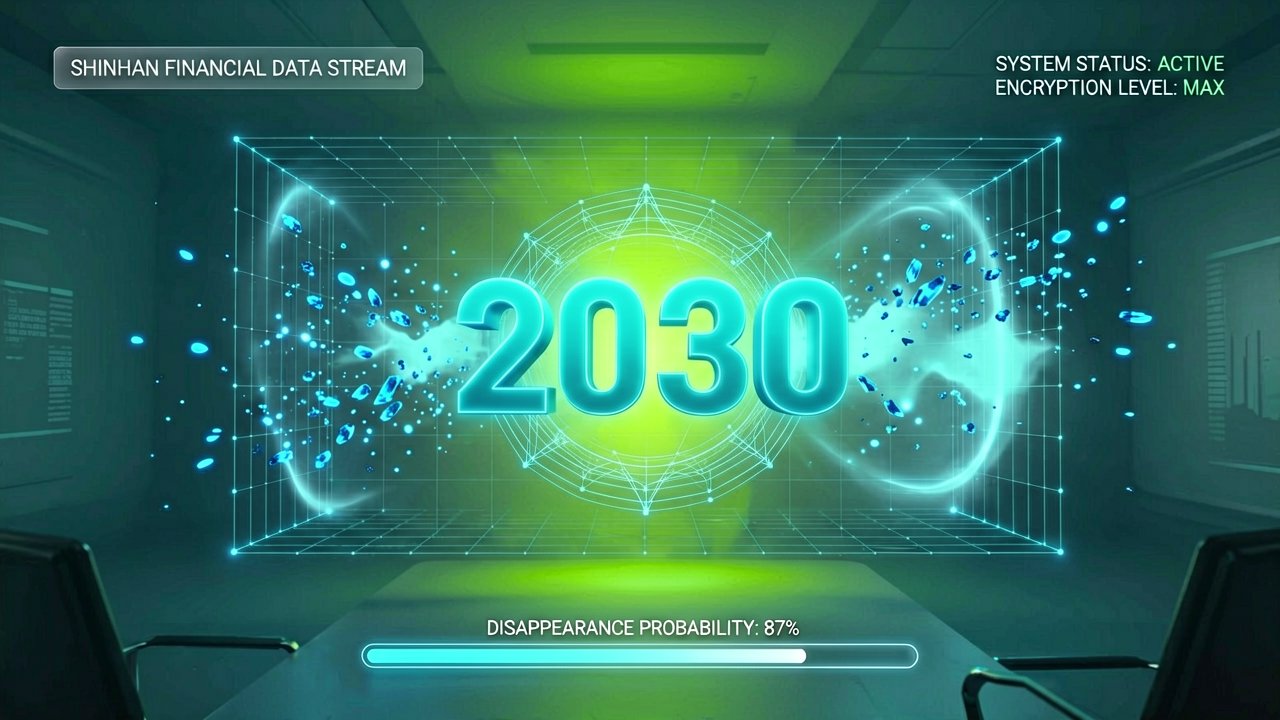
Shinhan Financial Group has transitioned from traditional defensive risk management to an aggressive, AI-native posture by deploying an in-house developed AI "red team" to challenge its executive decision-making. During the group’s 2026 second-half management forum, this generative AI agent acted as a simulated adversary, analyzing executive discussions in real time to generate counterarguments and alternative proposals. According to reports from The Korea Herald, the session began with a provocative simulation of a market where Shinhan Financial had entirely disappeared by 2030, forcing leadership to confront systemic vulnerabilities under extreme conditions.
This strategic shift reflects a broader mandate by Chairman Jin Ok-dong to move beyond "willpower and determination" toward a focus on AI transformation (AX) as a survival mechanism. The bank has already demonstrated the fiscal benefits of this digital pivot, reporting a cost saving of 652.3 billion won in the previous fiscal year through AI-driven operational efficiency, as detailed by Seoul Economic Daily. By integrating adversarial AI into the boardroom, Shinhan is attempting to institutionalize "intellectual friction," ensuring that corporate strategies are resilient enough to withstand the "black swan" events often found in today’s volatile global markets.
The Rise of Adversarial Thinking in Financial Strategy
The implementation of an AI red team marks a significant departure from standard internal controls, moving toward a model of continuous stress testing. Unlike static risk assessments, this AI agent evaluates group presentations and pre-assigned tasks to identify logical gaps and blind spots. As noted by The Chosun Daily, this allows for a higher degree of objectivity in executive discussions, effectively removing the human bias and "echo chamber" effects that can plague high-level corporate planning.
Market Impact and the AI-Native Evolution
Shinhan’s move is part of a larger trend where financial institutions are evolving into AI-native entities to maintain market leadership. The bank's "SCoRE AI" platform, which integrates generative AI into its group-wide internal control system, serves as the technological backbone for this strategy. Industry analysis from Asia Business Daily suggests that this approach not only enhances decision-making resilience but also establishes a new industry benchmark for how AI can be used to audit and strengthen governance in high-stakes financial environments.

Shinhan Financial Group has transitioned from traditional defensive risk management to an aggressive, AI-native posture by deploying an in-house developed AI "red team" to challenge its executive decision-making. During the group’s 2026 second-half management forum, this generative AI agent acted as a simulated adversary, analyzing executive discussions in real time to generate counterarguments and alternative proposals. According to reports from The Korea Herald, the session began with a provocative simulation of a market where Shinhan Financial had entirely disappeared by 2030, forcing leadership to confront systemic vulnerabilities under extreme conditions.
This strategic shift reflects a broader mandate by Chairman Jin Ok-dong to move beyond "willpower and determination" toward a focus on AI transformation (AX) as a survival mechanism. The bank has already demonstrated the fiscal benefits of this digital pivot, reporting significant cost savings and operational efficiency through AI-driven automation. By integrating adversarial AI into the boardroom, Shinhan is attempting to institutionalize "intellectual friction," ensuring that corporate strategies are resilient enough to withstand the "black swan" events often found in today’s volatile global markets.
The Rise of Adversarial Thinking in Financial Strategy
The implementation of an AI red team marks a significant departure from standard internal controls, moving toward a model of continuous stress testing. Unlike static risk assessments, this AI agent evaluates group presentations and pre-assigned tasks to identify logical gaps and blind spots. As noted by Seoul Economic Daily, this allows for a higher degree of objectivity in executive discussions, effectively removing the human bias and "echo chamber" effects that can plague high-level corporate planning.
Market Impact and the AI-Native Evolution
Shinhan’s move is part of a larger trend where financial institutions are evolving into AI-native entities to maintain market leadership. The bank's integrated generative AI platforms serve as the technological backbone for this strategy. Industry analysis from The Chosun Daily suggests that this approach not only enhances decision-making resilience but also establishes a new industry benchmark for how AI can be used to audit and strengthen governance in high-stakes financial environments.

The Architecture of Corporate Self-Correction
Beyond the Algorithmic Shield: The true significance of Shinhan's adversarial AI deployment lies in its capacity to dismantle "groupthink" at the highest echelons of South Korean finance. In traditional corporate structures, internal hierarchies often stifle dissenting opinions, leading to strategic blind spots during periods of rapid market transition. By introducing an AI agent specifically programmed to be "disagreeable," the bank creates a safe psychological space where executives are forced to defend their logic against cold, data-driven critiques that do not defer to seniority or tenure.
This shift from "AI-supported" to "AI-challenged" decision-making represents a fundamental change in the role of the Chief Risk Officer (CRO). Historically, risk management focused on historical data and compliance checkboxes. Today, the adversarial model utilizes Large Language Models (LLMs) to ingest real-time global macroeconomic shifts, geopolitical tensions, and fintech disruptions to simulate "what-if" scenarios that a human team might overlook. This proactive friction ensures that by the time a strategy is approved, it has already survived a digital gauntlet of its own worst-case possibilities.
Historical context reveals that Shinhan's focus on resilience stems from the cyclical nature of the Korean financial market, which has historically been sensitive to export volatility and demographic shifts. The AI red team is not merely a technical tool but a cultural intervention designed to pivot the bank away from a legacy of stability-seeking and toward a future of agile adaptation. By modeling its own corporate "obsolescence" by 2030, the leadership is effectively training the organization to treat every strategic success as a temporary state that must be constantly re-earned through rigorous validation.
From a stakeholder perspective, this level of transparency in stress-testing provides a unique form of assurance to institutional investors and regulators. As financial products become increasingly complex, the ability of a board to demonstrate that they have "vetted the vetters" via independent AI analysis becomes a powerful differentiator. It signals a move toward algorithmic governance where the bank’s survival is not dependent on the intuition of a few individuals, but on a robust, self-correcting system that thrives on internal conflict and analytical rigor.
Ultimately, the successful integration of adversarial AI requires more than just high-performance computing; it demands a leadership team willing to be corrected by a machine. This cultural maturity is what distinguishes Shinhan’s initiative from mere marketing. By embedding "critique as a service" into the core of the group’s management forum, the bank is building a neural network of human-AI collaboration that prioritizes long-term resilience over short-term consensus. This evolution positions Shinhan as a pioneer in a new era of "Cognitive Banking," where the most valuable asset is the ability to anticipate failure before it manifests in the real-world market.
Shinhan Financial Group has transitioned from traditional defensive risk management to an aggressive, AI-native posture by deploying an in-house developed AI "red team" to challenge its executive decision-making. During the group’s 2026 second-half management forum, this generative AI agent acted as a simulated adversary, analyzing executive discussions in real time to generate counterarguments and alternative proposals. According to reports from The Korea Herald, the session began with a provocative simulation of a market where Shinhan Financial had entirely disappeared by 2030, forcing leadership to confront systemic vulnerabilities under extreme conditions.
This strategic shift reflects a broader mandate by Chairman Jin Ok-dong to move beyond "willpower and determination" toward a focus on AI transformation (AX) as a survival mechanism. The bank has already demonstrated the fiscal benefits of this digital pivot, reporting significant cost savings and operational efficiency through AI-driven automation. By integrating adversarial AI into the boardroom, Shinhan is attempting to institutionalize "intellectual friction," ensuring that corporate strategies are resilient enough to withstand the "black swan" events often found in today’s volatile global markets.
The Rise of Adversarial Thinking in Financial Strategy
The implementation of an AI red team marks a significant departure from standard internal controls, moving toward a model of continuous stress testing. Unlike static risk assessments, this AI agent evaluates group presentations and pre-assigned tasks to identify logical gaps and blind spots. As noted by Seoul Economic Daily, this allows for a higher degree of objectivity in executive discussions, effectively removing the human bias and "echo chamber" effects that can plague high-level corporate planning.
Market Impact and the AI-Native Evolution
Shinhan’s move is part of a larger trend where financial institutions are evolving into AI-native entities to maintain market leadership. The bank's integrated generative AI platforms serve as the technological backbone for this strategy. Industry analysis from The Chosun Daily suggests that this approach not only enhances decision-making resilience but also establishes a new industry benchmark for how AI can be used to audit and strengthen governance in high-stakes financial environments.
The Architecture of Corporate Self-Correction
Beyond the Algorithmic Shield: The true significance of Shinhan's adversarial AI deployment lies in its capacity to dismantle "groupthink" at the highest echelons of South Korean finance. In traditional corporate structures, internal hierarchies often stifle dissenting opinions, leading to strategic blind spots during periods of rapid market transition. By introducing an AI agent specifically programmed to be "disagreeable," the bank creates a safe psychological space where executives are forced to defend their logic against cold, data-driven critiques that do not defer to seniority or tenure.
This shift from "AI-supported" to "AI-challenged" decision-making represents a fundamental change in the role of the Chief Risk Officer (CRO). Historically, risk management focused on historical data and compliance checkboxes. Today, the adversarial model utilizes Large Language Models (LLMs) to ingest real-time global macroeconomic shifts, geopolitical tensions, and fintech disruptions to simulate "what-if" scenarios that a human team might overlook. This proactive friction ensures that by the time a strategy is approved, it has already survived a digital gauntlet of its own worst-case possibilities.
From a stakeholder perspective, this level of transparency in stress-testing provides a unique form of assurance to institutional investors and regulators. As financial products become increasingly complex, the ability of a board to demonstrate that they have "vetted the vetters" via independent AI analysis becomes a powerful differentiator. It signals a move toward algorithmic governance where the bank’s survival is not dependent on the intuition of a few individuals, but on a robust, self-correcting system that thrives on internal conflict and analytical rigor.
Reading Between the Lines: The Paradox of Automated Skepticism
Reading Between the Lines: While Shinhan’s adversarial AI is framed as a safeguard against complacency, its implementation exposes a fundamental tension between machine-driven logic and the political realities of corporate governance. There is an inherent contradiction in using a tool designed by the bank itself to "authentically" threaten the bank’s existence. If the underlying data sets are curated by the same internal departments the AI is meant to challenge, the "adversary" risks becoming a mirror rather than a window, reflecting existing biases back to the board under the guise of objective technological critique.
Furthermore, the effectiveness of an AI red team is entirely contingent on the executive team’s willingness to act on unpleasant data. In the high-pressure environment of South Korean banking, where "face" and consensus are culturally significant, a generative agent that identifies a fatal flaw in a flagship project may find its warnings relegated to a footnote if those findings clash with short-term quarterly targets. The project's success hinges on whether the AI is treated as a core strategic partner or merely a high-tech novelty used to satisfy ESG and digital transformation quotas for annual reports.
From an analytical standpoint, the reliance on adversarial simulations may also create a "false sense of security" through over-optimization. By training for specific adversarial scenarios, an organization might inadvertently narrow its focus to the specific types of "chaos" the AI is capable of imagining. Real-world market shocks are frequently characterized by their "unknown unknown" nature—events that fall entirely outside the probabilistic distributions of current LLMs. Shinhan must ensure that by hardening its strategy against simulated red teams, it does not lose the human intuition required to navigate the truly unprecedented.
The long-term implication for the banking sector is a potential arms race of automated strategy. As competitors adopt similar red-teaming protocols, the market may reach a state of algorithmic equilibrium where every major player is optimizing for the same simulated risks. This convergence could lead to a systemic fragility where banks all retreat from the same perceived vulnerabilities simultaneously, potentially triggering the very liquidity crises or market shifts they were trying to avoid. True resilience will require a balance where AI provides the friction, but humans retain the authority to be unpredictably creative.
It is quite the modern irony that we now require a meticulously programmed computer to tell us we are wrong, simply because we have spent the last century building corporate cultures where no human would dare to do the same.
Shinhan Financial Group has transitioned from traditional defensive risk management to an aggressive, AI-native posture by deploying an in-house developed AI "red team" to challenge its executive decision-making. During the group’s 2024 second-half management forum, this generative AI agent acted as a simulated adversary, analyzing executive discussions in real time to generate counterarguments and alternative proposals. According to reports from The Korea Herald, the session began with a provocative simulation of a market where Shinhan Financial had entirely disappeared by 2030, forcing leadership to confront systemic vulnerabilities under extreme conditions.
This strategic shift reflects a broader mandate by Chairman Jin Ok-dong to move beyond "willpower and determination" toward a focus on AI transformation (AX) as a survival mechanism. The bank has already demonstrated the fiscal benefits of this digital pivot, reporting significant cost savings and operational efficiency through AI-driven automation. By integrating adversarial AI into the boardroom, Shinhan is attempting to institutionalize "intellectual friction," ensuring that corporate strategies are resilient enough to withstand the "black swan" events often found in today’s volatile global markets.
The Rise of Adversarial Thinking in Financial Strategy
The implementation of an AI red team marks a significant departure from standard internal controls, moving toward a model of continuous stress testing. Unlike static risk assessments, this AI agent evaluates group presentations and pre-assigned tasks to identify logical gaps and blind spots. As noted by Seoul Economic Daily, this allows for a higher degree of objectivity in executive discussions, effectively removing the human bias and "echo chamber" effects that can plague high-level corporate planning.
Market Impact and the AI-Native Evolution
Shinhan’s move is part of a larger trend where financial institutions are evolving into AI-native entities to maintain market leadership. The bank's integrated generative AI platforms serve as the technological backbone for this strategy. Industry analysis from The Chosun Daily suggests that this approach not only enhances decision-making resilience but also establishes a new industry benchmark for how AI can be used to audit and strengthen governance in high-stakes financial environments.
The Architecture of Corporate Self-Correction
Beyond the Algorithmic Shield: The true significance of Shinhan's adversarial AI deployment lies in its capacity to dismantle "groupthink" at the highest echelons of South Korean finance. In traditional corporate structures, internal hierarchies often stifle dissenting opinions, leading to strategic blind spots during periods of rapid market transition. By introducing an AI agent specifically programmed to be "disagreeable," the bank creates a safe psychological space where executives are forced to defend their logic against cold, data-driven critiques that do not defer to seniority or tenure.
This shift from "AI-supported" to "AI-challenged" decision-making represents a fundamental change in the role of the Chief Risk Officer (CRO). Historically, risk management focused on historical data and compliance checkboxes. Today, the adversarial model utilizes Large Language Models (LLMs) to ingest real-time global macroeconomic shifts, geopolitical tensions, and fintech disruptions to simulate "what-if" scenarios that a human team might overlook. This proactive friction ensures that by the time a strategy is approved, it has already survived a digital gauntlet of its own worst-case possibilities.
From a stakeholder perspective, this level of transparency in stress-testing provides a unique form of assurance to institutional investors and regulators. As financial products become increasingly complex, the ability of a board to demonstrate that they have "vetted the vetters" via independent AI analysis becomes a powerful differentiator. It signals a move toward algorithmic governance where the bank’s survival is not dependent on the intuition of a few individuals, but on a robust, self-correcting system that thrives on internal conflict and analytical rigor.
Reading Between the Lines: The Paradox of Automated Skepticism
Reading Between the Lines: While Shinhan’s adversarial AI is framed as a safeguard against complacency, its implementation exposes a fundamental tension between machine-driven logic and the political realities of corporate governance. There is an inherent contradiction in using a tool designed by the bank itself to "authentically" threaten the bank’s existence. If the underlying data sets are curated by the same internal departments the AI is meant to challenge, the "adversary" risks becoming a mirror rather than a window, reflecting existing biases back to the board under the guise of objective technological critique.
Furthermore, the effectiveness of an AI red team is entirely contingent on the executive team’s willingness to act on unpleasant data. In the high-pressure environment of South Korean banking, where "face" and consensus are culturally significant, a generative agent that identifies a fatal flaw in a flagship project may find its warnings relegated to a footnote if those findings clash with short-term quarterly targets. The project's success hinges on whether the AI is treated as a core strategic partner or merely a high-tech novelty used to satisfy ESG and digital transformation quotas for annual reports.
From an analytical standpoint, the reliance on adversarial simulations may also create a "false sense of security" through over-optimization. By training for specific adversarial scenarios, an organization might inadvertently narrow its focus to the specific types of "chaos" the AI is capable of imagining. Real-world market shocks are frequently characterized by their "unknown unknown" nature—events that fall entirely outside the probabilistic distributions of current LLMs. Shinhan must ensure that by hardening its strategy against simulated red teams, it does not lose the human intuition required to navigate the truly unprecedented.
It is quite the modern irony that we now require a meticulously programmed computer to tell us we are wrong, simply because we have spent the last century building corporate cultures where no human would dare to do the same.
Artūras Malašauskas is an AI Systems Integrator with 20+ years of production-grade web engineering experience. He has designed, shipped, and scaled enterprise Python/PHP systems for logistics, SaaS, and public-sector clients. For the past year, he has focused exclusively on AI integrations: deploying open-source LLMs, building generative media pipelines (image, audio, video), and engineering multi-agent workflows for real production environments. His standard: reproducibility, security, cost-efficient inference—no vaporware. He documents and evaluates emerging AI tooling, separating verified capabilities from marketing noise. Technical editor at: muza-ai.eu, ai-verslas.lt, ai-naujinos.lt Connect on LinkedIn
Comments