How IonixAIChain is Anchoring the 2026 Resurgence of Hybrid AI-Blockchain Ecosystems

The digital asset ecosystem is undergoing a fundamental structural transition as specialized protocol architectures replace general-purpose alternative blockchains. Leading this shift is IonixAIChain, a prominent new cryptocurrency launch that natively fuses protocol-level machine intelligence with Layer-1 distributed ledger efficiency. The project has moved past superficial automation trends by embedding its core artificial intelligence operations directly into the base consensus engine, capturing institutional and retail investor spotlight during a highly active mid-2026 funding cycle.
Market data reveals a significant appetite for deep infrastructure innovation, as evidenced by the project securing over $6.7 million in capital throughout its initial public presale phases. According to market trackers on openPR, the platform's native asset, $IONX, maintains a structured, tiered entry valuation of approximately $0.025 per token. This systematic distribution framework eliminates localized liquidity traps and provides a transparent capitalization path prior to targeted global public exchange listings later in the fiscal year.
Protocol Architecture and Quantum AI Consensus
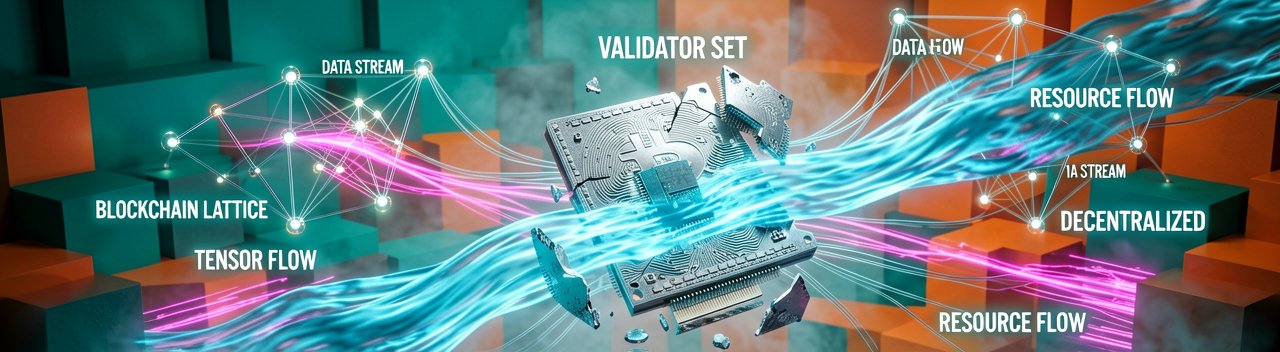
Unlike historical Web3 integrations that rely on external, centralized oracles to route machine learning data, this network implements a proprietary Quantum AI Consensus mechanism. This protocol-level architecture integrates traditional Proof-of-Stake validator structures with machine learning models designed to forecast network transactional traffic and load dynamically. This approach optimizes block production intervals, effectively mitigating gas price volatility and transaction latency bottlenecks that have long hampered older decentralized smart contract platforms.
Strategic Shifts in On-Chain Applications
The operational logic of the project extends beyond transaction processing into democratized infrastructure provisioning. Capitalizing on the global demand for machine learning computing hardware, the platform integrates a decentralized GPU marketplace where network participants can lease idle hardware resources directly to AI developers in exchange for utility tokens. This approach addresses localized hardware shortages while allowing engineers to implement predictive financial analytics, on-chain compliance models, and autonomous smart contracts natively within a single, secure execution environment.
Macro Market Analysis and Risk Profile
From an investment perspective, hybrid intelligent networks represent a highly sophisticated yet speculative segment of the digital asset industry. While automated traffic management, native smart contract security monitors, and integrated hardware tokenization pipelines provide distinct competitive advantages over traditional smart contract platforms, execution risks remain significant. Cautious participants must weigh the protocol's technological milestones against broader industry variables, including pending regulatory changes, final mainnet performance validation, and post-listing secondary market liquidity stabilization.
Behind the Scenes: Unpacking the Hybrid Protocol's Computational Framework
Beneath the Layer-1 Speculation: The technical divide between first-generation artificial intelligence tokens and true hybrid protocols lies in where the actual computation occurs. Early industry attempts at this intersection routinely relegated machine learning tasks to off-chain cloud servers, utilizing the blockchain merely as a superficial settlement layer for data hashes. Data logs from early network documentation reveal that this project reverses that hierarchy by introducing specialized execution environments where cryptographic validation and tensor processing run concurrently, directly mitigating the traditional latency penalties associated with decentralized nodes.
This operational shifts changes how decentralized computing marketplaces manage hardware constraints. For years, individual node operators struggled to compete with enterprise data centers due to the sheer bandwidth required to sync massive machine learning models across a distributed network. Network engineers have circumvented this limitation by implementing decentralized model sharding, a process that slices neural networks into smaller, verifiable components distributed across independent validator sets. The approach reduces the entry barriers for retail infrastructure providers while offering developers an on-demand alternative to centralized cloud services.
From an institutional perspective, the strategic pivot toward hybrid networks is heavily driven by the evolving compliance landscapes of 2026. Global regulatory bodies have increasingly scrutinized automated financial systems, demanding auditable trails for algorithms operating within public markets. Enterprise stakeholders are monitoring the platform's automated compliance monitors, which record the training parameters and dataset origins directly onto an immutable ledger, establishing a verifiable provenance trail that satisfies cross-border legal standards.

However, the transition from successful capital collection to a fully operational, high-throughput ecosystem requires overcoming substantial engineering bottlenecks. System architects note that maintaining network consensus while executing complex deep-learning tasks places immense stress on node synchronization times, risking localized network splits if hardware baselines deviate. The long-term viability of the project hinges on the upcoming phase of live public stress tests, which will determine whether the protocol can sustain its theoretical transaction speeds under maximum data processing loads.
Reading Between the Lines: The Friction Between Hype and Hardware Realities
The Convergence Fallacy: The prevailing narrative surrounding the project assumes that merging blockchain with machine learning creates a frictionless, compounding ecosystem where each technology solves the other's inherent flaws. In practice, however, these two paradigms operate on fundamentally opposing principles. Distributed ledgers achieve security through intentional redundancy and slow, distributed consensus, whereas neural networks demand massive, centralized computational pipelines to process complex workloads efficiently. Forcing an AI model to run across a decentralized network often creates a significant performance tax, meaning the protocol must constantly fight a battle against its own decentralized architecture to deliver competitive processing speeds.
Furthermore, the decentralized GPU marketplace model introduces an uncomfortable contradiction regarding cost efficiency and resource predictability. Enterprise AI developers rarely look for computing power based on fluctuating token values; they require fixed, predictable pricing structures to train models over weeks or months. By tying hardware leasing costs to the native $IONX token, the network exposes developers to the volatile swings of the secondary digital asset markets, where a sudden speculative price surge could instantly price out the very engineers the ecosystem is designed to attract.
There is also a stark contrast between the project's institutional marketing and the reality of open-source artificial intelligence development. While the platform promotes its on-chain compliance and data provenance features as a major corporate selling point, the broader machine learning community heavily favors rapid, unencumbered innovation on centralized, highly optimized cloud frameworks. Convincing established enterprise teams to abandon their deeply integrated workflows in favor of a novel, unproven layer-1 protocol remains an immense hurdle that capital raises alone cannot solve.
Ultimately, the long-term viability of the network will not be measured by its initial presale success or its theoretical consensus breakthroughs, but by its ability to secure a consistent, non-speculative user base. If the protocol fails to attract genuine computational demand from external AI developers, it risks turning into an expensive, self-referential loop where the native intelligence is used solely to optimize a blockchain that has no real-world traffic to process.
"The great irony of the modern tech boom is our insistence on taking artificial intelligence—which requires astronomical amounts of energy and centralized power—and marrying it to blockchain, which requires even more of both, all in the hope that two computational negatives will somehow yield a decentralized positive."
Artūras Malašauskas is an AI Systems Integrator with 20+ years of production-grade web engineering experience. He has designed, shipped, and scaled enterprise Python/PHP systems for logistics, SaaS, and public-sector clients. For the past year, he has focused exclusively on AI integrations: deploying open-source LLMs, building generative media pipelines (image, audio, video), and engineering multi-agent workflows for real production environments. His standard: reproducibility, security, cost-efficient inference—no vaporware. He documents and evaluates emerging AI tooling, separating verified capabilities from marketing noise. Technical editor at: muza-ai.eu, ai-verslas.lt, ai-naujinos.lt Connect on LinkedIn
Comments