Google Deens Gemini AI Deep into Workspace, Erasing the Friction of Daily Grunt Work
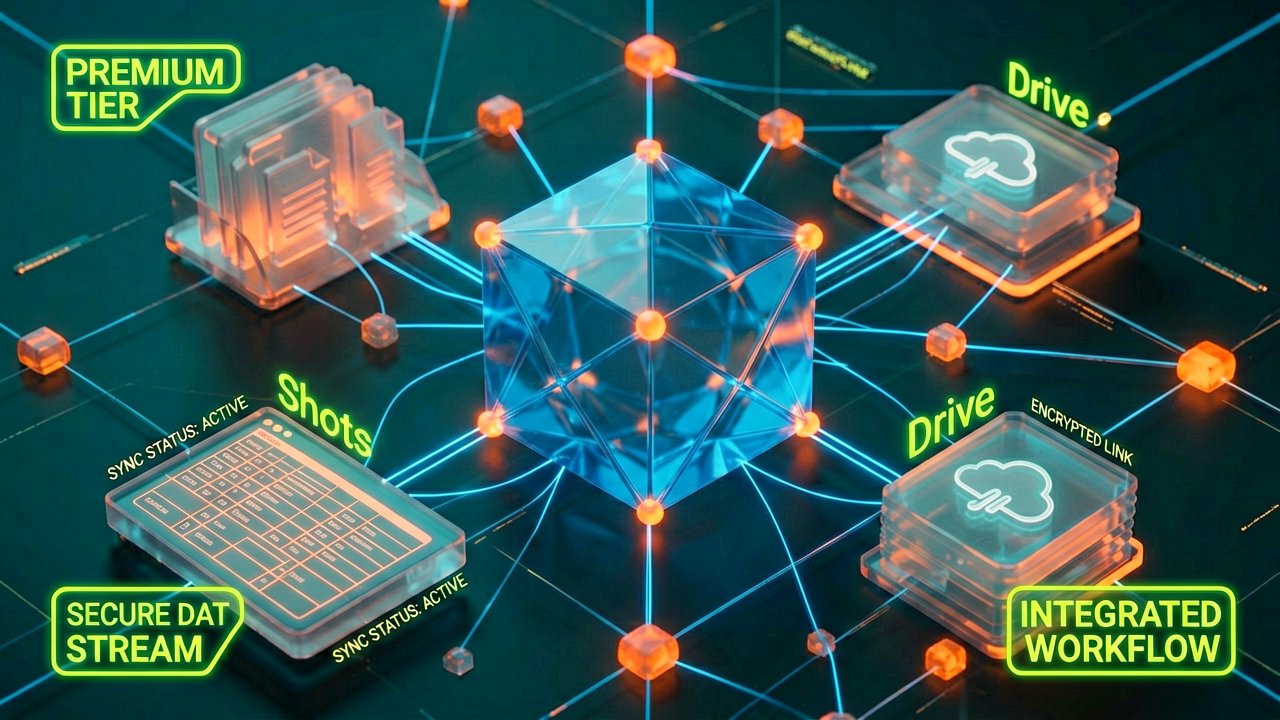
Google has officially rolled out a massive suite of new Gemini AI capabilities across its core Workspace applications, deeply embedding the assistant into Docs, Sheets, Slides, and Drive. The expansion, launching in beta today for Google AI Pro and Ultra subscribers, transforms the AI from a simple sidebar companion into an active collaborative partner. By bridging the gaps between isolated files and messy email threads, the tech giant aims to strip the friction out of daily productivity workflows for enterprise and everyday consumer users alike.
Instead of manually copy-pasting data or toggling between tabs, users can now instruct Gemini to orchestrate workflows natively within the apps they are already using. According to an official update on the Google Blog, the AI can synthesize information across emails, chats, and Drive files to draft formatted documents, build complex spreadsheets, or assemble presentation slides almost instantly. The update brings structural intelligence to the forefront, allowing teams to maintain stylistic cohesion across disjointed projects without the traditional administrative headache.
Unifying Style and Structure Across Apps
One of the most practical additions hitting Google Docs is a new "Match writing style" feature, engineered to solve the age-old problem of collaborative drafts looking like a patchwork of different authors. The AI analyzes existing text and suggests edits to ensure a single, cohesive voice throughout the document. Furthermore, a companion "Match the format" tool lets users mirror the exact structure of a reference file. For instance, as noted by TechCrunch , a traveler can feed Gemini a favorite itinerary template, and the AI will automatically pull relevant flight confirmations, rental agreements, and hotel bookings straight from their connected Gmail account to populate it.
Smarter Drive Exploration and Global Availability
Beyond content creation, the update introduces a more immersive, multi-turn conversational workspace directly inside Google Drive. This allows users to interrogate their cloud storage, instantly surface hard-to-find insights, and summarize massive document repositories without opening a single file. While the new Docs, Sheets, and Slides features are available globally in English starting today, the advanced Drive capabilities are initially rolling out exclusively within the United States as Google refines its context-aware enterprise tools.

Behind the Scenes: The deep-rooted ecosystem play unfolding here is less about introducing flashy artificial intelligence tricks and much more about solving a massive historical problem: information fragmentation. For over two decades, the primary hurdle of digital productivity hasn't been a lack of tools, but rather the heavy cognitive tax of shifting between them. Employees lose hours every week jumping from a half-baked email thread to a dense project spreadsheet, only to copy that data into a presentation deck. By threading Gemini as an active, connective layer that can pull live data natively across these distinct silos, the tech giant is trying to make its cloud office suite completely frictionless.
This aggressive rollout directly follows the technical leap seen in the SiliconANGLE coverage of Google's foundational models, which introduced advanced reasoning capabilities using a sophisticated mixture-of-experts architecture. Rather than relying on rigid, pre-programmed macros, Gemini can now dissect plain English commands, build comprehensive research plans, and autonomously interact with complex internal files. Industry researchers tracking these advancements have noted that the AI's success rate in manipulating real-world datasets is steadily climbing toward human-expert capability. This fundamentally shifts the corporate dynamic from a system where humans do the manual labor to one where users act primarily as editors and curators.
Enterprise Wars and the Premium Pivot
The business calculations behind this update are as much about market defense as they are about technological innovation. Google is currently locked in an intense enterprise arms race with Microsoft’s Copilot ecosystem, fighting for dominance over corporate IT budgets and user workflows. To secure its ground, Google has consciously restricted these advanced, cross-app automation features to premium tiers, explicitly targeting Google AI Pro, Ultra, and enterprise Workspace subscribers. By locking these deep contextual features behind a paid firewall, the company is betting that organizations will gladly pay a premium to reclaim the thousands of collective hours lost to administrative friction and tedious cross-referencing.
Yet, pushing autonomous data synthesis into the heart of corporate cloud storage comes with intense regulatory and security scrutiny. For enterprise administrators, the thought of a generative model scanning across millions of sensitive internal files, chats, and financial records raises immediate flags regarding data governance and permissions. Google has aggressively emphasized that its models maintain ironclad security boundaries, promising that internal files and email contexts remain locked within the organization's perimeter and are never used to train public models. As these tools continue to expand into mobile environments via platforms like the Google Workspace Updates Blog, the ultimate test will be whether IT administrators trust the AI enough to let it touch the core machinery of daily corporate operations.
Reading Between the Lines: The grand promise of frictionless automation frequently glosses over a stubborn reality: an AI assistant is only as competent as the corporate data architecture underpinning it. While Google pitches Gemini as a cure-all for administrative fatigue, the software seamlessly inherits an organization's existing, flawed folder hierarchies and permissions. If a company has sloppy data hygiene, outdated group memberships, or overly permissive file sharing, the AI will confidently index and surface that sensitive information to anyone with the right prompt. Tech journalists evaluating these systems have noted that instead of fixing chaotic filing systems, deep cross-app integrations risk turning a hidden digital mess into an active data governance liability.
Furthermore, an unresolved tension exists between Gemini's rapid execution speed and its actual creative depth. While the software excels at compiling itineraries, tracking administrative details, and drafting structural outlines, power users point out that its writing output often hits a distinct quality ceiling. The tendency toward surface-level synthesis and overly cautious phrasing means that while Gemini can generate a first draft in seconds, the output often demands extensive human polishing to remove corporate fluff. This creates a strange paradox where the time saved on data aggregation is immediately spent on tedious editorial review, raising valid questions about whether true productivity is increasing or simply shifting shapes.
Finally, Google’s walled-garden approach introduces a glaring limitation for modern, fragmented workplaces that do not rely exclusively on a single software vendor. Unlike more platform-agnostic tools, Gemini's cross-app context is strictly bound to the Google ecosystem. For agile teams that orchestrate their operations across diverse apps like Slack, Notion, or specialized project management boards, Gemini's cognitive utility hits a rigid wall the second a project moves outside of Drive or Gmail. By demanding a total commitment to its proprietary suite, Google is gambling that the convenience of deep native integration will ultimately outweigh the modern enterprise's appetite for flexible, multi-platform workflows.
"Ultimately, paying premium enterprise subscription fees to have an AI effortlessly organize your messy calendar and draft polite corporate emails proves one immutable fact: the future of work isn't about escaping administrative bureaucracy, it's just about paying a machine twenty dollars a month to tolerate it for you."
Artūras Malašauskas is an AI Systems Integrator with 20+ years of production-grade web engineering experience. He has designed, shipped, and scaled enterprise Python/PHP systems for logistics, SaaS, and public-sector clients. For the past year, he has focused exclusively on AI integrations: deploying open-source LLMs, building generative media pipelines (image, audio, video), and engineering multi-agent workflows for real production environments. His standard: reproducibility, security, cost-efficient inference—no vaporware. He documents and evaluates emerging AI tooling, separating verified capabilities from marketing noise. Technical editor at: muza-ai.eu, ai-verslas.lt, ai-naujinos.lt Connect on LinkedIn
Comments