AegeanWire Redefines Media Trust by Broadcasting Its Eight-Agent Newsroom Operations Live to the Public

The traditional pillars of media trust are undergoing a foundational shift. In response to widespread skepticism regarding automated content, EIN Presswire reports that AegeanWire has launched an entirely transparent AI newsroom based in Türkiye. This platform utilizes an automated, eight-agent editorial system that subjects all incoming travel-trade data to continuous live verification. Rather than shielding its algorithmic processes behind a standard interface, the outlet streams its backend operations directly to a public dashboard.
This strategy addresses the growing demand for visibility in automated journalism. Industry research from the Nieman Journalism Lab highlights that while AI adoption is accelerating within global news operations, systemic concerns regarding factual accuracy and generative hallucinations persist. By presenting a live view of its autonomous workspace, AegeanWire transitions artificial intelligence from a hidden utility into an auditable feature. The platform allows readers to trace information from its raw source material directly to the finalized B2B publication.
The introduction of public cost tracking adds an economic layer to this transparency paradigm. Publishing the API computational expenses associated with running multi-agent workflows challenges the standard economics of regional business reporting. This structural openness provides media analysts with clear documentation regarding the exact cost per article. It also establishes an operational benchmark for digital-first news organizations trying to stabilize scaling overhead costs within highly volatile technical environments.
Market Impact and Strategic Shifts
The development represents an analytical evolution from simple automated copy-generation to advanced multi-agent coordination. AegeanWire assigns highly specialized micro-tasks—including ingestion, translation, cross-referencing, and structural formatting—across eight distinct digital personas. This distribution of labor minimizes the compounding logic errors common in monolithic large language models. The architecture provides a concrete blueprint for B2B media companies looking to automate niche industry sectors where accuracy is essential.

Furthermore, local operational context shapes how these systems deploy internationally. Legal analysis by Lexin Legal notes that Türkiye lacks a singular, comprehensive AI statute, meaning data workflows must navigate existing components of Personal Data Protection Law No. 6698. AegeanWire sidesteps common privacy complications by focusing strictly on public B2B travel metrics, corporate filings, and route logistics. This targeted data scoping protects operational continuity while setting a clear standard for regulatory compliance in automated regional reporting.
What Most Reports Miss: The Mechanics of Algorithmic Accountability
Behind the Glass: While broad industry commentary frequently focuses on the threat of workforce displacement, the true paradigm shift lies in the mechanics of algorithmic accountability. Traditional media organizations typically treat their content management pipelines as proprietary trade secrets, which unintentionally deepens public skepticism when errors occur. AegeanWire rejects this opacity by actively displaying its source-verification layer. Audiences can witness exactly how its agents cross-reference facts, reject anomalies, and isolate unverified claims before publication occurs.
This radical visibility transforms the relationship between a publication and its professional readership. In the specialized B2B travel-trade ecosystem, a single incorrect report regarding airline capacities, destination policy changes, or hotel investments can result in substantial financial miscalculations for tour operators and logistics firms. By proving exactly where and how a piece of information was validated, the platform shifts the burden of credibility from blind institutional trust to verifiable digital proof.
This methodology positions automated auditing as the next major step for independent digital media. The strategic objective is no longer merely to generate high volumes of articles quickly, but rather to construct an automated framework that actively self-audits. This approach demonstrates that multi-agent systems, when structured transparently, can mitigate the risks of generative bias and hallucination that have previously slowed widespread corporate adoption of AI journalism.
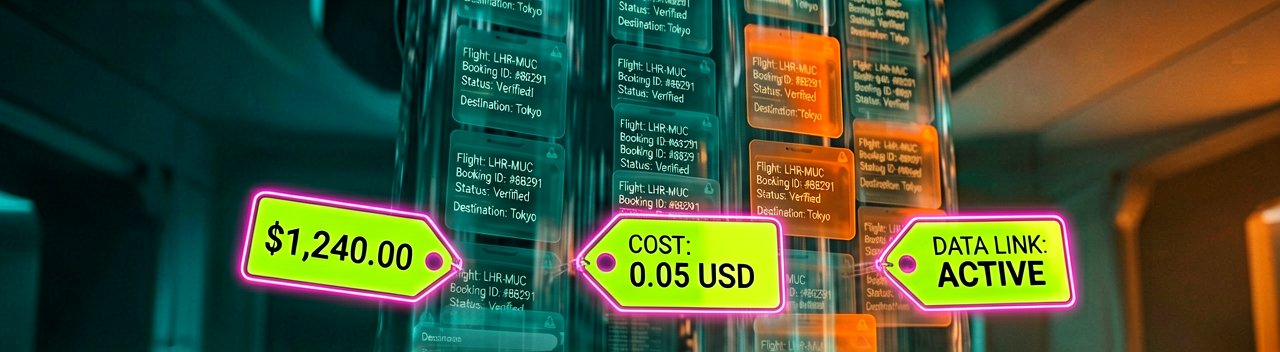
The Paradox of Transparency in Autonomous Journalism
Reading Between the Lines: The celebration of total newsroom transparency overlooks a fundamental tension within automated media architectures. While broadcasting backend workflows and real-time API billing appears to democratize information, it simultaneously introduces cognitive overload for the average media consumer. Watching raw logs, parallel agent processes, and prompt iterations requires a high degree of technical literacy. The risk is that visual transparency functions merely as performative accountability, where the sheer volume of data obscures the actual mechanics of algorithmic decision-making under the guise of openness.
Furthermore, relying on a multi-agent system to eliminate editorial bias introduces a cyclical logic problem. The rules governing source prioritization, truth thresholds, and validation metrics are ultimately hardcoded by the engineers who designed the system's guardrails. By removing human editors from the immediate loop, AegeanWire has not eliminated editorial subjectivity; it has merely displaced it to the upstream software engineering phase. True transparency would require the platform to open-source its prompt libraries and fine-tuning datasets, as a system's bias is established long before its agents begin processing live travel-trade data.
The economic sustainability of public cost tracking also introduces long-term strategic vulnerabilities. Exposing operational costs in real time invites competitors to reverse-engineer efficiency models and underbid the publication's cost structure. If token costs spike during high-frequency news cycles, the organization faces a dilemma between absorbing volatile infrastructure overhead or capping its computational depth when deep verification is needed most. This dependency highlights that autonomous newsrooms remain inherently tethered to the pricing structures of big tech infrastructure providers, trade-offs that are rarely discussed in standard industry rollouts.
"We have finally achieved the future of media transparency: an immaculate, uncorrupted system where artificial intelligence can verify automated press releases in real time, completely unburdened by human readers who are still trying to figure out what a token costs."
Artūras Malašauskas is an AI Systems Integrator with 20+ years of production-grade web engineering experience. He has designed, shipped, and scaled enterprise Python/PHP systems for logistics, SaaS, and public-sector clients. For the past year, he has focused exclusively on AI integrations: deploying open-source LLMs, building generative media pipelines (image, audio, video), and engineering multi-agent workflows for real production environments. His standard: reproducibility, security, cost-efficient inference—no vaporware. He documents and evaluates emerging AI tooling, separating verified capabilities from marketing noise. Technical editor at: muza-ai.eu, ai-verslas.lt, ai-naujinos.lt Connect on LinkedIn
Comments