Godot's AI Policy Shift: Balancing Innovation with Ethical Boundaries
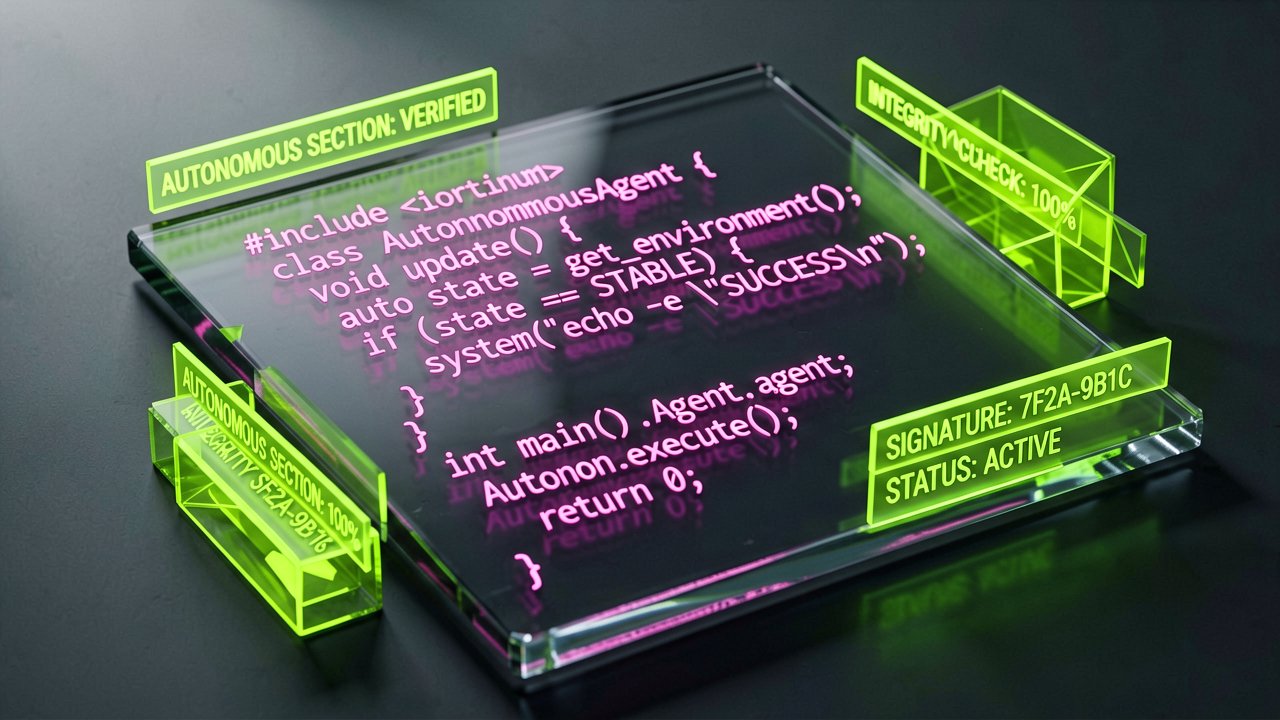
The open-source game development ecosystem is facing a critical structural evolution as the Godot Engine implements a strict ban on contributions involving autonomous AI agents or "vibe-coded" elements. This strategic shift addresses an unprecedented surge in low-quality automated code submissions that threaten to overwhelm human code reviewers. By drawing a firm line, the community seeks to protect its volunteer maintainers from severe operational fatigue while preserving the integrity of its core software repository.
According to official statements, heavy reliance on automated generation introduces serious liabilities, primarily because large language models lack the capacity to take architectural responsibility or understand their own outputs. Maintainers highlight that code review acts as a pipeline for mentoring future project leads, a dynamic that vanishes when developers act as mere intermediaries for machine-generated requests. Under the updated framework, anyone deploying autonomous coding bots or completely detached AI-prompting workflows will face an immediate ban from the project repository.
Operational Safeguards and the Developer Pipeline
The updated rules establish clear parameters for acceptable technical contributions to ensure project stability. Major refactoring projects or feature submissions from new contributors—defined as individuals with three or fewer merged pull requests—now require explicit authorization before engineering work begins. While the core codebase remains strictly human-authored, developers may still utilize narrow machine intelligence for minor productivity enhancements, such as localized regex creation, simple string manipulation, or basic code completion.
Humanity in Communication and Professional Responsibility
Beyond the technical architecture, the policy introduces strict guidelines for community interactions by banning machine-generated text in developer discussions. The non-profit foundation emphasizes that volunteer maintainers deserve genuine human-to-human interaction, categorizing automated comment replies as a fundamental violation of collaborative respect. The policy explicitly allows automated tools only for cross-language translation services, ensuring global accessibility while mandating that the underlying conceptual thoughts originate entirely from a human developer.

Market Impact on the Open-Source Landscape
This policy pivot marks a significant milestone in how major open-source ecosystems govern synthetic code integration. By prioritizing long-term repository health over short-term production velocity, the decision demonstrates that unchecked automated development can quickly degrade the volunteer structures keeping open software alive. As commercial engines continuously scale up their integrated automated tooling, independent platforms must carefully evaluate how to balance developer accessibility with rigorous, human-verified quality control standards.
Behind the Scenes: The Invisible Crisis of the Pull Request Queue
Behind the Scenes: The technical governance crisis forcing this policy evolution stems directly from an asymmetric burden placed on open-source maintainers. While a developer can prompt an autonomous AI agent to generate hundreds of lines of complex C++ code in mere seconds, verifying that submission requires hours of meticulous, line-by-line human analysis. Volunteer reviewers quickly found themselves acting as unpaid quality assurance engineers for algorithmic output, diagnosing subtle architectural flaws and ghost bugs introduced by systems that do not actually comprehend game engine physics or memory management.
Historical context reveals that this friction has been building since the mainstream adoption of commercial large language models. Early experiments with automated code generation flooded public repositories with plausible-looking but fundamentally broken contributions. For a community-driven project like Godot, which relies heavily on a finite pool of core maintainers to steer its engineering trajectory, this influx threatened to paralyze routine operations. The new restrictions represent a defensive mechanism designed to prevent the exhaustion of the human capital that keeps the engine competitive against heavily funded proprietary alternatives.
Industry veterans note that the complete prohibition of machine-generated text in discussion forums addresses a deeper psychological strain within the community. Open-source development thrives on mentorship, shared technical philosophy, and mutual respect among contributors. When communication channels are flooded with automated summaries, boilerplate explanations, and synthetic feedback, the collaborative fabric degrades. Senior engineers expressed growing frustration over debating technical architecture with contributors who could not explain their own pull requests, leading to a profound sense of isolation among the core team.
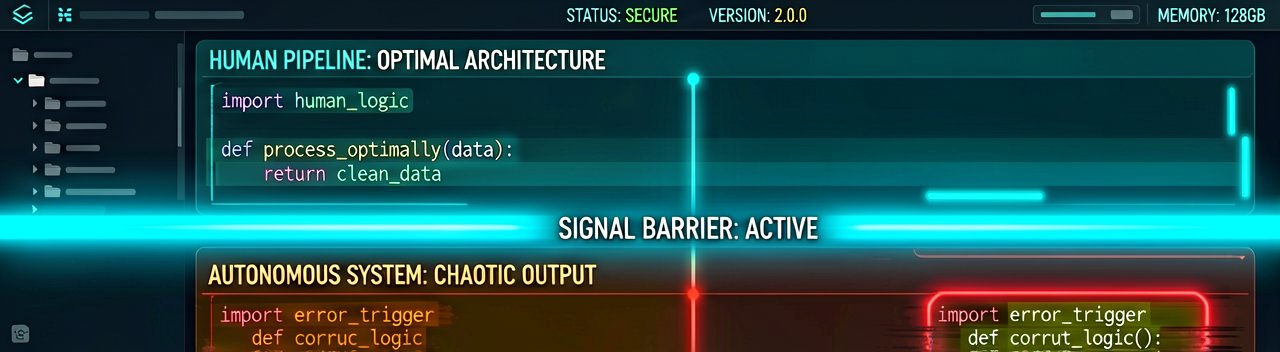
Market analysts view this structural pivot as a direct challenge to the corporate narrative surrounding the future of software engineering. While venture capital continues to flood startups promising autonomous development pipelines and "vibe-coded" applications, the reality on the ground highlights severe scaling limitations in complex systems. By legally and operationally insulating its codebase from autonomous agents, Godot establishes a precedent that human-verified architecture remains the gold standard for foundational software infrastructure.
Ultimately, this decision redefines the boundaries of accessibility in game development tools. The engine remains deeply committed to lowering barriers for creators worldwide, but it draws a sharp line where accessibility compromises platform stability. By explicitly protecting the human pipeline of future core maintainers, the project ensures that its technological evolution remains deliberate, well-understood, and resilient against the volatile trends of the broader automation landscape.
Reading Between the Lines: The Paradox of Automated Democratization
Reading Between the Lines: The ideological friction at the heart of this policy shift exposes a deep contradiction within the modern open-source ethos. For years, the democratization of game development was championed through tools that lowered technical barriers, allowing non-programmers to manifest complex ideas. Yet, by erecting a legal and procedural wall against autonomous agents, the project inadvertently creates a new class division between traditional, syntactically proficient engineers and the emerging wave of prompt-based creators. This tension highlights an uncomfortable reality: the very automation marketed as the ultimate equalizer is being rejected by foundational platforms as an existential threat to software stability.
Furthermore, enforcing these boundaries introduces a game of technical cat-and-mouse that project maintainers are ill-equipped to win. Distinguishing between a human-authored code snippet and a highly optimized, machine-generated block is becoming functionally impossible without intrusive surveillance or flawed algorithmic detection tools. The policy relies heavily on a social contract and developer honesty—a fragile defense mechanism when the commercial pressure to ship features quickly incentivizes under-the-table automation. By mandating an honor system, the community risks penalizing transparent developers while failing to deter sophisticated actors who seamlessly blend synthetic code into legitimate pull requests.
This defensive posture also risks isolating independent engines from a broader technological shift that corporate competitors are embracing with open arms. Proprietary platforms are aggressively embedding generative layers directly into their editor pipelines to accelerate asset creation and boilerplate scripting. By taking a hardline stance against autonomous contributions, community-driven projects may preserve their architectural purity at the cost of production velocity. If machine-assisted development eventually overcomes its accuracy hurdles, the insistence on purely human craftsmanship could transition from a proud ethical stance into an operational bottleneck that widens the feature gap between open and commercial ecosystems.
Ultimately, the long-term survival of this policy depends on whether the broader developer community views it as a forward-thinking safeguard or an anachronistic restriction. Protecting volunteer maintainers from automated noise is a clear operational necessity, but decoupling an engine from the momentum of autonomous computing is an immense gamble. If the future of software engineering inevitably shifts toward orchestration rather than manual syntax execution, governance models will have to evolve beyond outright bans to find a sustainable equilibrium where machines do the heavy lifting under rigorous, human-defined constraints.
We have successfully arrived at a historical turning point where humanity must legally mandate human laziness over machine efficiency, if only to ensure that the people tasked with fixing the code still understand how to read it.
Artūras Malašauskas is an AI Systems Integrator with 20+ years of production-grade web engineering experience. He has designed, shipped, and scaled enterprise Python/PHP systems for logistics, SaaS, and public-sector clients. For the past year, he has focused exclusively on AI integrations: deploying open-source LLMs, building generative media pipelines (image, audio, video), and engineering multi-agent workflows for real production environments. His standard: reproducibility, security, cost-efficient inference—no vaporware. He documents and evaluates emerging AI tooling, separating verified capabilities from marketing noise. Technical editor at: muza-ai.eu, ai-verslas.lt, ai-naujinos.lt Connect on LinkedIn
Comments