The Algorithmic Pitch: How Artificial Intelligence Permanently Rewrote the Rules of the 2026 World Cup
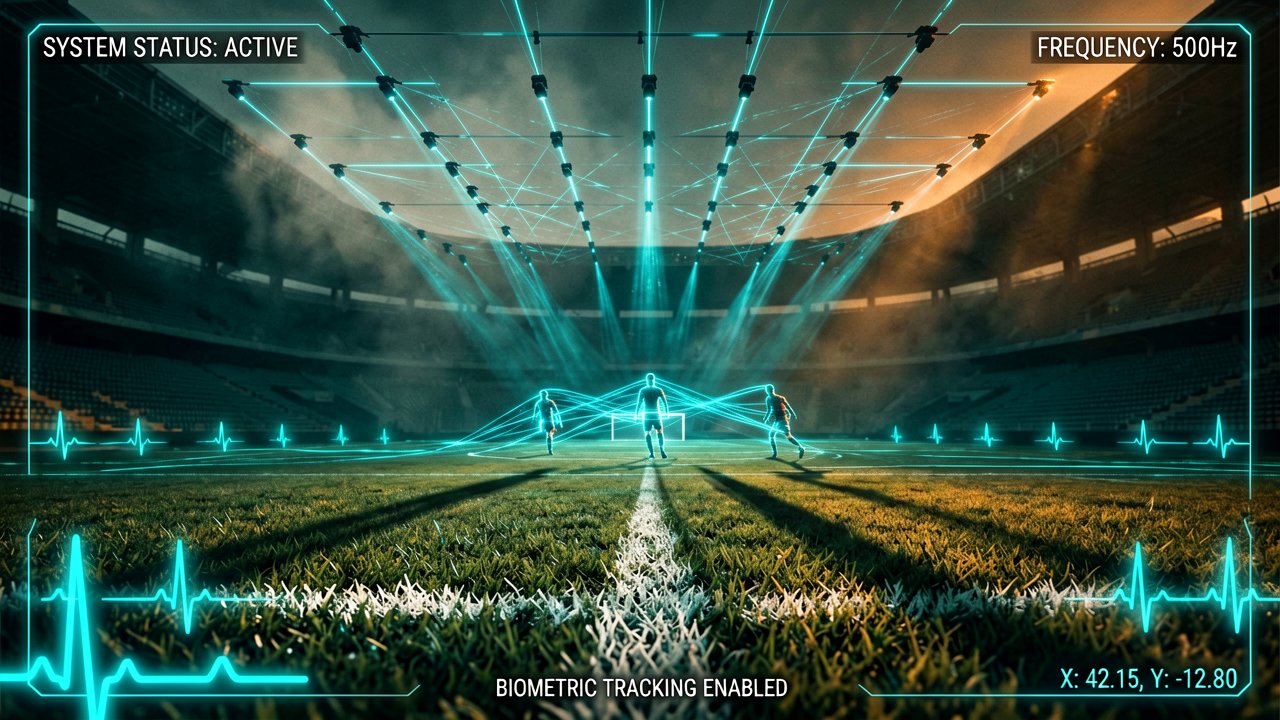
The 2026 World Cup has solidified a massive paradigm shift where football matches are no longer dictated solely by human instinct and physical stamina. Advanced algorithms and real-time computer vision networks have fundamentally transformed the tournament into an interconnected data environment. Coaching staffs no longer wait for halftime to review physical reports. Instead, they ingest millions of automated spatial data points delivered directly to the dugout while play is still live. This level of technical oversight has effectively turned the pitch into an optimization lab, permanently altering the traditional dynamics of elite sports.
At the center of this transformation is a sophisticated infrastructure developed in partnership with major technology corporations. Every stadium features a dense network of tracking cameras alongside microchip-embedded equipment to track spatial positioning and ball kinetics simultaneously. According to an official product breakdown on the Inside FIFA platform, the deployment of Football AI Pro has allowed all 48 participating nations to query structured match data using natural language, democratizing elite tactical intelligence. This systemic integration means that tactical behavior, mechanical errors, and physical workloads are scrutinized by invisible machine agents in mere milliseconds.
This rapid shift from pure human athleticism to digital verification has triggered an intense debate regarding the preservation of the sport. While the reduction of referee errors and the optimization of human stamina improve overall match precision, critics fear that excessive mechanization risks turning football into a highly sterile, predictable exercise. When every player movement is calculated, tracked, and countered by software, the spontaneous magic that traditionally defined the game is increasingly replaced by rigorous mathematical efficiency.
The Real-Time Hardware Architecture Driving Strategy
Modern tactical adjustments during this tournament rely heavily on a complex layer of tracking hardware. The match ball features an integrated sensor recording spatial movements 500 times per second, establishing a rapid data stream for offside and contact decisions. As detailed by FullStack Labs, this tracking framework synchronizes immediately with local camera arrays to supply video assistant referees and coaching staffs with an exact timeline of player contact. Consequently, managers can alter defensive pressing lines and passing lanes based on immediate algorithmic data rather than waiting for post-match film review.

Democratized Analytics and the Global Competitive Shift
The institutional deployment of generative tools has leveled the analytic playing field between historical football superpowers and ascending nations. Historically, only the wealthiest associations could afford massive departments of data scientists to break down opponent tendencies. As reported by Fast Company, the Lenovo-engineered Football AI Pro tool orchestrates multiple analytical agents across more than 2,000 metrics to give every single nation an identical computational starting point. This equalization of back-end technology has fundamentally altered group-stage strategies, allowing smaller nations to successfully disrupt elite teams via highly optimized, automated scouting templates.
The Human Element Versus Mathematical Optimization
Managing physical exhaustion has completely transitioned away from traditional subjective assessments toward rigorous biometric tracking. Wearable internet-of-things devices and optical cameras calculate physical workload and recovery metrics live, forcing managers to make substitutions based strictly on performance degradation curves. According to a market report from IoT Insider, teams utilize these centralized tracking systems to actively prevent soft-tissue injuries by pulling players the moment their kinetic output violates pre-established safety parameters. While this ensures peak physical preservation, it systematically replaces the traditional romance of the exhausted athlete pushing through pain with strict, computer-mandated asset management.
The Hidden Architecture of Algorithmic Control
What Most Reports Miss: The true revolution of the 2026 World Cup is not happening on the broadcast screens, but within the silent, predictive loops running on sideline tablets. For decades, football managers relied on a mix of gut instinct, historical bias, and rudimentary halftime statistics to alter their tactical shapes. Today, elite managers are effectively acting as system administrators. Artificial intelligence engines continuously simulate thousands of match permutations every second, calculating the exact probability of conceding a goal based on a defender shifting just two inches to the left. This level of granular, predictive oversight has stripped away the traditional chess match of managerial intuition, replacing it with a cold war of computational processing power.
This systemic shift has fundamentally altered the daily operations and hiring practices of national football associations. The traditional scouting staff, once comprised of grizzled ex-players traveling to remote stadiums, has been largely superseded by elite data engineers and quantitative analysts recruited directly from top-tier tech firms. Behind every tactical decision made on the pitch is a collaborative effort between the head coach and a data team translating complex algorithmic recommendations into digestible commands. This operational evolution has created a distinct rift within coaching staffs, as veteran purists struggle to reconcile their decades of experiential knowledge with mathematical models that demand absolute adherence to statistical probabilities.

Furthermore, the players themselves are undergoing a profound psychological transition as they adapt to being measured against an flawless digital twin. Every sprint, deceleration, and pass completion is weighed against an idealized, algorithmic baseline of maximum efficiency. When an attacker opts for an imaginative, low-probability dribble instead of a statistically optimized back-pass, the sideline software immediately registers it as a negative deviation. This continuous, real-time monitoring creates an invisible psychological weight, forcing athletes to consciously decide between the spontaneous creativity that makes the sport beautiful and the rigid, risk-averse parameters dictated by the team's software architecture.
The geopolitical reality of global football governance has also been reshaped by this dependency on high-performance computing infrastructure. While institutional programs have attempted to democratize access to baseline data, the nations that maintain exclusive partnerships with sovereign tech giants still hold a definitive analytical advantage. Custom-built proprietary models, trained on proprietary domestic league datasets, can identify microscopic flaws in an opponent's defensive structure that generic tools simply overlook. As a result, the tournament has exposed a new form of systemic inequality where the digital maturity of a nation's technological sector directly influences its competitive longevity on the pitch.
Ultimately, this total computational integration forces a critical re-evaluation of what constitutes athletic excellence in the modern era. Football is rapidly moving away from being a sport defined by individual physical triumphs over adversity, transitioning instead into a highly controlled, data-driven experiment. When the final whistle blows, the victory belongs as much to the optimization algorithms and server farms as it does to the players who executed those commands on the turf. The 2026 tournament stands as definitive proof that the beautiful game has been permanently decoded, leaving fans and purists to wonder how much room remains for the unscripted human spirit.
The Paradox of Predictable Perfection
Reading Between the Lines: The institutional push to transform football into a flawless, mathematically optimized science actively threatens the very financial and emotional foundation upon which the sport is built. FIFA and its corporate partners champion real-time artificial intelligence as the ultimate tool for competitive equity and athletic perfection. However, this narrative conveniently ignores a glaring systemic contradiction. Football’s global multi-billion-dollar appeal does not stem from mechanical predictability, but from the glorious chaos of human error. By systematically eradicating tactical mistakes, erratic refereeing, and irrational player decisions through algorithmic intervention, the sport risks engineering away the exact drama that commands global television audiences.
This pursuit of digital optimization has also exposed a deep hypocrisy in how the sport values player welfare versus analytical output. Technical directors frequently praise automated biometric tracking as a protective shield against athlete burnout and soft-tissue injuries. Yet, the reality on the ground suggests that these tracking systems are primarily used to maximize the extraction of human labor. Instead of giving exhausted athletes rest, the real-time data is leveraged to push human bodies to the absolute brink of safety parameters without crossing the line. The player is no longer viewed as a human sportsman, but as a biological asset being optimized for maximum corporate return on investment under the guise of scientific care.
Projecting this trend into the next decade reveals a highly sterile future where tactical diversity faces total homogenization. Because every elite nation now utilizes comparable machine learning frameworks trained on identical global match datasets, the algorithms are inevitably converging on the same "correct" way to play the game. The unique stylistic identities that historically defined global football—the flamboyant individual flair of South America, the rigid defensive block of Italy, or the relentless physical pressing of Northern Europe—are being dissolved into a single, universal, computer-mandated style. When every team plays with the exact same mathematically optimal positioning, matches degenerate into predictable stalemates decided entirely by microscopic physical anomalies.
Furthermore, this absolute reliance on computational metrics creates a dangerous vulnerability to data manipulation and algorithmic gaming. Teams are already beginning to reverse-engineer the tracking software, instructing players to manipulate their movement patterns purely to trigger favorable metrics on sideline dashboards rather than to achieve an organic tactical advantage. When performance data becomes the primary metric for player valuation, contract renewals, and starting lineups, the incentive shifts from winning the actual match to winning the approval of the algorithm. This shifts football away from an athletic contest and transforms it into a corporate gamification exercise where the cleverest data-gaming strategy triumphs.
"We have finally achieved the ultimate sporting dream: a perfectly optimized, entirely predictable, error-free football match, though we may soon find ourselves forced to pay the stadium utility bills by selling tickets to the servers that actually enjoyed watching it."
Artūras Malašauskas is an AI Systems Integrator with 20+ years of production-grade web engineering experience. He has designed, shipped, and scaled enterprise Python/PHP systems for logistics, SaaS, and public-sector clients. For the past year, he has focused exclusively on AI integrations: deploying open-source LLMs, building generative media pipelines (image, audio, video), and engineering multi-agent workflows for real production environments. His standard: reproducibility, security, cost-efficient inference—no vaporware. He documents and evaluates emerging AI tooling, separating verified capabilities from marketing noise. Technical editor at: muza-ai.eu, ai-verslas.lt, ai-naujinos.lt Connect on LinkedIn
Comments