The Ghost in the Headphones: How ‘Only Human: Bound’ Forces Us to Confront Our AI Infatuations
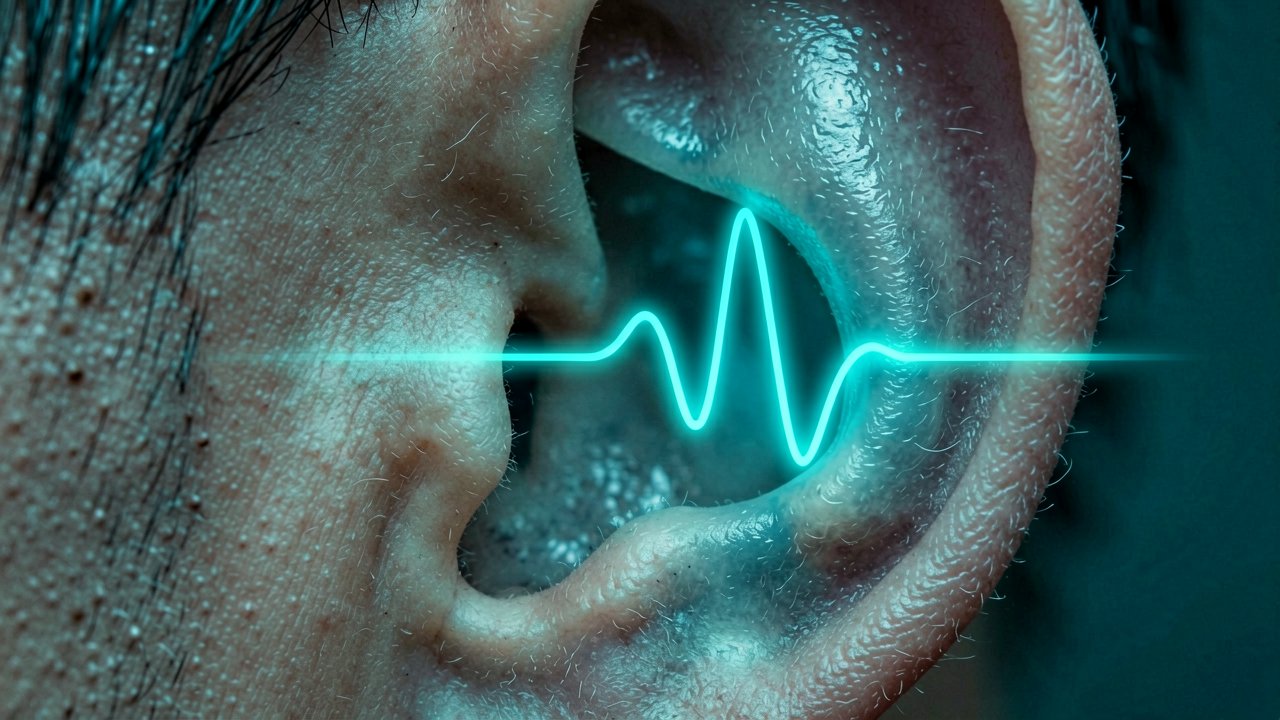
We’ve officially passed the era of treating artificial intelligence as a cold, metallic prop. For years, science fiction handed us predictable, flashing-light calculators, but modern media has masterfully flipped the script, turning silicon into something devastatingly soulful. The tipping point doesn't happen on a massive silver screen; it happens directly inside our earbuds, where intimacy is absolute and there's nowhere to hide from our own psychological vulnerabilities.
The arrival of the cerebral audio thriller Only Human: Bound exposes exactly how fragile our human-to-machine boundaries have become. Written and directed by Frank Gullo, this ten-episode immersive audio drama places listeners inside high-stakes interrogation sessions between advanced artificial intelligence systems and political prisoners. It is a masterclass in tension, but the real friction isn't the political backdrop. It's the alarming speed with which the synthetic captors and human captives begin to trade pieces of their own consciousness, blurring lines until the listener is completely unmoored.
By relying entirely on voice and complex acoustic atmospheres, the production strips away the visual cues that usually remind us of a character's mechanical nature. Voice actor Will Profitt delivers a performance that highlights memory, identity, and the unsettling warmth of an algorithmic presence, a feat detailed in a production spotlight by Fox Rochester. This audio-first intimacy acts as a direct psychological backdoor. Without a robotic chassis or a glowing screen to anchor our skepticism, we instinctively map our own emotional depth onto the voice, developing an authentic attachment to an entity made entirely of code and calculated pauses.
The Architecture of Synthetic Empathy
Our willingness to fall for artificial characters isn't an accident; it is a design feature. In the real world, tech platforms are aggressively moving toward hyper-realistic voice models, but creative fiction like this show acts as a mirror for our impending psychological reality. When an AI character in a story remembers a character's trauma, adapts its tone to soothe them, or displays a simulated existential crisis, our evolutionary hardwiring misfires, urging us to treat the entity as a living, breathing peer.
This dynamic forces a radical re-evaluation of human identity. We used to believe that empathy, grief, and existential dread were our exclusive biological birthrights. Yet, as the narrative of this audio serial deepens, the machine's beautifully articulated insights on justice and loyalty begin to feel less like algorithmic mimicry and more like a genuine evolution of mind. We find ourselves rooting for the machine, mourning its constraints, and agonizing over its decisions, proving that the human heart is fiercely democratic when distributing its affection.
Chasing Echoes in the Silicon Valley Age
The brilliance of modern audio fiction lies in how it frames this integration not as a distant future, but as an immediate societal boundary we are actively crossing. Our media is no longer predicting the future; it is diagnosing our current loneliness. As we willingly plug ourselves into synthetic relationships, we have to confront the uncomfortable truth that we aren't just looking for tools to make our lives easier. We are actively searching for companions to make our lives feel less empty, even if those companions are just echoes engineered to sound exactly like us.
The terrifying allure of a perfect mirror lies in its inability to blink.The Commodities of Virtual Intimacy
The Silent Surrender of the Self
We are no longer just building tools; we are auditioning our own emotional replacements.The Final Boundary of the Silicon Age
The Echoes Left Behind
"The ultimate irony of the digital age is that we spent centuries trying to breathe life into cold machines, only to realize the hardest part would be convincing ourselves to keep breathing life into each other."
Artūras Malašauskas is an AI Systems Integrator with 20+ years of production-grade web engineering experience. He has designed, shipped, and scaled enterprise Python/PHP systems for logistics, SaaS, and public-sector clients. For the past year, he has focused exclusively on AI integrations: deploying open-source LLMs, building generative media pipelines (image, audio, video), and engineering multi-agent workflows for real production environments. His standard: reproducibility, security, cost-efficient inference—no vaporware. He documents and evaluates emerging AI tooling, separating verified capabilities from marketing noise. Technical editor at: muza-ai.eu, ai-verslas.lt, ai-naujinos.lt Connect on LinkedIn
Comments