Beyond Bare Metal: CoreWeave Launches ARIA to Automate the AI Research Loop
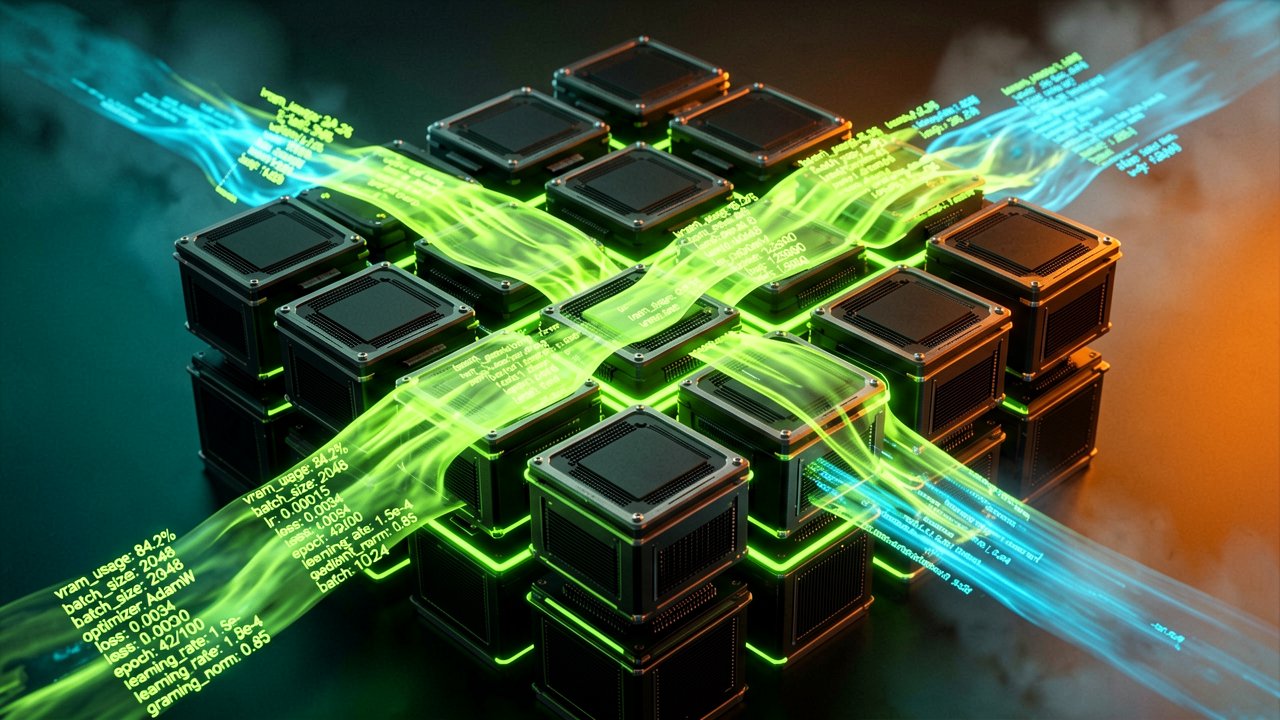
The specialized cloud race is officially moving up the software stack. On June 29, 2026, specialized GPU infrastructure heavyweight CoreWeave shook up the developer landscape by launching ARIA, an AI Research and Iteration Agent designed to automate the painful, manual tasks of analyzing machine learning runs and training next-generation autonomous AI agents.
Rather than dropping a standalone tool into an already fractured market, CoreWeave is embedding ARIA directly into the Weights & Biases platform, which it acquired last year for a cool $1.4 billion. It is a calculated chess move that effectively shifts the company from a pure-play infrastructure utility provider into a high-margin, full-stack AI development ecosystem. Alongside ARIA's public preview, CoreWeave also announced the general availability of W&B Weave, the underlying development platform used to construct these complex agentic systems.
Closing the Developer Management Gap
For data science teams, the current bottleneck in AI development isn't just securing raw compute—it's processing the staggering mountain of telemetry that a single training cycle generates. Researchers traditionally spend hours constructing bespoke dashboards and parsing custom notebooks just to extract a sliver of actionable insight. ARIA addresses this friction point by acting as a native coding assistant that automatically maps out project structures, reviews thousands of experiment runs, and tracks tens of thousands of metrics in mere minutes.
Instead of merely spitting out generic text summaries, the agent actively constructs live, visual workspaces. It builds complex heat maps for parameter sweeps and maps parallel coordinate plots to trace hyperparameter interactions in real-time. Because it is natively trained on the platform's specific nuances, it bypasses the API scaling lag that standard, general-purpose LLMs encounter when dealing with large enterprise datasets.

Building the Self-Improving Autoresearch Loop
What makes this launch significant is that it pushes beyond passive experiment tracking and inches closer to true autonomy. Teams can use natural language to query the agent—asking, for example, whether a specific normalization layer has been tried by a colleague—and ARIA will scour historical code metadata, output logs, and team boundaries to uncover the answer. From there, it can independently formulate a hypothesis, draft the necessary configurations, and deploy follow-up experiments directly onto the team's available compute cluster. According to product executives at CoreWeave, the long-term goal is to establish a closed-loop system where agents and models continuously optimize their own performance with minimal human intervention, maximizing both developer productivity and backend hardware utilization.
The Architectural Pivot Toward Autonomous Telemetry
What Most Reports Miss: This launch is less about adding a clever feature to a software suite and more about securing a critical data moat in the specialized cloud market. As hyper-scalers like Microsoft and Google aggressively build out their own custom silicon, boutique GPU providers like CoreWeave face an existential question: how do they retain enterprise loyalty when raw compute inevitably becomes a commoditized utility? The answer lies in owning the operational brain of the machine learning pipeline, turning telemetry into an exclusive competitive advantage that general cloud fabrics cannot easily replicate.
By coupling ARIA directly with the Weights & Biases data engine, CoreWeave is positioning itself to capture the massive influx of structured engineering logs that teams generate daily. General-purpose models struggle with this data because an ML run isn't just text; it is a chaotic mix of hardware thermal metrics, gradient variances, and changing data distributions. ARIA leverages specialized fine-tuning to treat these complex, multi-modal log files as first-class inputs, allowing it to spot training anomalies or exploding gradients hours before a human engineer would notice the degradation in a traditional monitoring dashboard.
This deep integration alters the economic equation for enterprise AI labs that are burning through millions of dollars in idle compute time. Historically, when a massive LLM training run crashed at 3:00 AM due to a hardware fault or an unstable hyperparameter, the cluster sat useless until morning, wasting precious budget and time. ARIA alters this paradigm by acting as a proactive triage agent that can analyze the exact point of failure, suggest the optimal checkpoint roll-back strategy, and adjust execution parameters to bypass the fault automatically.
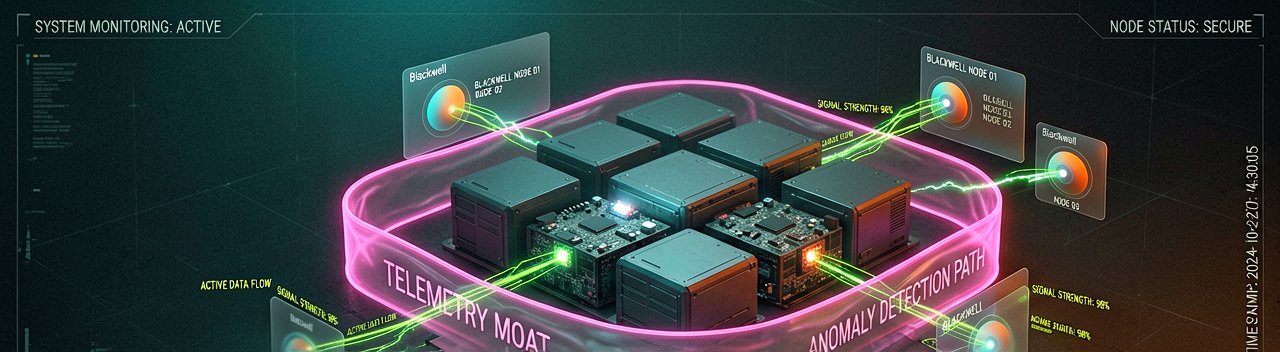
From a market perspective, this strategy places CoreWeave on a collision course with traditional enterprise dev-ops giants that are scrambling to add AI capabilities to their legacy stacks. However, CoreWeave's distinct edge is its ability to build this intelligence natively into the physical infrastructure layer rather than treating software as a detached abstraction. For engineering teams, having an autonomous agent that deeply understands both the high-level python code and the physical architecture of the underlying H100 or Blackwell cluster means significantly less friction when scaling up to frontier-class models.
Ultimately, the industry is witnessing the early stages of a self-correcting research loop where AI is explicitly tasked with designing and debugging its successors. While developers will still maintain high-level strategic veto power over project directions, the labor-intensive grunt work of parsing loss curves and rewriting boilerplate configurations is rapidly being outsourced to autonomous agents. As these agentic workflows mature throughout the year, the value in the AI ecosystem will increasingly consolidate around the platforms that can seamlessly bridge the gap between intelligent orchestration and raw infrastructure scale.
The Hidden Overhead of Delegated Autonomy
Reading Between the Lines: The industry narrative framing ARIA as a friction-free productivity booster glosses over a glaring paradox inherent to agentic AI development. While outsourcing telemetry analysis to an autonomous agent promises to save countless hours of human labor, it introduces a secondary layer of complexity: who audits the auditor? When an LLM fails to train correctly, debugging the model is already difficult enough, but adding an autonomous research agent that actively alters hyperparameters and shifts training data introduces an entirely new vector for silent, cascading errors that could take weeks to diagnose.
Furthermore, this shift toward autonomous infrastructure optimization creates an uncomfortable dependency cycle for enterprise software teams. CoreWeave’s vision relies on a closed-loop system where AI agents manage the very hardware clusters they are deployed on, subtly shifting the power balance away from traditional engineering teams. If a platform like ARIA continuously tweaks experimental parameters to maximize cluster utilization, it aligns perfectly with CoreWeave's financial incentives as an infrastructure provider, potentially encouraging a higher volume of continuous, costly compute consumption under the guise of algorithmic necessity.
There is also a stark contradiction between the industry’s push for open-source reproducibility and the closed, proprietary ecosystem CoreWeave is building here. While data scientists champion transparent workflows, embedding ARIA deeply into a proprietary, $1.4 billion infrastructure stack makes true vendor independence nearly impossible for startups. Once a company's entire historical research context, team boundaries, and automated experiment loops are locked into a specialized cloud fabric, migrating to an alternative provider becomes an architectural and financial nightmare.
Ultimately, the promises of automated research loops must confront the reality of diminishing marginal returns in model optimization. If every enterprise AI lab utilizes the same automated agents to sweep the same hyperparameter spaces and parse the same standard telemetry, the competitive edge provided by software optimization begins to flatten. The real bottleneck will inevitably revert right back to where it started: the raw quality of proprietary datasets and the sheer, unvarnished scale of the physical compute clusters powering them.
"We are rapidly approaching an era where human engineers will spend less time training AI and more time playing referee to an endless digital boardroom of agents arguing over loss curves—proving that even in the automated future, middle management remains entirely inescapable."
Artūras Malašauskas is an AI Systems Integrator with 20+ years of production-grade web engineering experience. He has designed, shipped, and scaled enterprise Python/PHP systems for logistics, SaaS, and public-sector clients. For the past year, he has focused exclusively on AI integrations: deploying open-source LLMs, building generative media pipelines (image, audio, video), and engineering multi-agent workflows for real production environments. His standard: reproducibility, security, cost-efficient inference—no vaporware. He documents and evaluates emerging AI tooling, separating verified capabilities from marketing noise. Technical editor at: muza-ai.eu, ai-verslas.lt, ai-naujinos.lt Connect on LinkedIn
Comments