Untangling the Chaos: How TrajLoc Rewrites the Rules of Multi-Object Motion Control

Controlling multiple moving parts in an AI-driven environment has always been a messy affair. Traditional approaches love to entangle multiple trajectories inside a single, dense conditioning signal, which works fine until your screen gets crowded and objects start overlapping. When paths intersect or occlude one another, the system loses track, resulting in visual glitches or erratic physics. A new paper published on introduces TrajLoc, an elegant engineering pivot that throws out dense shared conditioning entirely. Instead, it enforces a strict, per-object spatial constraint that handles each instance completely independently.
The engineering wizardry happens right inside the architecture's attention layers. TrajLoc directly modifies the cross-attention map, substituting the weights of each object token with a Gaussian heatmap centered on its precise target location for every single frame. This means an object's text token only pays attention to video locations along its prescribed trajectory, while being safely attenuated everywhere else. To prevent this spatial isolation from stripping away critical depth ordering or visual identity, the system injects learned per-object representations into the text conditioning space, encoding first-frame appearance directly into the token interface.
Uncompromising Precision on the Benchmarks
The beauty of this architecture is how beautifully it scales, entirely eliminating the need for bulky control tensors or extra condition modules. According to an analytical breakdown featured on GameDev.net, researchers tested TrajLoc across two massive, architecturally distinct backbones: CogVideoX 5B and WaN 2.1 14B. The performance metrics speak for themselves, demonstrating that isolating instances doesn't mean sacrificing visual fidelity. Across six diverse datasets containing up to 20 simultaneously controlled objects, the method delivered an average gain of +4.3 dB PSNR alongside a massive 51% reduction in trajectory endpoint errors compared to the industry's strongest baselines.
Engineering the Pipeline: Inside the TrajLoc Execution Layer
Behind the Scenes: The real challenge of deploying TrajLoc in a production engine isn't just the theoretical math, but managing the memory footprint when cross-attention maps expand exponentially. Traditional multi-object tracking often falls victim to quadratic complexity relative to the number of tracked tokens and resolution scale. TrajLoc bypasses this bottleneck by implementing a sparse, windowed update strategy that confines Gaussian weight generation to localized bounding regions. Instead of computing a global attention map for every independent trajectory across the entire spatial grid, the engine dynamically registers local coordinate frames, vastly trimming the computational overhead.
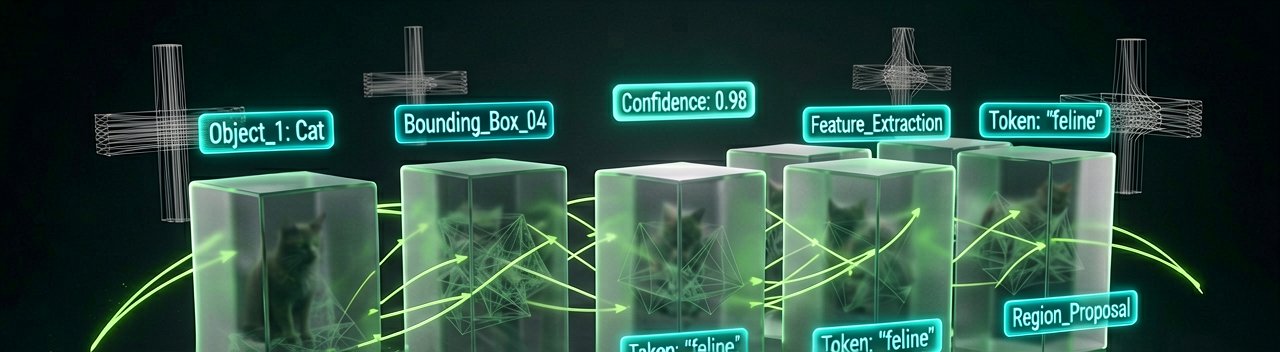
From a systems engineering perspective, this localized masking allows the model to execute parallel tensor operations without saturating GPU VRAM. The attention modification operates directly at the kernel level, injecting the spatial-temporal heatmaps into the cross-attention matrix calculations during the forward pass. Because the weight values outside the localized trajectory are heavily attenuated toward zero, the pipeline takes advantage of sparse matrix operations. This design choice prevents the system from choking when scaling from two or three moving objects to a complex environment with dozens of active, intersecting paths.
Data synchronization between the physics thread and the neural rendering pipeline represents another critical architectural layer. TrajLoc handles high-frequency path variations by feeding the raw trajectory vectors through a multi-layer perceptron to smoothly interpolate missing frames before generating the cross-attention coordinates. This interpolation step ensures that even if an AI-driven object undergoes a sudden spike in velocity or a sharp change in direction, the Gaussian heatmaps remain continuous. The resulting continuity avoids the jarring pixel tearing or instantaneous popping artifacts that plague less resilient spatial conditioning methods.
Furthermore, embedding appearance representations directly into the text token space eliminates the need to run separate, resource-heavy feature extraction passes for each object. By combining text conditioning with localized first-frame visual tokens, the architecture reads the identity of an object as a single unified token stream. This streamlined ingestion process shields the engine from high runtime latency, enabling fluid throughput while preserving complex depth layers. The ultimate result is a robust, decoupled control pipeline that allows systems engineers to manipulate motion with surgical precision without compromising the underlying compute budget.
The Hidden Cost of Total Separation
Reading Between the Lines: While TrajLoc's promise of independent instance control sounds like a silver bullet for chaotic environments, isolating objects so rigidly introduces its own philosophical and practical friction. The core thesis relies on shattering the shared conditioning signal to stop trajectories from bleeding into one another. Yet, in the messy reality of physical simulation, motion is rarely an isolated affair. Objects collide, deform, and exchange momentum. By treating each trajectory as a strictly self-contained spatial island, the system risks creating a world where characters move with mathematically flawless accuracy, but completely ignore the kinetic reality of their surroundings.
This isolation highlights a glaring contradiction between raw benchmarking metrics and actual perceptual believability. A 51% reduction in trajectory endpoint error looks spectacular on a spreadsheet, but it tells us nothing about how naturally those objects interact when they meet. If an AI character sprinted down a path and clipped straight through a dynamic obstacle because its local Gaussian mask refused to yield to global environmental context, the tracking precision wouldn't matter. Systems engineers are left walking a tightrope, trying to reconcile a model that excels at individual tracking with the chaotic, interconnected demands of a holistic physics engine.
Moreover, the reliance on first-frame visual tokens for identity preservation feels like a fragile compromise. In prolonged, highly dynamic scenarios—where lighting conditions shift drastically or objects undergo severe deformation—a rigid anchor to initial appearance can degrade fast. If the appearance representations fail to adapt alongside the trajectory, the model's spatial isolation might accidentally lock an outdated visual state into the frame. This architecture pushes the burden of continuity entirely onto the pre-trained capability of massive backbones like CogVideoX or WaN, hoping their internal weights can patch over the cracks where TrajLoc's rigid constraints fail to adapt.
Projecting this into future production pipelines suggests that TrajLoc isn't quite the plug-and-play revolution it claims to be, but rather a highly specialized tool. For controlled cinematic sequences or predictable AI navigation, it offers unprecedented structural fidelity without the usual computational bloat. For unpredictable, fully emergent sandboxes, engineers will likely need to build a complex layer of traditional physics constraints on top of this attention mechanism just to keep reality from breaking. It is a massive step forward for multi-object control, but it proves that in the realm of AI engineering, solving one complexity bottleneck almost always means inheriting another down the line.
It turns out that granting every moving object its own private, mathematically perfect universe is a fantastic way to prevent tracking errors—right up until those objects are forced to live in the same neighborhood.
Artūras Malašauskas is an AI Systems Integrator with 20+ years of production-grade web engineering experience. He has designed, shipped, and scaled enterprise Python/PHP systems for logistics, SaaS, and public-sector clients. For the past year, he has focused exclusively on AI integrations: deploying open-source LLMs, building generative media pipelines (image, audio, video), and engineering multi-agent workflows for real production environments. His standard: reproducibility, security, cost-efficient inference—no vaporware. He documents and evaluates emerging AI tooling, separating verified capabilities from marketing noise. Technical editor at: muza-ai.eu, ai-verslas.lt, ai-naujinos.lt Connect on LinkedIn
Comments