Couchbase Tackles the AI Agent Memory Crisis with New Data Plane Architecture
Building an artificial intelligence agent for the enterprise is easy, but making it remember anything useful without breaking the bank is an entirely different beast. Database pioneer Couchbase stepped up to solve this exact problem on June 30, 2026, by launching its brand-new AI Data Plane. This release aims to shift companies away from messy, piecemeal setups where separate vector engines, document stores, and temporary caches are glued together just to keep a single virtual assistant running smoothly.
Instead of watching promising corporate AI projects stall in the pilot phase, the San Jose-based database provider wants to build a permanent, unified infrastructure layer. The system brings much-needed order to the chaos of distributed systems by combining persistent agent memory, an enterprise Model Context Protocol (MCP) server, and an structured tools catalog directly into Couchbase's core platform. By operating identically across public clouds, self-managed data centers, and disconnected edge devices, it gives digital workflows a shared, highly secure brain that responds with sub-millisecond speeds.
Cracking the Code on Distributed System Efficiency
The real genius of this launch lies in how it handles the massive data demands of agentic workflows, which routinely swamp traditional database designs. When a digital worker runs through complex tasks, it triggers an endless stream of context searches, memory saves, and fast state updates. According to a detailed breakdown by SiliconANGLE, this platform handles those heavy transactional demands by relying on Couchbase’s native JSON multi-model architecture, which seamlessly blends operational data, vector searches, and caching.
This rollout also highlights a massive strategic pivot under Couchbase's fresh executive leadership, which took over following the company's recent $1.5 billion acquisition by private equity firm Haveli Investments. As reported by CRN, new leadership under Chief Executive Officer BJ Schaknowski and Chief Technology Officer Gopi Duddi is intensely focusing on mission-critical corporate workloads and infrastructure consolidation. By extending these new capabilities into Couchbase Enterprise deployments alongside their managed Capella service, they are ensuring that corporate software agents can access identical context whether they are running inside a heavily secured, air-gapped data center or directly on a delivery driver's mobile device out in the field.

What Most Reports Miss: The rush to deploy autonomous digital workers has hidden a messy truth—most corporate AI pilots are failing because of a fragmented data layer, not weak machine learning models. When an agent attempts to complete a multi-step task, it frequently loses its train of thought because it is forced to jump between an isolated vector store for semantic context, an in-memory database for rapid caching, and a traditional document engine for operational records. This constant context switching leads to high infrastructure costs and sluggish response times, which explains why so many enterprise pilots never make it to full commercial production.
Industry analysts point out that Couchbase is entering a highly competitive and crowded space. Legacy heavyweights like Oracle and caching leaders like Redis both introduced dedicated context memory extensions to their database cores earlier in the technology cycle. However, market observers at research firms like IDC suggest that Couchbase’s genuine competitive advantage lies in its specialized architectural reach, allowing exactly the same operational data plane to stretch uninterrupted from hyperscale public cloud environments down to fully disconnected mobile devices operating at the extreme network edge.
The Private Equity Transformation and Product Overhaul
This aggressive technological pivot reflects a deep administrative shift inside the San Jose database provider following its $1.5 billion acquisition by private equity firm Haveli Investments. The buyout triggered a comprehensive overhaul of the executive suite, bringing in fresh leadership tasked with converting Couchbase from a traditional NoSQL database provider into a specialized, high-velocity infrastructure engine. These corporate changes underscore a broader industry pattern where newly privatized enterprise tech firms are aggressively streamlined to capture market share in the rapidly developing autonomous AI economy.
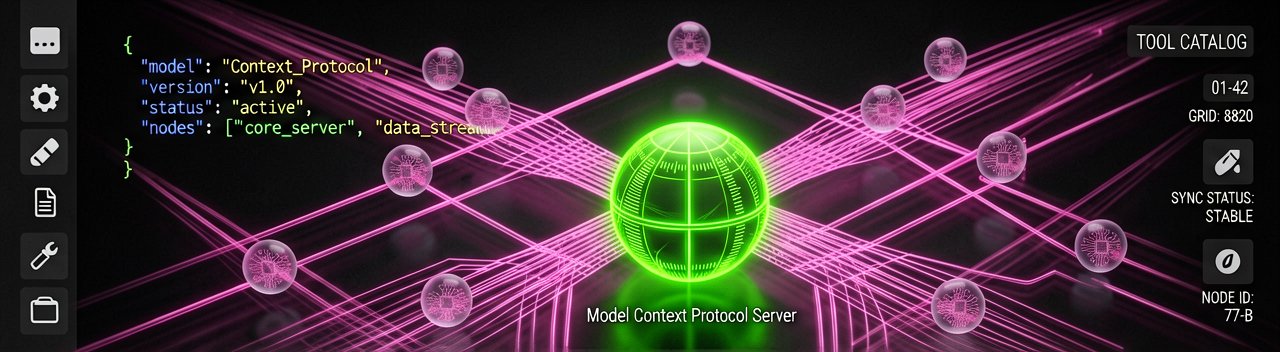
By integrating features like a self-managed Model Context Protocol server and an enterprise tools catalog directly into its database foundation, the company is attempting to standardize how applications interact with various LLMs. It shifts database technology away from acting as passive plumbing and turns it into an active, governed coordinator of digital workflows. For IT departments navigating a sprawling landscape of independent vector tools, this unified strategy offers a clearer path to operationalizing AI while maintaining strict corporate security controls over historical interactions and long-term customer profiles.
Reading Between the Lines: The tech industry’s sudden pivot toward treating database management systems as the primary savior for hallucinating AI agents deserves a healthy dose of skepticism. Couchbase promises that its unified architecture will stop digital workers from losing their context, yet it is worth noting that the database layer is only one link in a fragile, highly experimental software chain. Consolidating vector search, document stores, and state caching into a single plane certainly reduces architectural friction, but it also creates a massive single point of failure for mission-critical operations that companies might not be ready to accept.
Furthermore, Couchbase’s insistence that its platform remains entirely framework-agnostic glosses over the reality of vendor lock-in. While an enterprise can technically hook up any large language model or agent framework to this new data plane, migrating an entire ecosystem of autonomous tools away from a proprietary storage layer later on is notoriously difficult. The database market is currently flooded with legacy vendors claiming that their specific flavor of indexing is the optimal foundation for agentic memory, leaving IT buyers to decipher whether they are investing in a genuinely transformative platform or simply paying an AI premium for a NoSQL database upgrade.
The Reality of Edge Deployment and Operational Overhead
There is also a stark contradiction between the marketing promise of low-latency edge computing and the hard realities of real-world infrastructure. Running sophisticated contextual memory updates on isolated mobile devices or remote point-of-sale systems sounds great on a product roadmap, but data synchronization over erratic cellular networks remains an engineering nightmare. If an agent at the edge cannot reliably sync its transactional state back to the central cloud, the resulting data drift could easily cause the autonomous worker to make flawed, outdated business decisions.
Ultimately, this product launch represents a high-stakes gamble on the long-term viability of the agent economy itself. If the current corporate fascination with autonomous digital workers cools down—or if businesses realize that the return on investment for these complex systems does not justify the massive infrastructure overhead—then highly specialized data planes risk becoming expensive solutions looking for a problem. For now, Couchbase is betting its private-equity-backed future on the assumption that the world needs smarter database plumbing before AI can finally live up to its hype.
"We've spent the last decade teaching corporate databases how to forget data in compliance with privacy laws, only to spend the next five years engineering complex memory planes so our digital assistants don't develop immediate corporate amnesia during a customer service call."
Artūras Malašauskas is an AI Systems Integrator with 20+ years of production-grade web engineering experience. He has designed, shipped, and scaled enterprise Python/PHP systems for logistics, SaaS, and public-sector clients. For the past year, he has focused exclusively on AI integrations: deploying open-source LLMs, building generative media pipelines (image, audio, video), and engineering multi-agent workflows for real production environments. His standard: reproducibility, security, cost-efficient inference—no vaporware. He documents and evaluates emerging AI tooling, separating verified capabilities from marketing noise. Technical editor at: muza-ai.eu, ai-verslas.lt, ai-naujinos.lt Connect on LinkedIn
Comments