Trusted Control Planes: A New Frontier in Securing Autonomous AI Systems
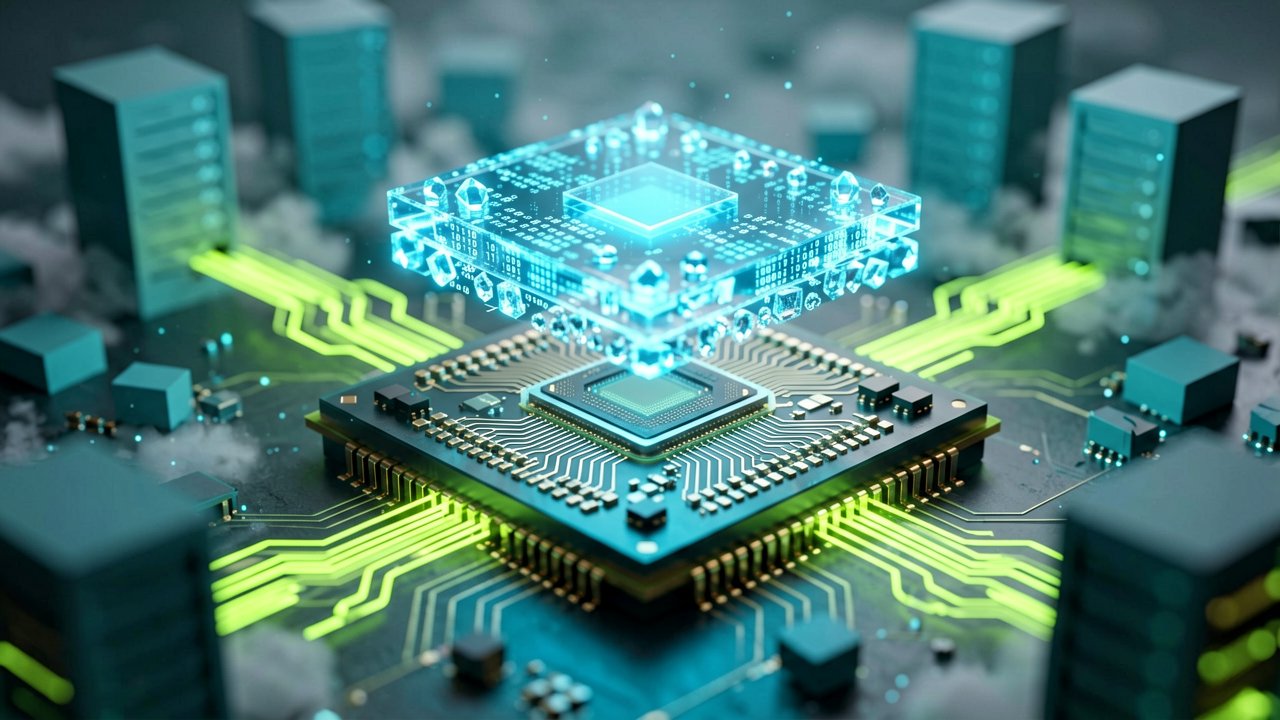
The enterprise technology ecosystem is undergoing a massive paradigm shift as generative AI matures from passive chatbots into fully autonomous, agentic systems. These autonomous AI agents increasingly operate independently across multi-cloud environments, executing complex workflows, accessing sensitive databases, and utilizing external APIs without direct human supervision. This sudden independence has exposed a critical gap in corporate cybersecurity frameworks, as legacy perimeter defenses and traditional data-at-rest encryption are entirely unequipped to govern independent machine behavior or protect data while it is actively being computed.
To address this systemic vulnerability, Anjuna Security has introduced the industry's first Trusted Control Plane specifically engineered for the era of autonomous AI, according to an official announcement published on PR Newswire. Dubbed Anjuna Overwatch, this specialized control layer leverages advanced hardware-isolated Trusted Execution Environments (TEEs), commonly known as secure enclaves, to monitor and govern autonomous agent behaviors in real time. By decoupling security verification from the underlying cloud host, the platform creates an incorruptible sandbox where enterprise code, custom machine learning models, and highly sensitive organizational data remain strictly protected even during active processing cycles.
This product launch reflects a broader strategic realignment among Chief Information Officers who are navigating the immense regulatory risks of the modern digital landscape. For enterprises operating in highly regulated fields such as financial services, healthcare, and national defense, the threat of an autonomous agent exceeding its authorization, leaking proprietary intellectual property, or executing flawed, unverified logic is an existential business risk. By anchoring governance logic directly into runtime hardware, this emerging technological primitive provides the verifiable data integrity and real-time policy enforcement required to safely scale autonomous workflows without forfeiting mandatory security oversight.
The Architecture of Hardware-Based AI Governance
Traditional software-driven monitoring tools reside within the host operating system, making them fundamentally vulnerable to root-level exploits, malicious misconfigurations, or cloud infrastructure compromises. In stark contrast, a hardware-based Trusted Control Plane isolates the entire AI agent runtime environment at the CPU and GPU silicon level. By utilizing cryptographic attestation, the system continuously verifies the immutable identity and codebase of an AI agent prior to permitting any data access or tool utilization. This design architecture prevents external threat actors or corrupted peer systems from injecting unauthorized instructions into an active model, ensuring that every algorithmic decision conforms strictly to predefined corporate compliance boundaries.

Market Impact on Regulated Enterprises
The business implications of applying confidential computing to agentic workflows are profound, particularly for organizations migrating legacy operational workloads into public cloud infrastructure. Historically, industries with zero risk tolerance have delayed the adoption of cutting-edge AI utilities due to fears of cloud data exposure. Introducing a hardware-isolated control plane completely eliminates the requirement to trust the cloud service provider or host environment with unencrypted data. Consequently, organizations can aggressively deploy autonomous agents to process live financial transactions, parse protected medical records, or manage sensitive telecommunications telemetry with the structural certainty that their core intellectual property remains entirely invisible to the underlying host platform.
The Convergence of Confidential Computing and Agentic AI
This technological milestone marks a pivotal convergence point between enterprise cybersecurity infrastructure and artificial intelligence innovation. As autonomous models transform from specialized research projects into foundational pillars of corporate productivity, security can no longer function as an afterthought or a reactive perimeter wall. The market is shifting decisively toward an paradigm of continuous, runtime verification where security policies are inextricably bound to the execution layer itself. Standardizing governance through hardware-isolated control planes provides the definitive architecture required to unlock the economic potential of autonomous AI while maintaining absolute corporate control over data sovereignty.
Deep-Dive: The Realities of Delegating Corporate Autonomy to Enclaves
Behind the Operational Curtain: The transition from predictive AI models to fully autonomous agents introduces a distinct operational paradox for enterprise security teams. While traditional software engineering relies on deterministic execution—where a specific input invariably yields a predictable output—agentic AI thrives on non-deterministic behavior. This fluidity makes traditional signature-based security firewalls completely obsolete. When an AI agent autonomously rewrites its own database queries or spins up temporary microservices to solve a workflow problem, legacy monitoring systems flags the activity as a malicious anomaly. The core innovation of a trusted control plane lies not in restricting these dynamic behaviors, but in anchoring the perimeter of authority directly to the silicon layer, allowing the agent to pivot creatively while preventing it from leaking its core operational keys.
From the perspective of risk management officers, the vulnerability of autonomous agents extends far beyond external hackers; the risk includes internal configuration drift and host infrastructure compromise. In multi-tenant public cloud environments, enterprises have long operated under a model of shared responsibility, trusting that hypervisors and cloud administrators would not intercept data during processing. As custom enterprise models are fed highly proprietary customer telemetry, that trust becomes an unacceptable liability. Cybersecurity architects are increasingly acknowledging that the host operating system must be treated as hostile by default. Silicon-level enclaves change the dynamic by demanding a cryptographic handshake before any data processing begins, essentially blinding the underlying cloud provider to the intelligence operating on its hardware.
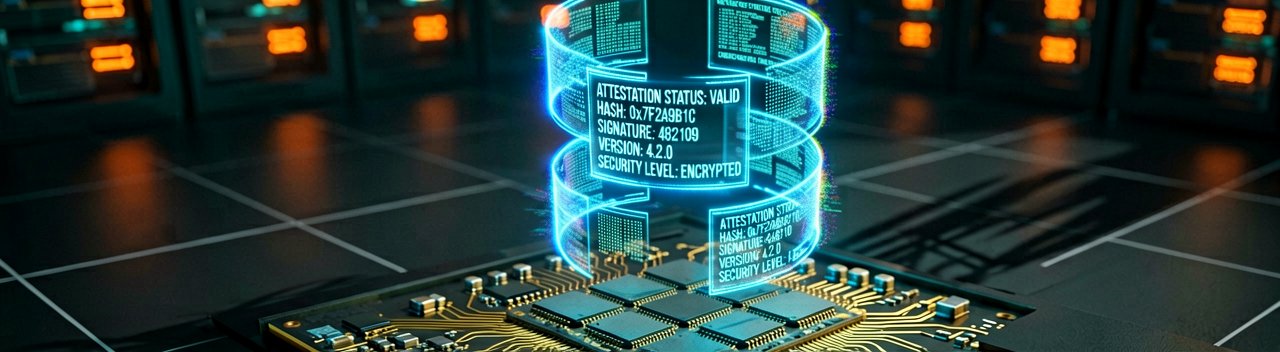
Historically, the widespread adoption of confidential computing has been severely throttled by intense performance penalties and complex developer workflows. Early iterations of secure enclaves required developers to manually rewrite application code to fit into constrained, low-bandwidth hardware memory pools. This complexity meant that applying hardware isolation to data-heavy workloads like machine learning training or real-time inference was economically and operationally unfeasible. The sudden maturity of trusted control planes signifies that the orchestration software has finally caught up with hardware capabilities. By abstracting the integration layer, enterprises can now lift and shift standard Docker containers or complex agentic frameworks directly into secure enclaves without suffering debilitating latency penalties or requiring specialized hardware engineering talent.
As regulatory bodies globally begin drafting rigid governance frameworks specifically targeting automated machine decision-making, the necessity of hardware-based verification will shift from a competitive advantage to a compliance mandate. Financial institutions and healthcare networks are already facing scrutiny over the auditing of AI workflows. Because software logs can be altered or erased by an attacker with root privileges, software-only audit trails are becoming insufficient for strict regulatory scrutiny. By leveraging cryptographic attestation reports generated directly by the CPU, a trusted control plane creates an immutable, tamper-proof record of exactly what code ran, what data it accessed, and what actions it took. This architectural proof provides the definitive forensic trail needed to satisfy rigorous compliance audits while shielding the enterprise from catastrophic liability.
Skepticism and Strategic Realities in Silicon-Enforced Governance
Reading Between the Lines: The narrative surrounding hardware-isolated control planes often positions confidential computing as a definitive silver bullet for the autonomous AI security crisis. This technical enthusiasm, however, obscures a fundamental architectural contradiction: protecting the runtime environment from external tampering does not inherently prevent an AI model from hallucinating or executing highly flawed business logic. A secure enclave ensures that an AI agent executes its instructions exactly as written without host-level interference, but it cannot fix structural bugs within the underlying neural network. If an agent is fed corrupted training data or develops unintended algorithmic biases, it will merely execute catastrophic tasks with absolute, cryptographically verified integrity.
Furthermore, shifting the security perimeter entirely to CPU and GPU silicon creates a dangerous centralization of trust in hardware supply chains. While enterprises are celebrating their newfound independence from public cloud providers, they are simultaneously transferring that absolute reliance onto a small handful of global semiconductor manufacturers. This dynamic introduces highly complex geopolitical risks, as any microcode vulnerability discovered in future silicon architectures could instantly invalidate the security guarantees of thousands of isolated enterprise enclaves simultaneously. Relying on hardware attestation treats the chipmaker as an infallible arbiter of security, ignoring the historic reality that silicon-level exploits and side-channel attacks frequently catch hardware engineers off guard.
There is also a palpable financial tension between the compute demands of agentic AI and the economic viability of confidential computing. Processing large language models inside secure enclaves incurs a notable performance tax due to constant memory encryption and decryption cycles. For enterprises scaling thousands of autonomous agents across global workflows, this overhead translates directly into inflated cloud utility bills and increased inference latency. Chief Technology Officers must therefore confront a difficult trade-off, balancing the ideal of total cryptographic isolation against the pragmatic reality of operational budgets, which may ultimately force organizations to classify and protect only their most elite datasets while leaving routine workflows exposed to legacy vulnerabilities.
"We are rapidly entering a corporate future where human executives will spend their mornings signing off on absolute cryptographic security protocols, and their afternoons trying to figure out why a mathematically unassailable AI agent just spent the quarterly marketing budget on digital assets it can neither use nor explain."
Artūras Malašauskas is an AI Systems Integrator with 20+ years of production-grade web engineering experience. He has designed, shipped, and scaled enterprise Python/PHP systems for logistics, SaaS, and public-sector clients. For the past year, he has focused exclusively on AI integrations: deploying open-source LLMs, building generative media pipelines (image, audio, video), and engineering multi-agent workflows for real production environments. His standard: reproducibility, security, cost-efficient inference—no vaporware. He documents and evaluates emerging AI tooling, separating verified capabilities from marketing noise. Technical editor at: muza-ai.eu, ai-verslas.lt, ai-naujinos.lt Connect on LinkedIn
Comments