Meta Leaps Ahead in Mind-Reading Race with Brain2Qwerty v2
For years, the dream of typing with your thoughts meant choosing between two extremes: undergoing invasive brain surgery for implants like Neuralink or settling for frustratingly sluggish external sensors that barely cleared a single-digit success rate. Meta AI just shattered that dichotomy. On June 29, 2026, the social media and tech giant pulled back the curtain on Brain2Qwerty v2, an artificial intelligence pipeline that translates raw, non-invasive brain recordings into written sentences with an unprecedented 61% average word accuracy.
The system marks a monumental shift from its predecessor, Brain2Qwerty v1, which was simultaneously detailed in the journal Nature. While the first version painstakingly guessed individual characters, v2 skips the alphabet soup entirely to focus on whole words and semantics. By fine-tuning large language models on raw signals harvested from magnetoencephalography (MEG) machines, Meta's researchers successfully bypassed the skull's dampening effects to extract actual meaning from messy, noisy neural data.
Cracking the Skull's Code Without a Scalpel
To train the model, Meta recruited nine volunteers who spent roughly 10 hours each inside a massive, highly sensitive MEG scanner. As they typed out nearly 22,000 unique sentences, the AI monitored the shifting magnetic fields produced by their thoughts. Over time, it learned to map those subtle fluctuations directly to intent. While the average accuracy hovered at 61%, the star pupil of the study reached a staggering 78% accuracy, with more than half of their sentences reconstructed with a single word error or less.
Compared to the dismal 8% baseline achieved by existing non-invasive competitors, this is a massive milestone. It shifts non-invasive brain-computer interfaces from academic curiosities into the realm of viable assistive communication tools. Meta is already pitching the underlying science as an eventual lifeline for millions of individuals suffering from brain lesions, stroke side effects, or severe motor impairments that strip away their ability to speak.
The Data Scaling Path to Parity
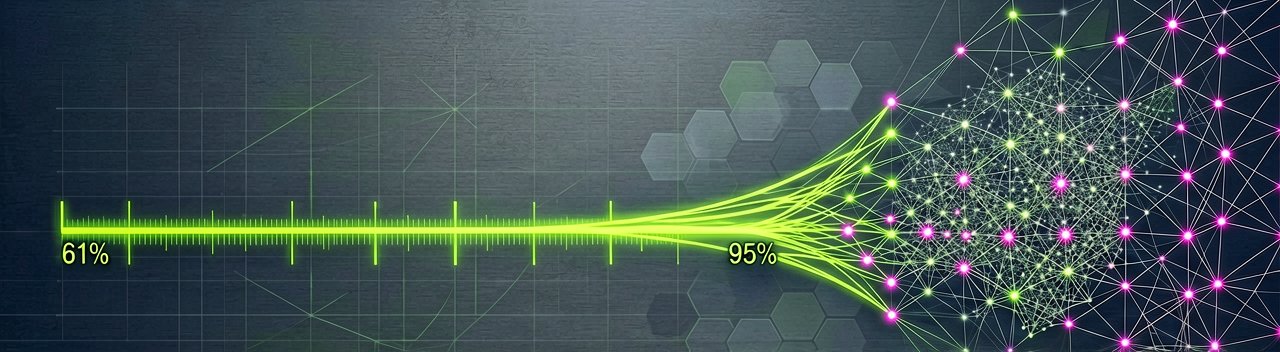
What makes this development particularly compelling is how the accuracy scales. According to Meta's published research findings, the system's precision improves log-linearly with data volume. This implies that the remaining performance gap between external headwear and surgical hardware might be solved simply by feeding the model more training data. There is no fundamental biological bottleneck holding it back anymore; it is just a matter of scale.
Despite the breathtaking results, you won't be telepathically replying to emails on your morning commute anytime soon. MEG setups are massive, million-dollar rigs that require magnetically shielded rooms and absolute stillness from the user. However, Meta is intentionally fostering open science to push the hardware limits, releasing the complete training code for both iterations alongside a $5 million Digital Brain Project fund to democratize neuroscience datasets.
What Most Reports Miss: The Architectural Shift From Speech to Text
The sudden jump to a 61% accuracy rate has caught many industry observers off guard, but it highlights a fundamental shift in how tech giants approach neural decoding. Traditional brain-computer interfaces have long focused on the motor cortex, attempting to translate the imagined muscle movements of speech or typing into digital inputs. Meta's latest breakthrough succeeds because it treats the human brain less like a physical joystick and more like a messy, unindexed database of linguistic intent. By utilizing a transformer-based AI architecture to predict words rather than individual phonemes or keystrokes, the system effectively uses language context clues to fill in the blanks left by the skull's natural signal dampening.
This semantic approach introduces unique challenges that contrast sharply with surgical hardware like Neuralink's thread arrays. While an implant reads precise electrical spikes from specific neurons, non-invasive sensors capture a blurred, macro-level orchestra of brain activity. When the AI fails, it does not make simple typographical errors; instead, it hallucinates synonyms or conceptually related phrases. For instance, a participant thinking about a specific vehicle might find the system outputting a generic descriptor like transport. This shift from physical precision to semantic approximation represents a completely different philosophy of machine learning in neural engineering.
Independent neurotechnologists have noted that this software-heavy approach places the burden of accuracy on data volume rather than hardware refinement. This choice explains Meta's decision to open-source the training code and establish the Digital Brain Project fund. By crowd-sourcing data collection to academic institutions worldwide, the company aims to bypass the bottleneck of scaling up massive, laboratory-bound magnetoencephalography scanners. The goal is to amass a large enough neural dataset to train foundational models capable of generalizing across different human brains without requiring hours of individual calibration.
The commercial implications also extend far beyond assistive medical tech. Inside the industry, this project is viewed as the long-term interface foundation for spatial computing and augmented reality. For consumer headwear to truly replace smartphones, users need a silent, friction-free input method that functions in public spaces. While a bulky laboratory scanner cannot fit into a pair of smart glasses, the mathematical models refined during these experiments are designed to eventually adapt to more portable, consumer-grade sensors like electromyography wristbands or compact infrared caps.
Reading Between the Lines: The Reality Gap in Consumer Telepathy
The euphoria surrounding a 61% accuracy rate conveniently glosses over a massive caveat: this system is completely helpless outside a laboratory setting. A magnetoencephalography machine weighs several tons, requires liquid helium cooling, and costs upwards of two million dollars. While Meta’s software engineering is undoubtedly brilliant, mapping this data onto a wearable consumer device is not just a miniaturization challenge; it is a fundamental physics problem. The subtle magnetic fields generated by human thoughts are easily drowned out by the ambient electromagnetic noise of a modern city, making the transition from a shielded room to a crowded subway car highly improbable with current sensor tech.
There is also an awkward contradiction in Meta's open-science posture. By funding academic datasets and open-sourcing the underlying algorithms, the company projects the image of a benevolent research patron. However, this strategy simultaneously crowdsources the costliest, most tedious part of neural AI development to public institutions. Meta effectively secures the intellectual property pipeline for the next generation of consumer inputs while letting university grants foot the bill for data collection. It is a brilliant corporate playbook that shifts the financial risk of basic science onto academia while keeping the commercial upside firmly within Silicon Valley.
Furthermore, the ethical discourse around thought-to-text decoding remains deeply unsettling, even at a sub-perfection accuracy rate. Meta assures the public that the system requires active user cooperation and hours of intent-focused training data to function. Yet, history shows that once data extraction pipelines are established, the pressure to monetize them is inevitable. A system capable of predicting linguistic intent from neural noise is only a few algorithms away from parsing subconscious emotional reactions to advertising or digital environments, raising severe privacy concerns that current consumer protection laws are entirely unequipped to handle.
Ultimately, the metric of success needs a reality check. In the realm of assistive communication, a 61% accuracy rate is a monumental triumph for someone locked inside their own body. In the realm of mainstream consumer electronics, however, a keyboard that misinterprets every third word is an infuriating piece of e-waste. Meta’s breakthrough proves that machines can finally hear what our brains are whispering, but it also reveals just how much gets lost in translation when you refuse to open the skull.
"We are officially trapped in a classic Silicon Valley paradox: tech giants have successfully built an artificial intelligence sophisticated enough to read our minds, but we still have to sit perfectly still inside a giant, liquid-helium-chilled metal donut just to text someone that we are running late."
Artūras Malašauskas is an AI Systems Integrator with 20+ years of production-grade web engineering experience. He has designed, shipped, and scaled enterprise Python/PHP systems for logistics, SaaS, and public-sector clients. For the past year, he has focused exclusively on AI integrations: deploying open-source LLMs, building generative media pipelines (image, audio, video), and engineering multi-agent workflows for real production environments. His standard: reproducibility, security, cost-efficient inference—no vaporware. He documents and evaluates emerging AI tooling, separating verified capabilities from marketing noise. Technical editor at: muza-ai.eu, ai-verslas.lt, ai-naujinos.lt Connect on LinkedIn
Comments