Ford’s AI Quality Control Backlash Signals Growing Reliance on Human Expertise in Manufacturing
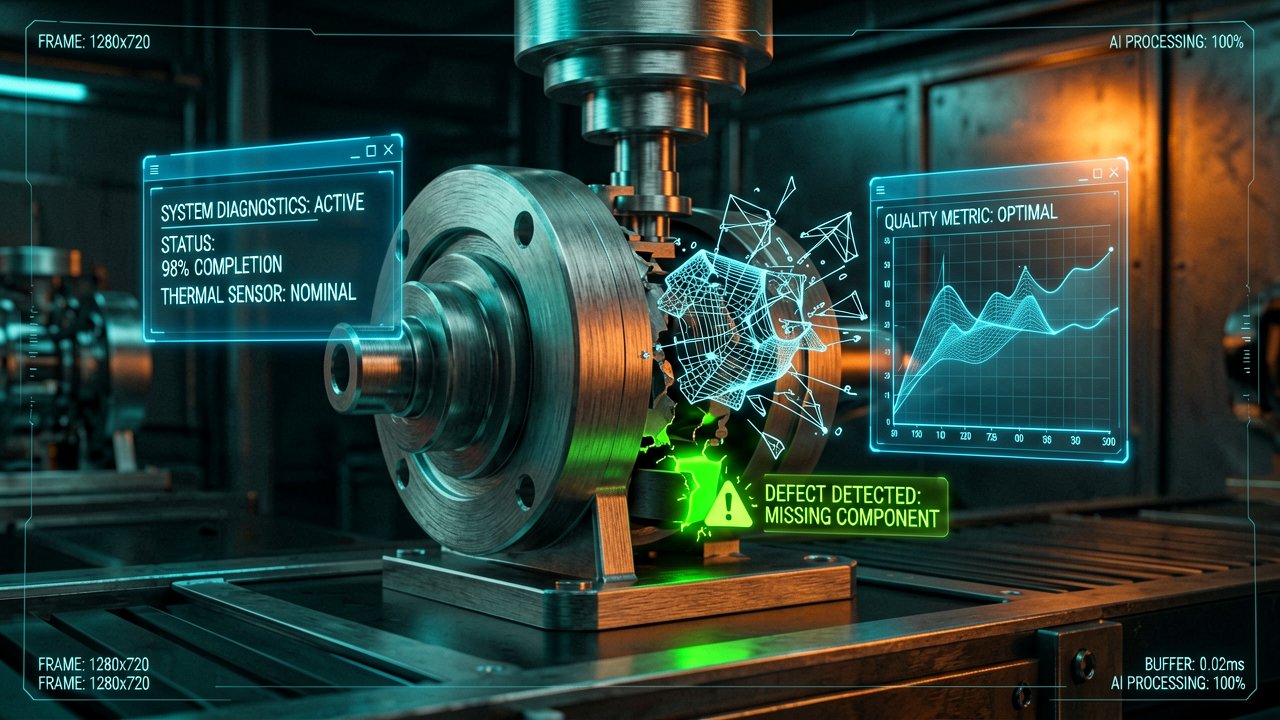
The industrial rush to fully automate automotive assembly lines has hit a significant roadblock, forcing Ford Motor Co. into a strategic course correction. Over the last three years, the automaker has quietly hired, rehired, or promoted approximately 350 veteran engineers—referred to internally as "gray beards"—after finding that its advanced artificial intelligence systems and automated quality control frameworks underperformed. This retreat from pure automation marks a pivotal shift in the industrial sector, demonstrating that even sophisticated machine learning pipelines cannot entirely replace the nuanced, tribal knowledge of seasoned human technicians.
According to reports from Bloomberg , the decision was made after Ford realized its AI-driven initiatives, which included deploying 900 AI-powered cameras across manufacturing plants to identify early-stage component defects, lacked the depth necessary to resolve complex design and structural bugs. Ford's vice president of vehicle hardware engineering, Charles Poon, admitted that leadership mistakenly believed that feeding engineering requirements directly into an AI system would automatically yield a high-quality product. Instead, the lack of human baseline training allowed subtle, systemic flaws to bypass automated checks, exacerbating the company's multibillion-dollar warranty and recall struggles.
Rather than discarding the technology entirely, Ford is leveraging its returning experts to bridge the operational gap by mentoring younger staff and reprogramming the faulty algorithms. This hybrid approach has yielded immediate dividends, enabling Ford to capture the top spot among mainstream brands in the latest JD Power Initial Quality Survey for the first time in sixteen years, while simultaneously saving hundreds of millions of dollars in warranty expenses. The situation serves as a stark warning to the broader manufacturing sector that AI is most effective as an assistive tool to augment human oversight, rather than an outright replacement for industrial expertise.
The Realities of Automated Inspection Failures
The primary breakdown in Ford's automated inspection layout stems from a fundamental misunderstanding of how machine learning models interpret design parameters. When older, experienced staff left the company during prior restructuring phases, decades of experiential data were lost before they could be converted into training data for the neural networks. Without this foundational knowledge, the AI cameras could not reliably identify non-standard defects or predict structural failures under real-world stress. The newly re-engaged human inspectors are now stationed upstream to intercept these design anomalies before components ever reach the factory floor, proving that human intuition remains essential for high-stakes quality assurance.
Market Shifts and the Future of Human-Centric Automation
Artūras Malašauskas is an AI Systems Integrator with 20+ years of production-grade web engineering experience. He has designed, shipped, and scaled enterprise Python/PHP systems for logistics, SaaS, and public-sector clients. For the past year, he has focused exclusively on AI integrations: deploying open-source LLMs, building generative media pipelines (image, audio, video), and engineering multi-agent workflows for real production environments. His standard: reproducibility, security, cost-efficient inference—no vaporware. He documents and evaluates emerging AI tooling, separating verified capabilities from marketing noise. Technical editor at: muza-ai.eu, ai-verslas.lt, ai-naujinos.lt Connect on LinkedIn
Comments