DoubleVerify Unleashes AI Optimization Engine, Aiming to Reset the Playbook for Ad Strategies

Digital media measurement heavyweight DoubleVerify officially launched a major expansion of its AI-powered capabilities by rolling out its campaign optimization engine, DV Authentic AdVantage, to major social platforms including Meta and TikTok in GlobeNewswire. This rollout introduces an engine designed to recommend and execute real-time adjustments to digital advertising campaigns, addressing a long-standing headache for brands trying to balance cost efficiency with media quality. By automating complex strategic optimizations that ad ops teams previously had to handle by hand, the tool is a bid to fundamentally reshape how brands scale their programmatic and social efforts.
For years, human campaign managers have been bogged down in reactive workflows, spending chunks of their week manually tweaking bid modifiers, shifting budgets, and adjusting performance thresholds across disparate ad tech dashboards. DoubleVerify is attempting to flip that dynamic completely on its head. The solution blends pre-bid media quality protection, independent campaign measurement, and real-time machine learning decisioning into a single workflow. Instead of treating brand safety and performance as separate conversations, the system uses algorithmic signals to optimize ad delivery on the fly, proving that media quality can actively drive business outcomes.
Breaking the Trade-Off Between Performance and Quality
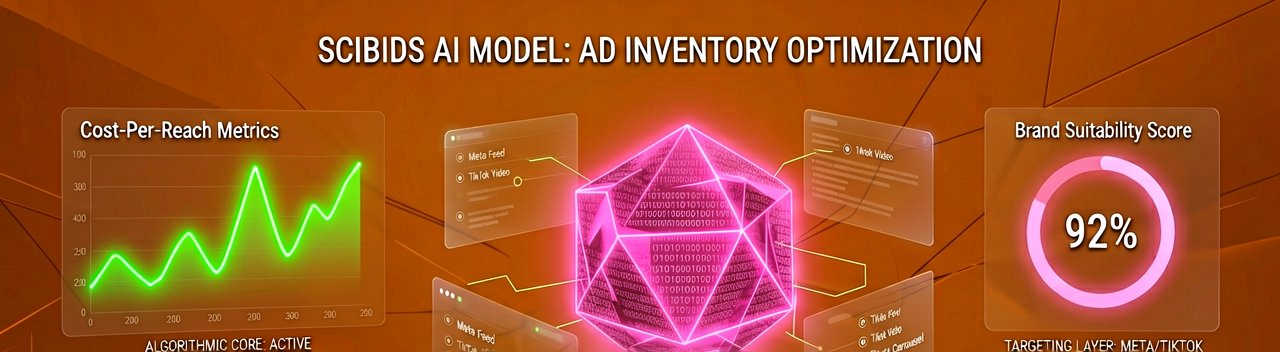
The platform relies heavily on technology from Scibids, an AI firm acquired by DoubleVerify, to dynamically generate custom bidding algorithms aligned to a brand’s specific key performance indicators. According to details shared by Marketing Report, early testing of the platform on TikTok yielded highly promising results for early adopters, showing a 98% increase in unique reach alongside a 50% improvement in efficiency and a 59% drop in brand suitability incidents. By factoring in real-time outcomes-based signals like reach, cost per mille, cost per acquisition, and attribution insights, the engine continuously reallocates ad spend toward top-performing inventory without risking exposure to unsafe content.
This automated approach takes the burden off internal ad operations teams, allowing them to step out of the role of manual campaign facilitators and shift their energy toward higher-level creative strategy and planning. As digital advertising environments grow increasingly fragmented and fast-paced, letting an AI layer pull hundreds of performance levers simultaneously looks less like a luxury and more like a baseline requirement for staying competitive in the modern attention economy.
Behind the Scenes: The Tech and Tactics Forcing Ad Ops to Evolve
What Most Reports Miss: The launch of DV Authentic AdVantage represents a deeper structural shift in ad tech than a simple feature update; it marks the final merging of media measurement with automated media buying. For over a decade, verification vendors like DoubleVerify operated strictly as passive referees, grading ad quality after the money was already spent. By integrating Scibids’ customizable AI models directly into the delivery pipeline, the company is crossing the line from referee to active player, fundamentally changing how media agencies value and buy inventory.
Historically, the digital advertising ecosystem has been plagued by a friction-filled workflow where verification data and demand-side platform bidding strategies lived in separate silos. Brand safety filters often acted as blunt instruments, blocking large swaths of premium publisher inventory because of a single keyword match. This over-blocking frustrated publishers and forced advertisers to choose between scaling their reach or protecting their brand reputation. The introduction of real-time machine learning changes the math by replacing generic blocklists with highly dynamic, granular decision-making that adapts to content context on the fly.
From the perspective of media buyers and agency executives, this automation solves a massive talent and operational bottleneck. Standard campaign management typically requires data analysts to export performance spreadsheets, manually identify top-performing ad placements, and log back into programmatic platforms to adjust bids. Because this human-driven process can take hours or even days, brands routinely miss optimal audience windows on hyper-fast platforms like TikTok and Meta. Automating these micro-adjustments allows media agencies to operate at the speed of modern social feeds without needing to scale their operational headcount linearly.
However, this shift toward fully algorithmic campaign management is not without its internal friction within marketing departments. Brand managers and corporate procurement teams often express skepticism about handing absolute budget control over to automated engines, demanding clear transparency around how these machine learning models make spending decisions. DoubleVerify is betting that its established reputation as an independent, third-party auditor will give advertisers the peace of mind they need to trust the automation, bridging the gap between programmatic efficiency and corporate compliance.

Ultimately, this technological evolution sets a new benchmark for what brands expect from verification partners moving forward. As cookies phase out and privacy regulations restrict user-level tracking, contextual signals and real-time media quality data are becoming the core inputs for performance optimization. By proving that clean, high-quality media placements directly yield better cost-per-reach metrics, the industry is moving away from the era of cheap, low-quality ad placements and stepping into an era where media health is viewed as the primary driver of digital campaign ROI.
The Hidden Cost of Autopilot Advertising
Reading Between the Lines: While the promise of an AI-driven, hands-off optimization engine sounds like an absolute win for overworked ad operations teams, it introduces a subtle paradox into the digital media supply chain. The industry has spent years demanding transparency from ad tech vendors, pushing back against the "black box" methodologies that historically obscured where ad dollars went and how performance metrics were calculated. By shifting the heavy lifting of campaign strategy over to automated machine learning models, brands risk trading old human biases for a new layer of algorithmic opacity under the guise of efficiency.
There is an inherent tension in having a verification company—whose primary business model is auditing media quality—also control the automated buying levers that optimize for that very same quality. While DoubleVerify's acquisition of Scibids gives it the muscle to execute these real-time shifts, it places the vendor in a dual role as both the independent judge and the active strategist. If the AI engine is continuously adjusting bids to hit optimization metrics defined by its own measurement tools, independent verification runs the risk of becoming a closed-loop ecosystem, making external validation significantly harder to achieve.
Furthermore, relying entirely on algorithmic efficiency to drive social media campaigns across platforms like Meta and TikTok assumes that performance signals are always accurate indicators of true business value. Machine learning models excel at spotting patterns and shifting budgets toward placements that generate high click-through rates or low cost-per-thousand impressions. However, this hyper-focus on short-term numerical optimization can inadvertently favor clickbait inventory or hyper-optimized ad units that look great on an agency spreadsheet but fail to build long-term brand equity or drive actual brick-and-mortar sales.
The broader implication for the workforce is equally complex, as the automation of routine bid adjustments forces a rapid re-skilling of the advertising sector. If algorithms can manage budget reallocations and brand suitability thresholds on the fly, the traditional role of the programmatic media buyer changes overnight. Agencies will no longer need tactical platform operators; instead, they will require strategic prompt engineers and data ethicists who know how to audit the AI’s decisions, shifting the human element from active management to high-level oversight.
As this technology scales, the ultimate test will be whether automated optimization actually saves brands money or simply raises the baseline cost of competing in the digital space. If every major advertiser adopts identical, AI-powered bidding engines hooked into the same platform signals, the competitive advantage shifts from the algorithm itself back to the size of the media budget and the quality of the creative asset. In a fully automated landscape, the tech may simply level the playing field, leaving brands exactly where they started, just with fewer humans in the room.
"We’ve spent a decade trying to take the guesswork out of advertising, and we’ve finally succeeded by replacing it with an algorithm that we promise is doing exactly what it's supposed to do, even if nobody in the building can quite explain how."
Artūras Malašauskas is an AI Systems Integrator with 20+ years of production-grade web engineering experience. He has designed, shipped, and scaled enterprise Python/PHP systems for logistics, SaaS, and public-sector clients. For the past year, he has focused exclusively on AI integrations: deploying open-source LLMs, building generative media pipelines (image, audio, video), and engineering multi-agent workflows for real production environments. His standard: reproducibility, security, cost-efficient inference—no vaporware. He documents and evaluates emerging AI tooling, separating verified capabilities from marketing noise. Technical editor at: muza-ai.eu, ai-verslas.lt, ai-naujinos.lt Connect on LinkedIn
Comments