AI’s Decade-Long Growth: Why These Three Stocks Are Built to Last

The secular expansion of artificial intelligence has transitioned from speculative venture into an industrialized global ecosystem. Institutional capital is increasingly prioritizing enterprise monetization metrics and supply chain durability over foundational breakthroughs. As hyperscalers continuously re-architect infrastructure pipelines to meet compounding optimization demands, a distinct tier of market leaders has emerged with competitive barriers engineered to safeguard long-term shareholder equity.
Sustained economic value across the next decade belongs to enterprises controlling the primary stack layers: custom merchant silicon architecture, localized cloud orchestration platforms, and foundry lithography limits. Organizations capable of cross-financing massive infrastructure investments through self-sustaining core business models are best positioned to navigate cyclical chip anomalies. Market valuations reinforce this divergence as capital rotates toward structural gatekeepers of foundational compute resources.
NVIDIA: The Full-Stack Compute Ecosystem
NVIDIA maintains an ironclad monopoly on the hardware acceleration layer, effectively transforming its corporate profile from a core chip designer into a comprehensive data center architecture manager. Forward projection data compiled by indicates that global data center capital expenditure is expected to ascend from current levels to a massive range of $3 trillion to $4 trillion by 2030. This structural expansion underpins the ongoing deployment cycles for specialized compute networks.
The enterprise moat is anchored by the proprietary CUDA software platform, which effectively locks developers into the silicon architecture. Rather than relying solely on individual product performance milestones, the platform integrates network switches, cooling parameters, and complex interconnect fabrics. This holistic strategy mitigates competitive pressures from custom merchant application-specific integrated circuits (ASICs) developed by standard cloud operators.

Microsoft: Monetizing Enterprise Intelligence
Microsoft has successfully leveraged its early infrastructure partnerships to emerge as the premier application and localized orchestration layer for global enterprise AI workloads. Financial statements reviewed by highlight that the company's annualized AI revenue run rate has surpassed $37 billion, representing an operating increase of 123% year-over-year. This rapid financial conversion provides essential defense against escalating infrastructure expansion costs.
The long-term value thesis rests on deep productivity suites where automated enterprise applications command strong pricing power. By embedding specialized virtual assistants across its software portfolio, the corporation monetizes active workflows rather than volatile cloud consumption layers. This predictable software subscription cash flow shields capital expenditures from standard macroeconomic market fluctuations.
Taiwan Semiconductor Manufacturing Company (TSMC): The Indispensable Foundry
Taiwan Semiconductor Manufacturing Company (TSMC) functions as the physical nexus of the advanced compute economy, acting as the exclusive production gateway for leading silicon design firms. Recent brokerage revisions published by Investing.com confirm that major financial institutions have increased target metrics based on accelerating global chip demand and upcoming price target adjustments for 2027. This highlights the pricing leverage the foundry holds over the industry stack.
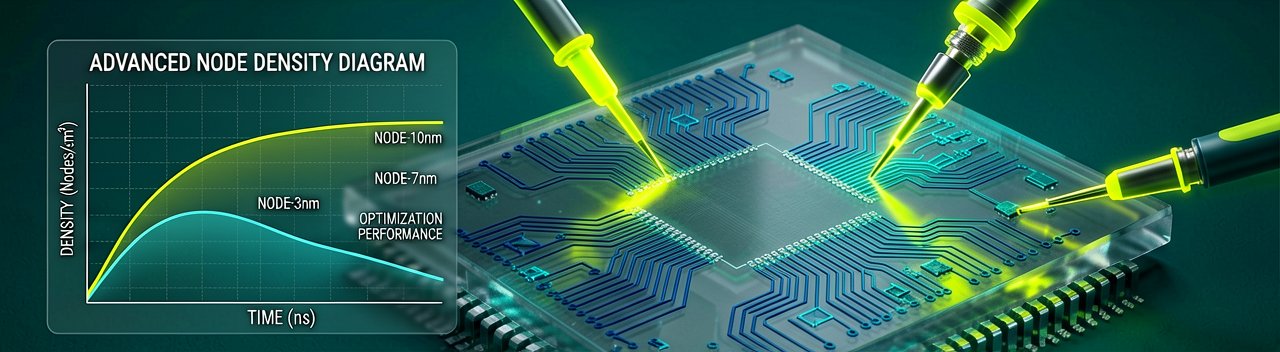
The manufacturing moat is sustained by capital-intensive advanced lithography and sophisticated packaging expertise required for complex matrix processors. Competitors face enormous capital barriers to replicate identical node densities, ensuring that almost all high-performance AI silicon must cycle through its production facilities. This structural reliance guarantees stable structural revenue capture regardless of which silicon architecture wins the chip design race.
The Architectural Underpinnings of AI Valuation
What Most Reports Miss: The long-term durability of these artificial intelligence leaders does not stem merely from current sales volume, but from the immense architectural friction required for an enterprise client to switch suppliers. In the compute layer, code written for specialized machine learning frameworks relies on deep hardware optimizations that cannot be easily transferred to alternative merchant silicon. This software lock-in transforms raw processors from temporary hardware commodities into permanent infrastructure standards, anchoring corporate technology budgets for decades to come.
From the perspective of hyper-scale data center operators, capital deployment has shifted from experimental pilots to defensive infrastructure buildouts. Institutional asset managers note that cloud providers face an asymmetric risk environment: under-investing in next-generation physical plants guarantees a loss of market share, while over-investing merely compresses operating margins temporarily. This structural reality provides a continuous demand cushion for advanced foundry capacity and custom packaging platforms, insulating the supply chain from classic semiconductor boom-and-bust cycles.
Historical parallels from the buildout of global telecommunications networks suggest that infrastructure providers capture the initial waves of value long before application developers achieve sustainable monetization. Large enterprises are currently absorbing significant capital costs to modernize legacy data structures, preparing internal software ecosystems to ingest automated intelligence models. As corporate workflows migrate to integrated productivity platforms, the software operators capable of showing immediate efficiency gains will command the highest premium over traditional software licensing models.
Geopolitical realities further reinforce the structural moats protecting advanced manufacturing facilities. The extreme concentration of lithography expertise means that physical capacity constraints act as an artificial limit on global chip supply, sustaining strong pricing power for advanced processing nodes. As long as the physical limits of silicon fabrication require billions of dollars in specialized capital equipment for every marginal yield improvement, market dominance will continue to consolidate around companies with existing operational scale and proven yield efficiency.
The Hidden Frictions in the AI Valuation Thesis
Reading Between the Lines: The prevailing consensus surrounding AI growth vectors glosses over a fundamental contradiction in current corporate financial structures. While hyperscalers are spending hundreds of billions on custom silicon and data centers, the broader enterprise market is still struggling to justify the steep monthly seats charged for AI productivity suites. This discrepancy creates a highly concentrated revenue loop where technology giants are essentially buying hardware from each other, subsidizing early growth metrics with balance sheets built on legacy advertising and enterprise software revenue rather than net-new AI profitability.
Furthermore, the assumption that advanced manufacturing dominance remains impervious to geopolitical friction ignores the accelerating fragmentation of the global technology supply chain. Government-mandated export controls and heavily subsidized domestic foundry initiatives in the West are forcing capital into less efficient geographic footprints. These parallel supply chains add massive operational redundancies that could erode the operating margins of top-tier chip manufacturers, proving that technological superiority alone cannot entirely neutralize localized regulatory and political interventions.
Skepticism is also warranted regarding the infinite scalability of software monetization models. As open-source models rapidly close the capabilities gap with proprietary models, the premium pricing power currently enjoyed by early platform operators will face intense downward pressure. If basic automated workflows become a free, commoditized feature embedded within every standard operating system, the massive infrastructure investments currently being capitalized on corporate balance sheets risk becoming expensive technical debt before the decade draws to a close.
"Investing in a multi-trillion-dollar infrastructure boom is a lot like buying the expensive tickets to a premier technology conference: everyone is convinced they are networking their way to a fortune, but the only entity guaranteed to turn a predictable profit is the venue owner selling the overpriced coffee and electricity."
Artūras Malašauskas is an AI Systems Integrator with 20+ years of production-grade web engineering experience. He has designed, shipped, and scaled enterprise Python/PHP systems for logistics, SaaS, and public-sector clients. For the past year, he has focused exclusively on AI integrations: deploying open-source LLMs, building generative media pipelines (image, audio, video), and engineering multi-agent workflows for real production environments. His standard: reproducibility, security, cost-efficient inference—no vaporware. He documents and evaluates emerging AI tooling, separating verified capabilities from marketing noise. Technical editor at: muza-ai.eu, ai-verslas.lt, ai-naujinos.lt Connect on LinkedIn
Comments